
South Africa’s new cabinet costs taxpayers R6 billion per year


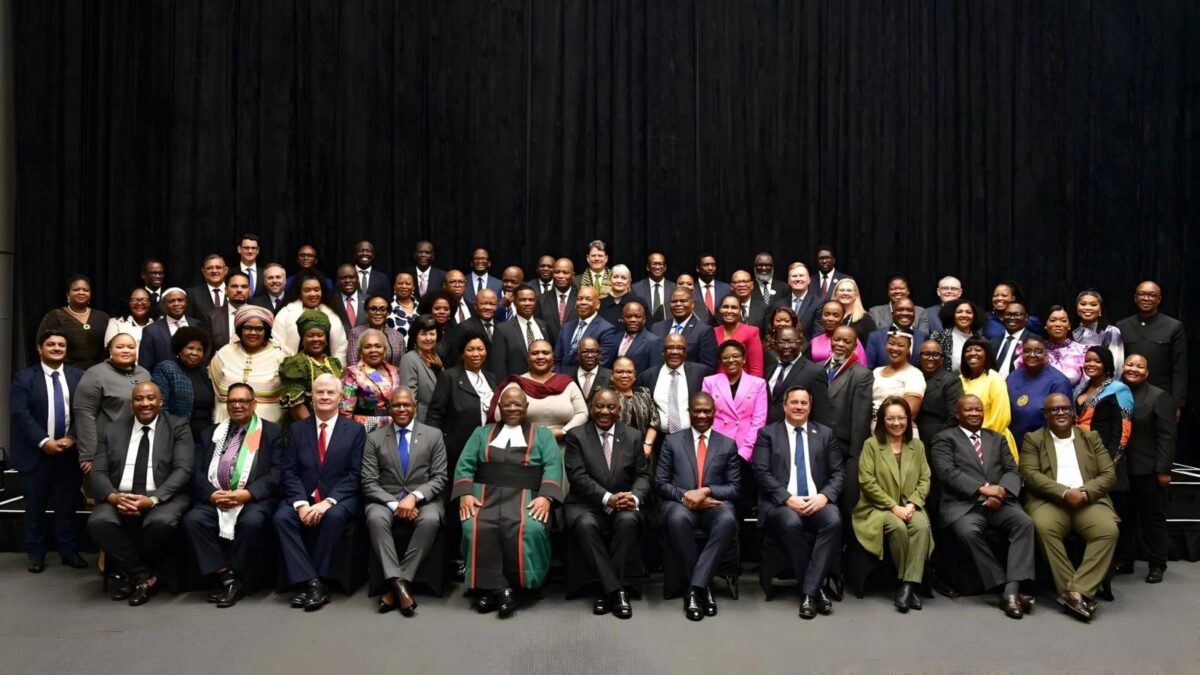
Taxpayers spent R600 million on the salaries of Ministers, Deputy Ministers and their support staff, R350 million on travel, and R4.5 billion on VIP protection.
These are the figures shared by Member of Parliament Athol Trollip during his speech on his 2-year review of South Africa’s new government of national unity (GNU).
The government of national unity was formed in June 2024 out of political necessity when no single party won an outright majority.
In the 2024 general elections, the ANC lost its absolute majority, dropping to roughly 40% of the national vote.
To govern and maintain market and political stability, President Cyril Ramaphosa invited political parties to sign a Statement of Intent to form a voluntary coalition.
The largest anchoring blocks are the ANC and Democratic Alliance (DA), alongside the IFP, Patriotic Alliance (PA), Freedom Front Plus (FF+), and UDM.
Ministries were split among parties, with the ANC controlling key portfolios such as Finance, Trade and Industry, and Foreign Affairs.
The GNU initially triggered a notable wave of investor confidence, partly because it prevented a coalition between the ANC, EFF, and MK Party.
The performance over the last two years was mixed. There was macroeconomic stabilisation and administrative reform, but slow growth and an ideological gridlock.
The financial performance was good enough for Fitch and S&P Global to upgrade South Africa’s outlook or ratings.
The performance of Eskom and Transnet improved, and the South African Revenue Service (SARS) collected record taxes.
Leon Schreiber at Home Affairs and Dean Macpherson at Public Works have won public praise for treating their portfolios like corporate turnarounds.
However, there were many negatives. The government missed its 3% economic growth target, and unemployment remained stubbornly high.
Local government continues to collapse, despite the national government’s promise to the President to address the issue.
There are also very different views within the government on issues such as the National Health Insurance (NHI) scheme, expropriation, and BEE.
Athol Trollip’s view on the GNU
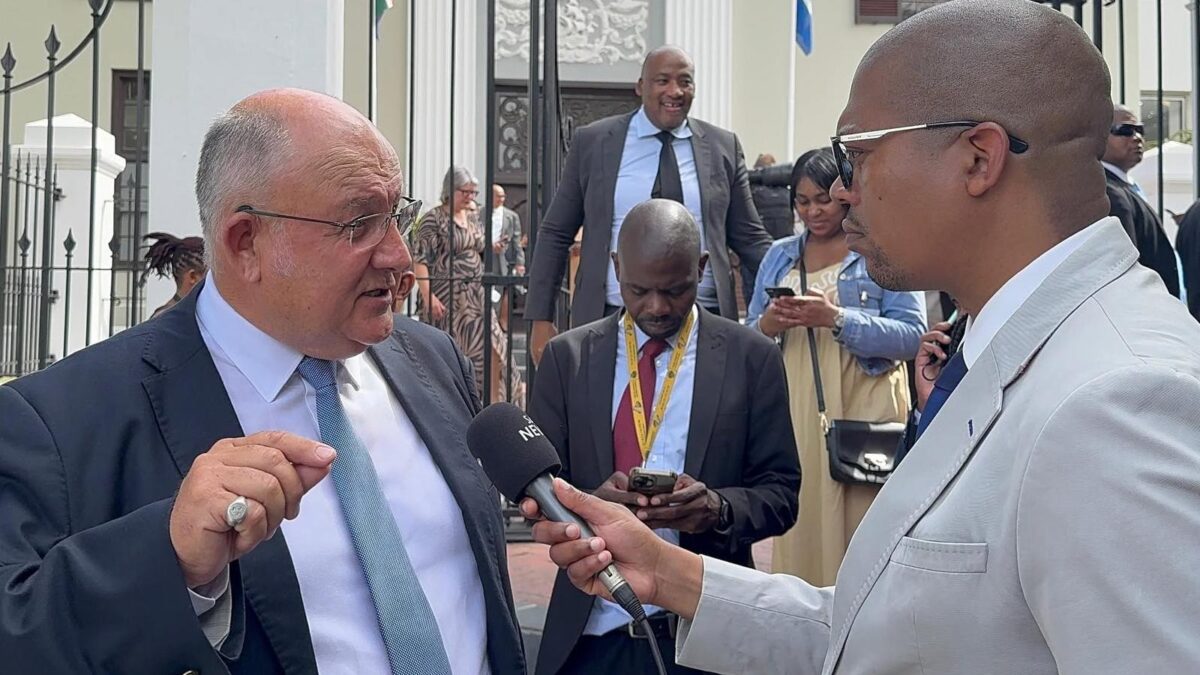
Member of Parliament Athol Trollip delivered a sharp critique of the government of national unity and its performance over the last two years.
“The very first decision taken by President Ramaphosa after the election was not to streamline government or cut waste. It was to expand it,” he said.
The Cabinet grew from 30 Ministers and 36 Deputy Ministers to 32 Ministers and 43 Deputy Ministers.
“South Africa now has one of the largest and most expensive executive structures in the world,” he said.
He added that every year, taxpayers spend roughly R600 million on the salaries of Ministers, Deputy Ministers and their support staff.
“An additional R350 million is spent on travel and accommodation, and R4.5 billion is spent on VIP protection.”
“When all the perks, protection and support structures are included, this bloated executive costs taxpayers R6 billion annually,” he said.
He argued that the most important measure by which South Africa’s government should be judged is whether it created jobs.
“The expanded unemployment rate has risen from 42.6% two years ago to a historic 43.7%. In the first quarter of 2026 alone, South Africa lost 345,000 jobs,” he said.
South Africa requires sustained economic growth of at least 3% to 4% a year to meaningfully reduce unemployment.
“Instead, growth was just 0.6% in 2024, 1.1% in 2025, and 0.5% in the first quarter of 2026. These are stagnation figures, which means unemployment,” he said.
He also touched on crime, saying South Africa remains one of the most violent countries in the world, with 58 people killed every day.
“Two years into the Government of National Unity, South Africans were entitled to expect urgency, accountability, and results,” Trollip said.
“Instead, they have received a bigger cabinet, higher unemployment, failing infrastructure, collapsing educational outcomes, and continued insecurity.”
He said that the isolated improvements were not enough when millions remain unemployed, unsafe, and without hope.









 Loading ...
The GNU is bloated because ANC was to accommodate its cadres in the government so that ANC should not loose its power in government. You will notice that DA ministers are deputised by ANC so that government is driven by ANC. Solly Malatsi is working very tough because of Gungubele opposing him in every decision Solly takes as a minister. Same as Gwarube, ANC cadres are making her difficult to perform the task.