
Warning of widespread protest action and potential mass violence in South Africa


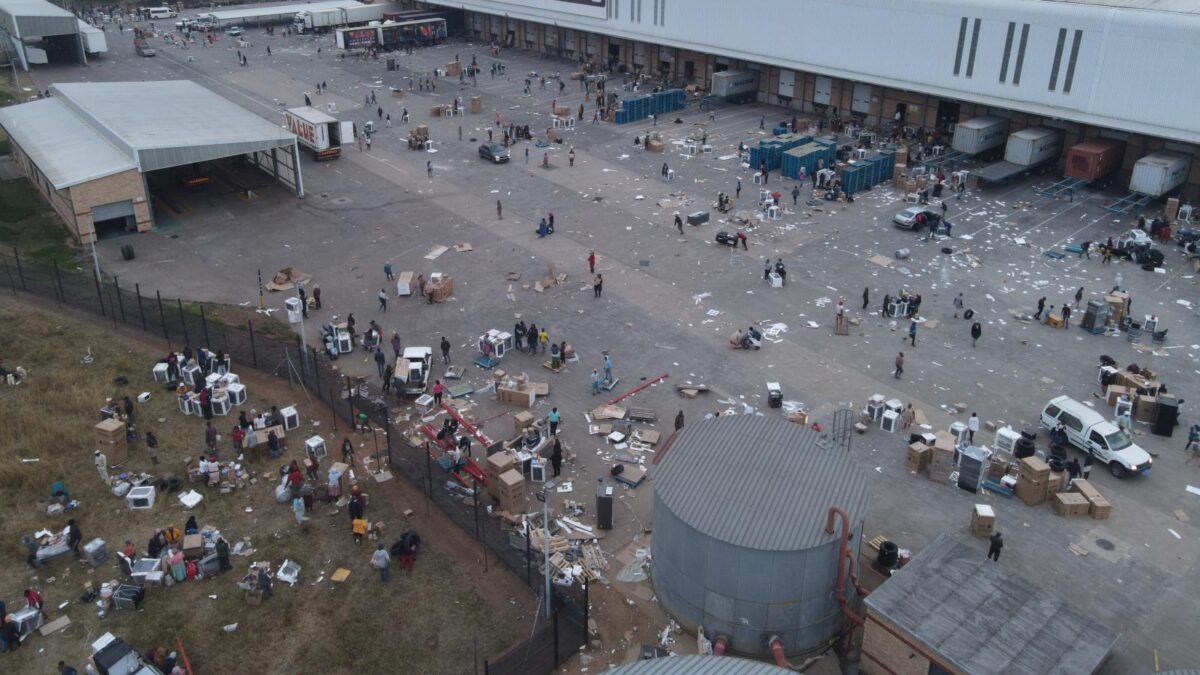
Renowned political and economic analyst Frans Cronje identified three triggers that historically have detonated mass civil unrest. All three are currently active.
Cronje shared this information in a video published on The Common Sense’s YouTube channel this week.
He warned that these triggers point to an imminent risk of widespread protest action and potential mass violence in South Africa.
The triggers are spikes in food and transport inflation, deliberate incitement, and bitterly cold temperatures.
When these three triggers are active simultaneously, they serve as a trigger for major riots, as seen in July 2021.
- Food and transport inflation – Because impoverished communities spend the vast majority of their income on these two necessities, any spike severely cripples their ability to feed their families.
- Deliberate incitement – Incitement is highly visible right now. Cronje said that during a recent trip to KwaZulu-Natal, the tension was incredibly palpable.
- Bitterly cold temperatures – When nighttime temperatures plummet, the reality of living in poverty becomes incredibly harsh and bitter. This physical discomfort dramatically escalates human frustration and anger
Cronje showed that historically, major riots have exploded when these three factors are all active in South Africa.
South Africa is currently experiencing soaring basic costs, active political incitement, and entering a cold winter.
He explained that this is why his firm, Frans Cronje Private Clients, believes that South African firms should prepare mitigation strategies for imminent unrest.
Anti-immigrant unrest and vigilante violence

Cronje’s warning comes amidst a coordinated wave of anti-immigrant unrest and vigilante violence in South Africa.
The situation has rapidly escalated from localised protests into a major humanitarian and diplomatic crisis on the continent.
The current tension has been building for months, heavily fueled by a citizen-led, anti-immigrant movement.
Vigilante groups have taken to the streets and gone door-to-door, closing foreign-owned small businesses, and demanding to check people’s legal documentation.
While tensions initially simmered in the traditional hotspots of Johannesburg and Durban, the most severe flashpoint has been Mossel Bay in the Western Cape.
In Mossel Bay, riots erupted following allegations that local construction companies were prioritising undocumented migrants for labour.
Local reports indicate that dozens of informal shacks were torched, some while residents were still inside.
Hundreds of foreign families have been displaced, seeking refuge in safe locations across the province.
The scale of the threat has forced several African nations to treat the situation as an active evacuation crisis rather than a standard diplomatic dispute.
The main reason for the violence, which aligns with Cronje’s assessment, is reported to be South Africa’s poor economic situation.
Local citizens are struggling because of the high unemployment rate, hovering around 33%, and nearly 40% of the population lives in poverty.
In poorer communities and informal settlements, foreign nationals are frequently blamed for straining collapsing municipal services.
They are also seen as driving down wages in informal sectors, like construction and retail, and contributing to high crime rates.
South African Foreign Minister Ronald Lamola condemned the violence, stating that no grievance, however legitimate, can justify violence.







 Loading ...
Viva ANC, viva.