
Ramaphosa and Steenhuisen fiddle as they make South African farmers watch their cattle die


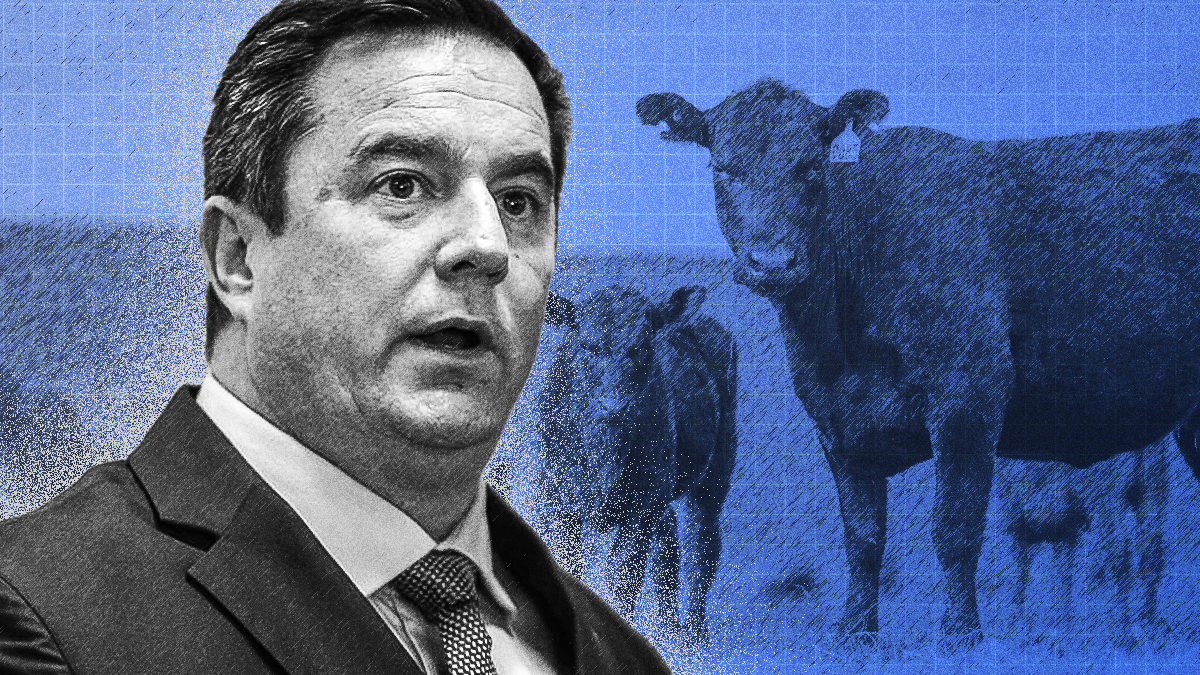
More than a year after an outbreak of foot-and-mouth disease began devastating South African herds, the country finally has the beginnings of a plan to tackle the disaster and stave off a food crisis.
For many farmers, it is too little too late. Others caution that there is a big difference between having a plan and executing it. The government’s insistence on central control also remains a needless impediment.
Additionally, experts have warned that the full ramifications of South Africa’s bungling of its response to the outbreak have yet to reveal themselves.
As usual, the disaster facing South African farmers was foreseen and wholly preventable. The government had six years of advance warning to rebuild the country’s capacity to combat such epidemics.
A smaller outbreak in 2019 had led the World Organisation for Animal Health to revoke South Africa’s foot-and-mouth disease–free status.
South Africa failed to regain its status thanks to ongoing outbreaks, with significant cases of the disease reported since 2021.
When the epidemic broke out in 2025, South Africa remained wholly unprepared, despite the government having years of forewarning, with vaccine manufacturing capacity at Onderstepoort gutted.
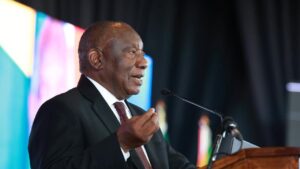
President Cyril Ramaphosa announced during his 2026 State of the Nation Address on Thursday, 12 February, that “we” have finally decided to vaccinate the entire national herd over the next year.
He explained that the plan involves vaccinating 14 million head of cattle, which will require 24 million vaccines to be administered.
“This disease is damaging our economy, resulting in export bans, trade restrictions, and devastation of herds,” Ramaphosa stated.
He went on to announce that he had established a task team comprising farmer organisations and experts, to loud jeers from the opposition benches in the gallery.
It was the third new task team Ramaphosa had announced in his speech. “Yes. Yes,” he responded, with index fingers in the air and a sardonic half-smile on his face.
“Working together with the Minister of Agriculture and his department, the task team will report to me every month about the progress we are making in dealing with this pandemic.”
Total state control
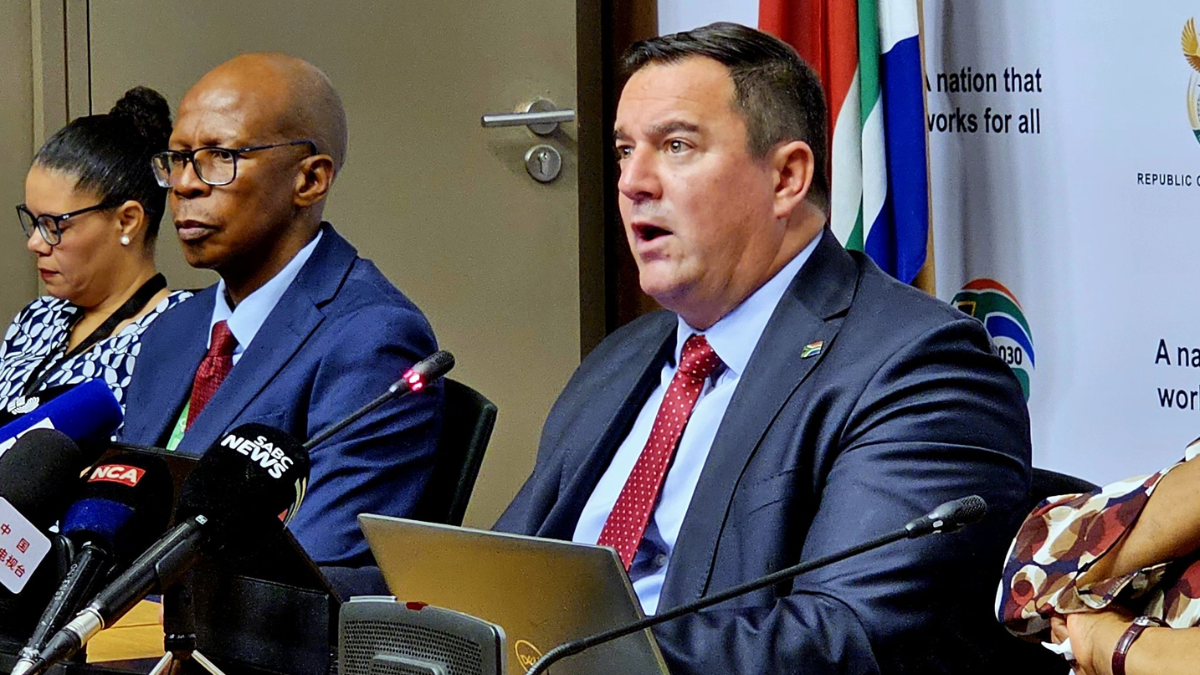
In addition to announcing a national vaccination drive, Ramaphosa also doubled down on complete state control over procurement.
While he paid lip service to “working closely with the private sector to enable an efficient rollout,” this came after he had already said the state would “facilitate” vaccine acquisition.
Speaking to the SABC following the president’s address, agriculture minister John Steenhuisen said the state is now procuring millions of vaccines.
“We’ve got three different suppliers internationally that are shipping vaccines. The first one of a million is going to arrive in the next five to seven days, and then we’ll roll that out,” Steenhuisen promised.
“It will obviously be a process that involves the private veterinarians and animal health technicians. We don’t have the capacity at state level to roll it out ourselves.”
Steenhuisen also confirmed Ramaphosa’s statement that while there would be a public-private partnership to administer vaccines, procurement and distribution would be centrally controlled.
“We will make sure the vaccines get to where they need to be based on the scientific heat map that our task team has developed, and we are going to vaccinate at scale,” said Steenhuisen.
“The goal is by the end of this year to have vaccinated 80% of the herd and to reduce the incidence of foot-and-mouth disease by 70%.”
Ramaphosa said that the centralised control was to ensure the correct vaccines are obtained for the particular strain of the virus that farmers face in South Africa.
However, certifying and licensing specific vaccines for South Africa and supervising their rollout is not the same as centrally controlling procurement and distribution.
Government-sanctioned price-gouging
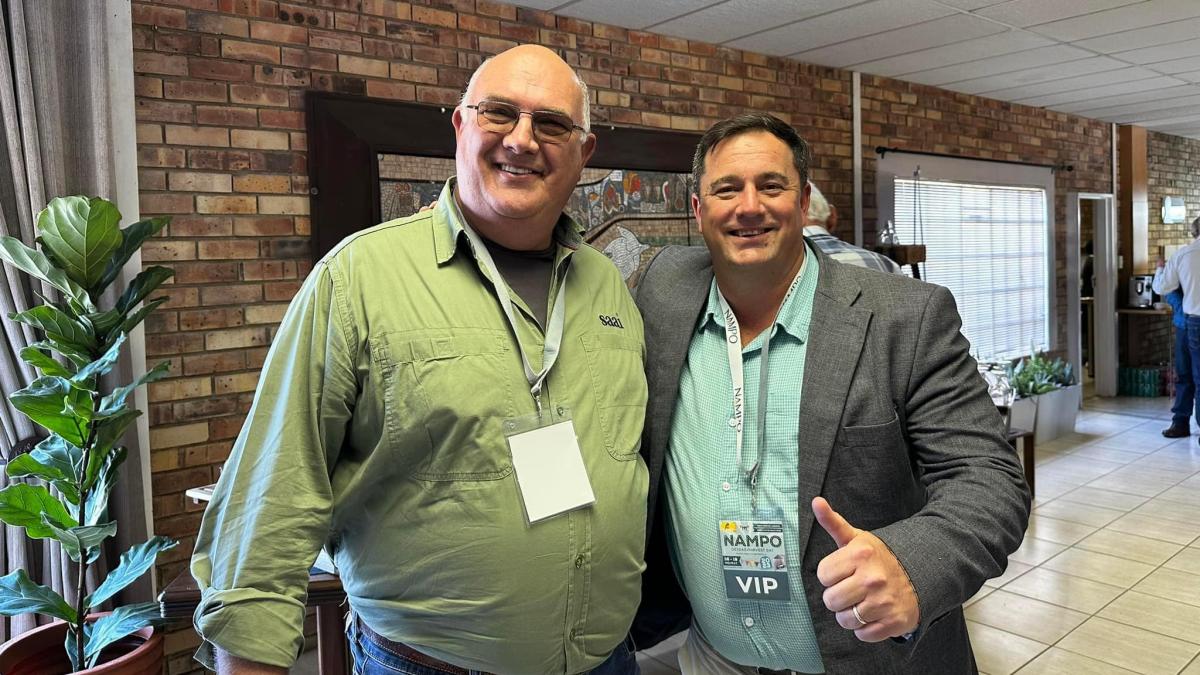
Speaking to BizNews, Theo de Jager, executive chairman of SAAI and one of the most experienced agricultural leaders in the country, said they were not opposed to the regulation of medication.
Vaccines and other medicines should first be approved by the South African Health Products Regulatory Authority (SAHPRA) before they are permitted for use.
De Jager said farmers were advocating that they be permitted to buy the vaccines directly rather than wait for a lengthy government procurement and distribution programme.
“For us as farmers, our absolute priority is to find the shortest route between the manufacturer and our cattle, which we know is the private route,” De Jager said.
“Once it goes into the government system, we are going to struggle. No one will know who will get it next or where it will go next.”
Another issue is price. De Jager said that farmers asked questions when markups on vaccines ballooned to 445%.
“We know that the vaccines come in for around R45 per dose. Two agents told us that they can land it at our farms for around R55 per dose,” said De Jager.
“But then on the day before Christmas, the department said that it will cost farmers about R300, and immediately the farmers asked, ‘Where will the difference go to?’”
Matters weren’t helped when the director-general for the Department of Agriculture remarked that he still had to put out some aspects of the vaccine distribution out to tender.
“You know, farmers hear tenderpreneurs, and they hear slowing down the value chain, and lots of profits, and this is what they are terrified of.”
The economics of foot-and-mouth
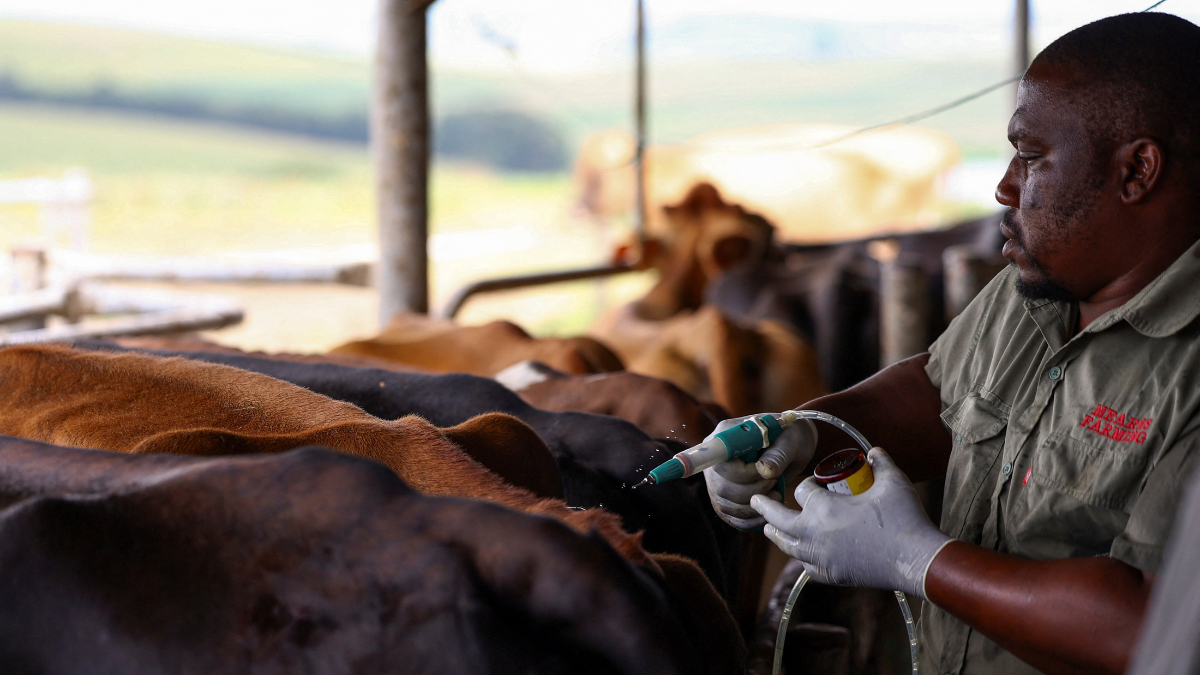
Ironically, the strains of foot-and-mouth disease circulating in South Africa are not particularly deadly, and cases of zoonotic transfer are practically nonexistent.
However, it still has a significant impact on herds and incomes. The disease causes animals to eat less, which causes dairy and mother cows to produce less milk.
Additionally, although mortality is typically low in adult livestock, it can be severe in calves and lambs due to complications such as myocarditis, known locally as “tiger heart disease.”
It also impacts fertility and contributes to abortions, severely affecting the number of new animals being born.
James Kean, a dairy farmer in Mooi River whose cattle were infected in January, recently told Reuters that South Africa’s cow population could halve over the next two years.
Combined with farms closing due to the economic impact of the disease, this spells a potential cost-of-living disaster for South Africa.
“If a farm is hit with an outbreak during breeding and you have to delay by six weeks on a thousand-cow herd, you could lose R5 million just because the cows are calving six weeks later.”
Additionally, while the disease is generally not dangerous to humans, other countries are extremely wary of it and, just like South Africa, want to prevent foreign strains from taking root.
This means loss of export market access. South African beef exports fell 26% in 2025, despite growing global demand, partly due to a Chinese ban on our red meat products.
That loss of income also puts farms under pressure, leading to bankruptcy. “We are now losing 2–3 dairies every week,” De Jager stated.
“South African farmers are in trouble. Every day, farming enterprises are going under because they cannot cope with this disease.”


 Loading ...
This is once again state of disaster created by the ANC. If Onderste Poort was up and running this would not happen. What happened to the R500 mil. designated and paid to upgrade Onderste Poort 6 years ago? Before Steenhuisen. The questions were asked but the ANC caders are mum. No comment……