
The 134-year-old company collapsing in front of everyone’s eyes


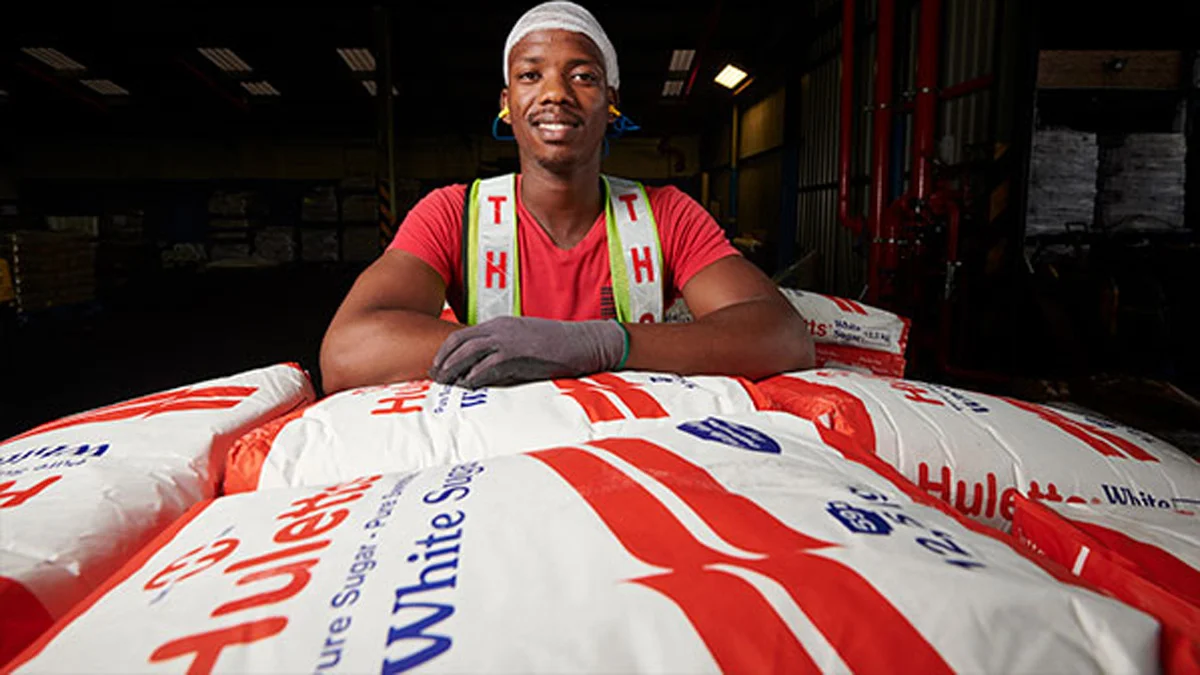
In less than a decade, Tongaat-Hulett went from a company of national pride to a nearly collapsed entity that could put an entire industry at risk.
The company’s history dates all the way back to the 1850s, and was incorporated in 1892 as Sir J L Hulett and Sons.
The name was later changed to Huletts Sugar Corporation, and then Huletts Corporation.
Around the same time, the Tongaat Group was started in 1875 as a partnership between English settlers Edward Saunders and W J Mirrlees.
In 1962, South African mining giant Anglo American acquired shares in the Tongata Group. The miner continued to hold shares in the company until 2009.
At the time, Tongaat had interests in various resources, including alumnum, building materials, consumer foods, cotton, edible oils, mushrooms and sugar.
It was only in 1982 that Tongaat-Hulett was born, formed when the Tongaat Group merged with Huletts Corporation.
A few years later, the now-merged conglomerate refocused its operations, settling on agri-processing operations and prime agricultural land holdings.
As the years progressed, the company continued to refine its operations and, ultimately, became South Africa’s leading agri-business in sugar, ethanol, animal feeds and cattle.
Crucially, Tongaat-Hulett is also the country’s only white sugar refiner, making it a key player in South Africa’s sugar value chain.
The sugar industry is one of the country’s most important, with the cane growing sector alone supporting 250,000 jobs.
Around 220,000 of these jobs are based in KwaZulu-Natal and 30,000 in Mpumalanga, alongside the 2,600 direct employees at Tongaat South Africa.
Therefore, Tongaat-Hulett’s impending liquidation spells severe trouble for an industry that is already buckling under enormous pressure.
Tongaat’s collapse
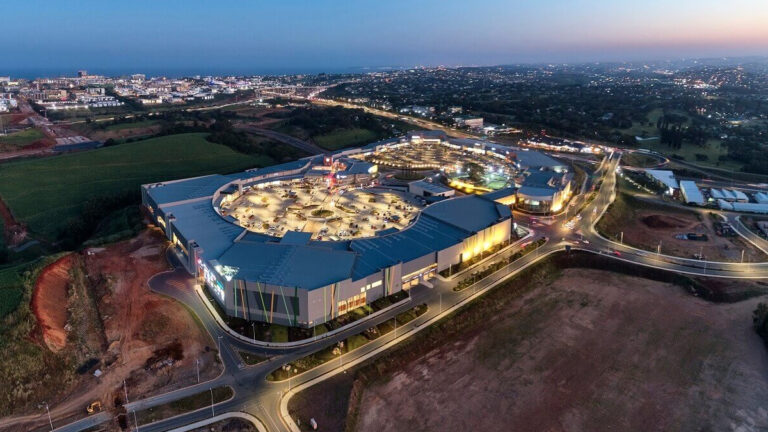
Seven years ago, Tongaat-Hulett experienced a catastrophic downfall when a massive accounting fraud scandal came to light.
In 2019, a PwC audit revealed that key executives at the sugar producer had manipulated the company’s accounts to inflate profits over several years.
These inflated profits were used to justify top executives’ hefty bonuses and share options.
When this fraud came to light, the company was forced to restate previous financial results, resulting in a staggering R12 billion write-down in the company’s value.
This also showed that the company was highly overleveraged, with a debt stockpile of R6.6 billion.
It was only a few years later, in 2022, that Tongaat entered voluntary business rescue in hopes of turning the company around.
Business rescue practitioners (BRPs) were appointed and, by 2024, an official business rescue plan was adopted.
The success of this plan hinged heavily on Tongaat’s strategic partners – the Vision Group consortium and the Industrial Development Corporation (IDC).
The Vision Group, in particular, was considered critical in the company’s turnaround, with plans in place for the consortium to acquire Tongaat’s operating assets in South Africa, as well as its investments in Zimbabwe, Mozambique, and Botswana.
Under this plan, Vision was set to assume responsibility for stabilising the business, and it was contingent upon three conditions –
- Refinancing of the IDC post-commencement funding facility of R2.3 billion into a structure assumed by Vision
- Funding of an escrow account in the amount of R517 million in respect of the South African Sugar Association (SASA), pending the outcome of legal proceedings
- Provision of R75 million for distribution to concurrent creditors
However, this plan quickly fell apart, as discussions between Vision and the IDC failed to lead to binding funding arrangements.
Ultimately, Tongaat’s BRPs concluded that there is no longer a reasonable prospect of implementing the adopted business rescue plan or rescuing Tongaat as a going concern.
Therefore, in February 2026, the BRPs made the decision to apply to the High Court to discontinue Tongaat’s business rescue proceedings and place the company into provisional liquidation.
While the future of the company is still uncertain, this development has brought enormous uncertainty and instability to a sector that is already under severe strain.
Taxes, trade and turmoil

South Africa’s sugar industry is struggling, facing severe pressure from both domestic and global sources.
SA Canegrowers has repeatedly sounded the alarm on one of the sector’s most pressing issues – low-cost sugar imports flooding South Africa’s market.
Over the past few years, South Africa has seen a surge in imported sugar, which has made it extremely difficult for local producers to compete.
This is because countries like Brazil and India, from where a lot of South Africa’s imported sugar comes, heavily subsidise their sugar industry, particularly exported sugar.
According to SA Canegrowers, this results in sugar prices that do not reflect true production value, making it difficult for local producers to compete.
SA Canegrowers chairman Higgins Mdluli previously estimated that for every ton of imported sugar entering the South African market, the local sugar industry loses around R7,500.
Another local challenge the organisation has highlighted is South Africa’s sugar tax, which it says significantly raises local producers’ input costs.
“While the industry fully supports efforts to address public health challenges, there is no evidence that the sugar tax has delivered any meaningful health outcomes, while it has inflicted significant economic damage on growers, millers and workers,” the organisation said.
“When the sugar tax was introduced in 2018, the industry shed more than 16,000 jobs in the first year alone.”
At the same time, local producers are also facing a notable challenge in the export market – specifically, high tariffs on products exported to the United States following US President Donald Trump’s ‘Liberation Day’ announcement.
Mdluli previously warned that the tariffs could further distort the market and worsen the competitiveness of South African sugar producers.
He said local growers cannot afford to become even more uncompetitive in a very important export market due to punitive tariffs, whilst at the same time losing local market share due to unfair trade practices.
Therefore, Tongaat’s potential liquidation could be the final nail in the coffin for South Africa’s struggling sugar industry, destabilising the entire sugar value chain.
“Ensuring continuity of milling operations at Tongaat and protecting grower income must be an urgent priority for the government and the BRPs of Tongaat, irrespective of the eventual ownership outcome,” Mdluli said.
“Tongaat’s liquidation will affect all of South Africa’s 27,000 small-scale and 1,100 large-scale growers.”
“The critical importance of Tongaat Hulett’s operations to South Africa’s economy and the stability of rural communities is hard to overstate.”








 Loading ...
Deja Vu …. pretty sure I read this story last week?