
What Johannesburg has done is criminal – Helen Zille


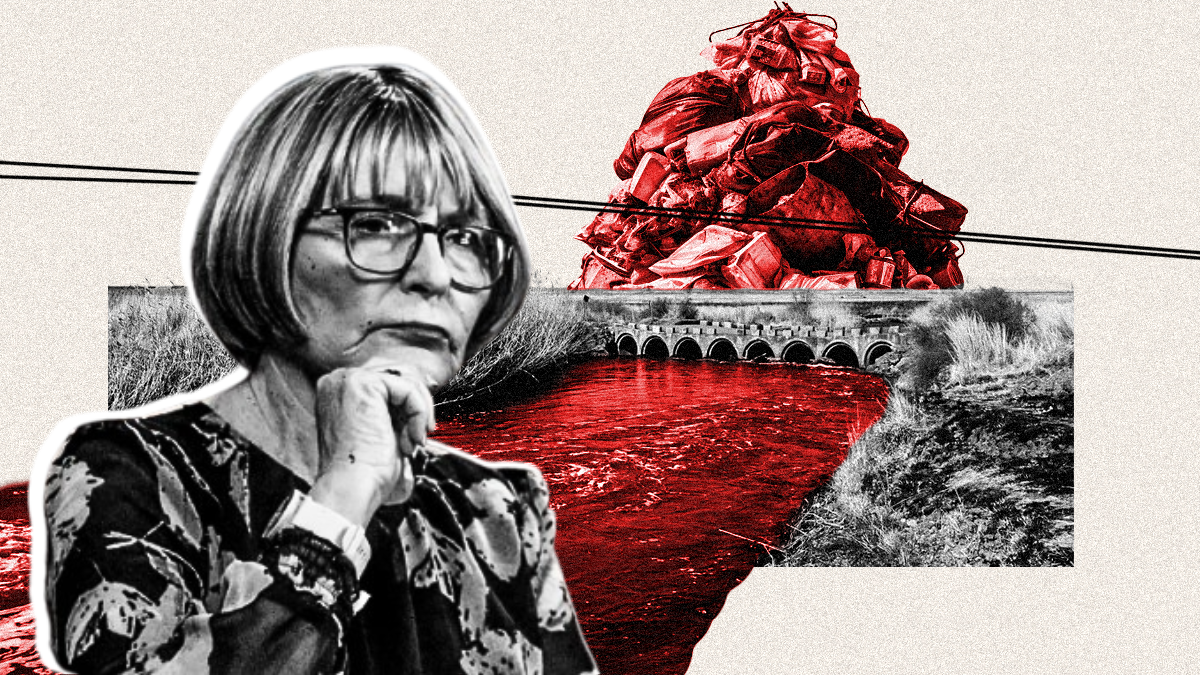
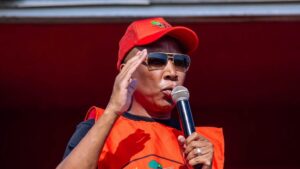
Johannesburg’s rivers have become a visible symbol of the city’s long-standing governance failures, and Democratic Alliance mayoral candidate Helen Zille did not mince her words in a wide-ranging interview with Newsday about the scale of the crisis.
“Underinvestment in wastewater treatment plants is criminal. It really is,” Zille said, highlighting the direct link between decades of neglect and the environmental degradation of the city’s rivers.
Johannesburg’s freshwater crisis is defined by a “metagenomic cocktail” of pathogens, where structural failures at key wastewater treatment works (WWTW) have rendered the Jukskei and Klip rivers biologically hazardous.
According to 2024/2025 research from the University of Johannesburg, for example, the Northern WWTW frequently discharges effluent into the Jukskei that exceeds national E. coli safety limits by several orders of magnitude, a result of chronic overloading and “throttled” intake.
This is exacerbated by the Goudkoppies and Bushkoppies plants, which a 2025 Water Research Commission (WRC) status report identifies as critical failure points due to persistent mechanical breakdowns.
The human impact is severe: studies in Environmental Science and Pollution Research highlight that the “foaming” caused by high surfactant levels poses an acute risk to religious groups, with a single immersion ritual in these waters carrying a significant probability of gastrointestinal or skin infection.
Downstream, small-scale farmers face a “calculated risk”, as 2025 enrichment factor analyses confirm high concentrations of heavy metals like lead and arsenic.
These contaminants, alongside pathogens like Vibrio cholerae, compromise food safety and local livelihoods, transforming vital natural resources into conduits for disease.
It wasn’t always like this
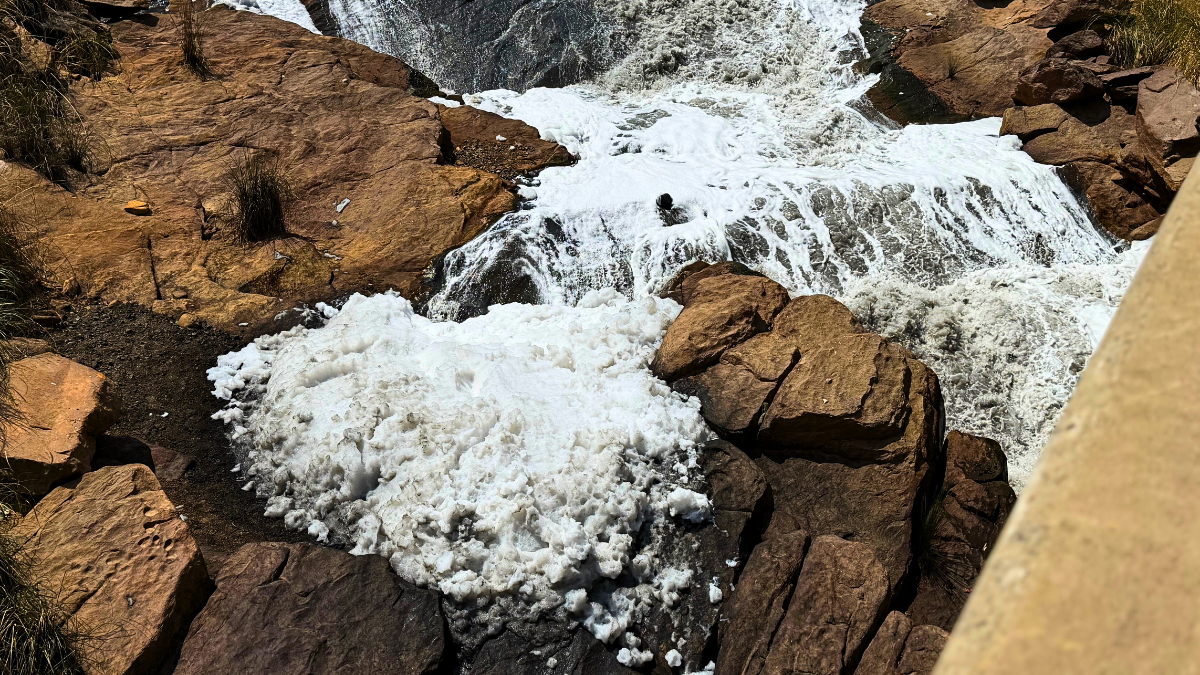
Drawing on her childhood memories, Zille contrasted the river she grew up with to its present condition.
“When I was growing up in Johannesburg, we lived very close to the Jukskei River in Rivonia, and the only risk of the river was that you could get bilharzia. That was the only risk.”
“But we played around the Jukskei. We fell a number of times without telling our parents. And, you know, we climbed trees over the Jukskei. We hopped from rock to rock over the Jukskei. It was fantastic.”
Today, the rivers tell a different story.
“Now I’ve seen some parts of that river today which are totally shocking. In many parts of our river system in greater Joburg, you have places that are rundown, squalid, polluted, and dangerous. That is the opposite of what a river system should be.”
Zille stressed that the problem is systemic, linking it to decades of underinvestment and insufficient maintenance.
“Underinvestment in wastewater treatment works is criminal. It really is,” said Zille.
“If you have a growing population and you’re linking them to the sewer system, you have to refurbish and extend and build new wastewater treatment plants, and that has to be a priority.”
“Otherwise there will be, as the mayor of Cape Town says, a poo-nami, and there will be if we don’t actually invest in that.”
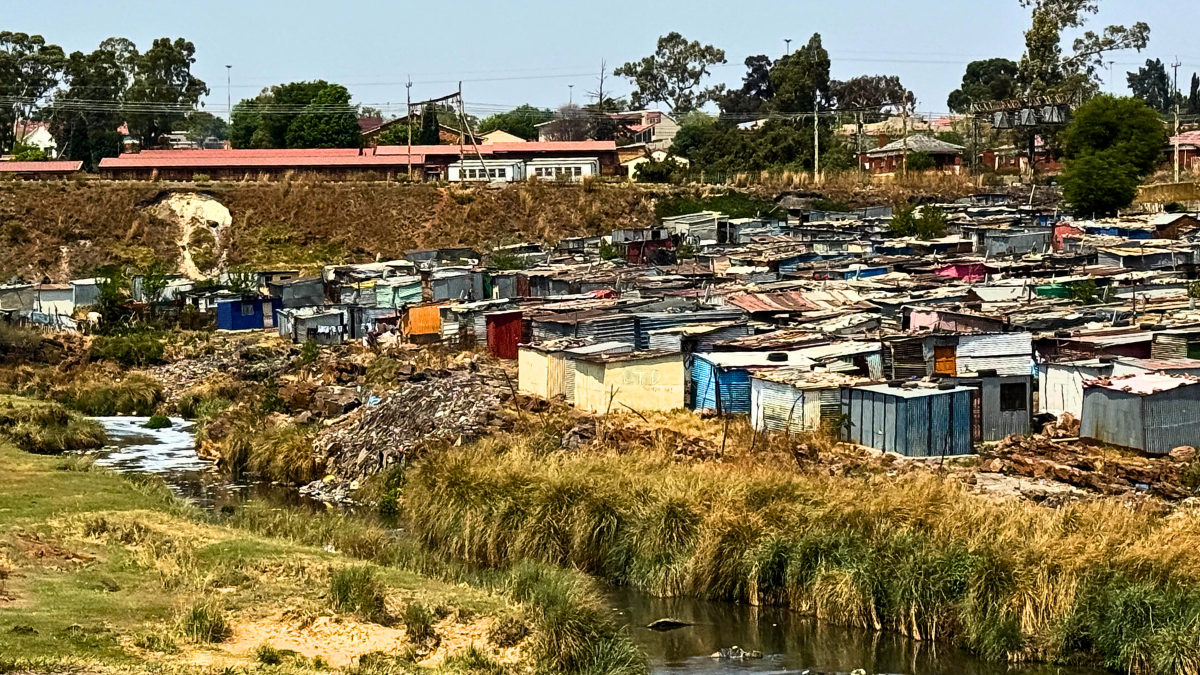
She also highlighted the human cost of the failing river infrastructure, particularly for informal settlements along riverbanks.
“In places like Alexandra, the shacks are almost in the water. And when the river comes down in flood, people die there,” Zille said.
Acknowledging the politically sensitive nature of addressing riverbank settlements, Zille said that relocation may be necessary to protect lives.
“It is an enormous job to rehabilitate the Jukskei River. And it is going to take actually relocating people from the edge of that river to fix it,” she said.
Zille added that rehabilitating the rivers would require clear, enforceable bylaws, investment in infrastructure, and partnerships with the private sector.
She expressed hope that parts of the river could be transformed like Cape Town’s Liesbeek River into safe, accessible, and well-maintained green spaces, framing the effort as a matter of both public safety and civic pride.
“A river should be one of the greatest assets of Joburg, and they aren’t at the moment,” Zille said, warning that without decisive action, communities will continue to face unnecessary health and safety risks.
“It is an enormous job,” she said. “But it must be done.”
Zille cautioned against blaming individual officials for Johannesburg’s decades-long service delivery failures, noting that systemic collapse cannot be pinned on one person.
She said even corruption often involves syndicates, making accountability complex, and argued that new leaders cannot fix entrenched problems in just a few years.
Still, she emphasised the need for transparency and robust accountability mechanisms to identify where governance is failing and ensure corrective action.
Failure has many fathers
Responding to calls to hold individual officials personally accountable for the decades of systemic collapse, Zille said that “one has to be a little bit careful of that because this problem has built up over decades.”
“Let’s say you get a new chief director… in Joburg Water. He’s not going to be able to fix it in two or three years… and then to get him to be personally punished for the sins of the past is unfair.”
“Failure has many fathers,” Zille added. “I’m afraid that the saying goes that failure is an orphan. But when you’re trying to hold someone accountable, you’ll find how many fathers failure has too.”
“You can never put it on one person. It’s always a series of stuff-ups along a very long chain and that is the problem why it’s very difficult to hold one person to account.”
She said there is a complex governance structure in a major metropolitan area, framing service delivery collapse as a decades-long, systemic issue rather than the result of individual incompetence.
“Even in corruption, there are whole syndicates these days,” she said.
“But there have got to be accountability mechanisms. I completely agree, and the more transparency we get, the more we’ll be able to see where things are going wrong.”

 Loading ...
I agree with Helen’s comments and concern, but have to point out that the river flowing through Rivonia is the Braamfontein Spruit, which only joins up with the Jukskei, which comes from the Eastern suburbs at Leeukop Prison in the North.