
The ministers in South Africa who spent the most taxpayer money on travel



Ministers in the Government of National Unity (GNU) have spent at least R450 million in travel and accommodation expenses during their first 18 months in office.
According to ActionSA, which has been tracking government spending through its GNU Performance Tracker, based on official responses received in Parliament, this amount is likely closer to R500 million.
“This level of spending reflects an alarming profligacy and an out-of-touch misuse of taxpayer funds,” said ActionSA MP Alan Beesly.
According to the Ministerial Handbook, among the numerous travel perks, ministers are entitled to business-class travel for flights exceeding two hours and accommodations in five-star hotels.
Examining the breakdown of taxpayer-funded trips, the Department of Human Settlements was identified as the ministry that incurred the highest travel expenses for the year and a half, at R32.98 million.
This is despite the fact that, in June 2025, Minister Thembi Simelane said that she had not undertaken any international travel.
From her appointment in December 2024 until June 2025, Simelane revealed in response to a parliamentary question from ActionSA that over R1 million was spent on car rental services.
The Minister further admitted to spending over R1 million on domestic flights during this time for herself alone.
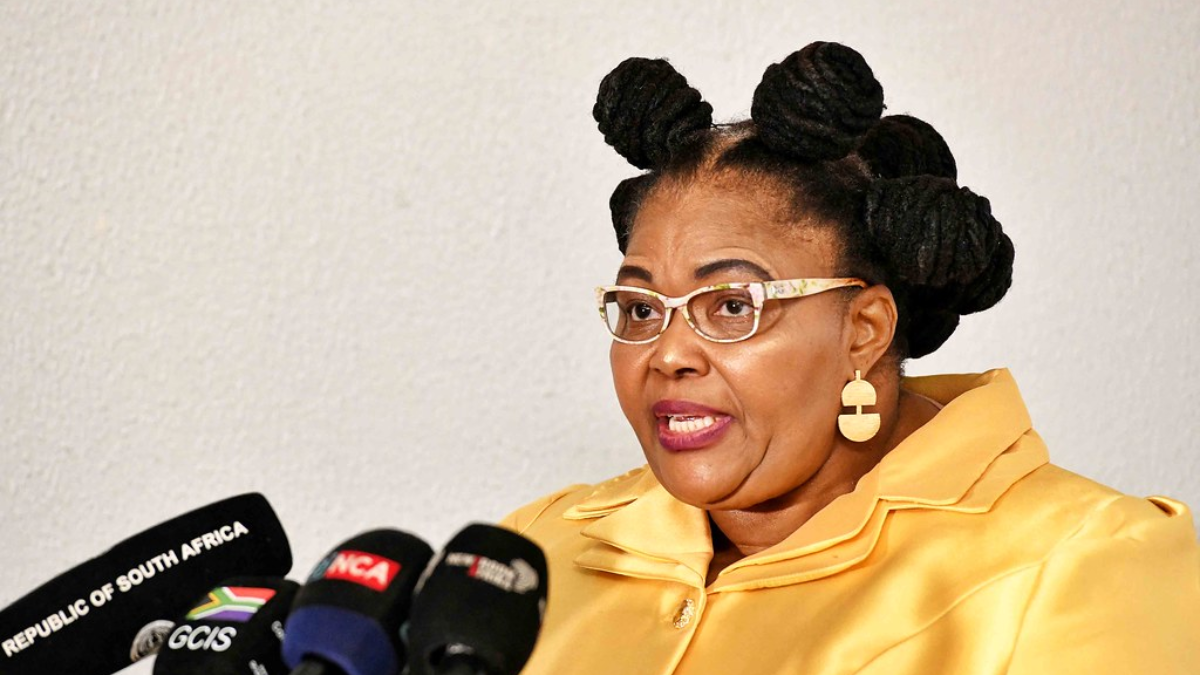
The Department of Water and Sanitation under the ANC’s Pemmy Majodina spent the second most money on travel expenses, at R29.57 million during the 18-month period.
In June 2025, R620,650.68 was spent on a trip to Russia for the St Petersburg International Economic Forum. This was despite accommodation and transport costs being covered by the event.
The R620,650.68 amount consists only of flight costs for the Minister, her Chief of Staff, her Private Secretary and the Department Director of Africa Multilateral Relations.
Costs per ministry
| Department | Travel expenses since July 2024 |
| The Presidency | Failed to disclose amount |
| Human Settlements | R32.98 million |
| Water and Sanitation | R29.57 million |
| Women, Youth and Persons with Disabilities | R25.27 million |
| Forestry, Fisheries and the Environment | R24.41 million |
| President | R24.17 million |
| International Relations and Cooperation | R23.75 million |
| Cooperative Governance and Traditional Affairs | R20.78 million |
| Defence and Military Veterans | R20.19 million |
| Electricity and Energy | R18.09 million |
| Police | R17.53 million |
| Science, Technology and Innovation | R15.95 million |
| Public Service and Administration | R15.95 million |
| Finance | R15.62 million |
| Health | R15.26 million |
| Transport | R13.05 million |
| Higher Education | R15.02 million |
| Employment and Labour | R13.97 million |
| Trade, Industry and Competition | R13.74 million |
| Home Affairs | R10.72 million |
| Planning, Monitoring and Evaluation | R9.1 millon |
| Mineral and Petroleum Resources | R8.89 million |
| Basic Education | R8.14 million |
| Deputy President | R7.9 million |
| Tourism | R7.43 million |
| Sports, Arts and Culture | R6.7 million |
| Justice and Constitutional Development | R5.35 million |
| Correctional Services | R5.18 million |
| Social Development | R5.13 million |
| Small Business Development | R4.64 million |
| Communications and Digital Technologies | R4.19 million |
| Land Reform and Rural Development | R3.71 million |
| Agriculture | R3.67 million |
| Public Works and Infrastructure | R3.21 million |
R6 million trip to New York City and other pricey trips
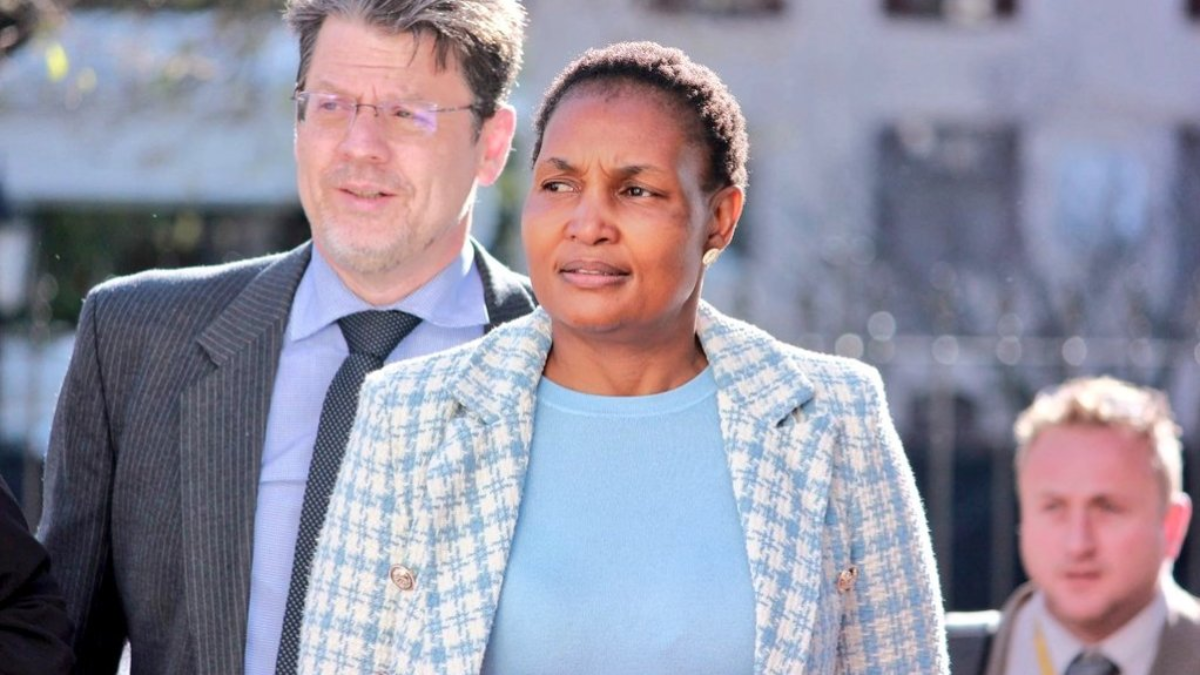
The Department of Women, Youth, and People with Disabilities, under Minister Sindisiwe Chikunga, spent R25.27 million on travel, ranking third on the list.
The Department came under scrutiny in September 2025 after it was revealed that Chikunga spent over R6 million of taxpayer funds on a departmental trip to New York City for a United Nations event.
A delegation of more than 80 people, including deputy ministers, senior officials and sector representatives, attended the event, which the minister insisted was necessary to champion women’s rights internationally.
Taking fourth place on the list of the biggest travel spenders is the Department of Forestry, Fisheries and the Environment, which was under DA Minister Dion George, but following his removal, is now under the DA’s Willie Aucamp.
The Ministry racked up R24.41 million in travel-related expenses. When asked by ActionSA MP Malebo Patricia Kobe to provide a breakdown of these travel costs in July, Minister George refused.
He said that “providing a breakdown of each trip, including specific destinations and individual justifications, is constrained by the protection of the Personal Information Act (POPIA).”
Beesly said in an interview with Newzroom Afrika that previous opposition parties, such as the DA, which were historically vocal about such issues, have become silent since coming into power as part of the GNU.
“They’ve become part of the gravy train. They’ve lost their voice eating caviar and drinking champagne on international flights,” he said.
Four ministers spent more on travel than the President
All of the mentioned departments exceeded the travel expenses incurred by the President himself. The President’s office was fifth on ActionSA’s list, spending a total of R24.17 million on travel during the 18-month period.
While the Deputy President failed to provide updated figures on travel expenses, ActionSA exposed that Deputy President Paul Mashatile spent R930,000 for four nights of hotel accommodation in Japan.
“That’s R235,000 a night,” Beesly said. “What are you getting for R235,000 a night? They could have built four houses for homeless people.”
He said that, while travel is important in representing South Africa on the global stage, it’s the extent of the travel expenses due to the size of the bloated GNU cabinet that leads to such high expenses.
“Since this GNU formed, we’ve got more ministers travelling further and in more luxury,” he said. There are currently 32 Ministers and 43 Deputy Ministers in the GNU.
ActionSA has been vocal about the size of President Cyril Ramaphosa’s cabinet, having introduced a constitutional amendment bill last year to cut down the size of the cabinet and abolish the Deputy Minister role entirely.
The party argues that deputy ministers are redundant and serve no meaningful purpose, and that the country could have a lean, effective, 20-member cabinet.
Despite multiple promises to reduce the size of the presidential cabinet, President Cyril Ramaphosa now has one of the most bloated governments the country has ever seen, and it is one of the largest in the world.
The President argued that a large cabinet is necessary to ensure inclusivity with the various parties in the GNU.


 Loading ...
We don’t need “expenses chart” – we need “sentence chart” – how long each minister will be prisoned for wasting TAXPAYERS MONEY.