
Major decline in South African military operations



The South African National Defence Force has seen a significant decline in the operational hours of its Navy and Air Force over the past 12 years.
On the other hand, the country’s military reserves are the only arm to see an increase in deployment because soldiers have been tasked with assisting the police and border management.
According to the Auditor-General of South Africa, there was a 37% increase in the deployment of the reserve forces from 2013/14 to 2024/25.
The number of hours of deployment increased from 2.7 million to 3.7 million over the period.
This was attributed to the increasing demand for unfunded operations. However, this forced the department to pay personnel instead of investing in new military equipment.
The Air Force saw the most significant decrease in force employment over the period, dropping from over 11,500 hours to a meagre 247.
This has been linked to poor procurement and management of maintenance contracts by Denel and the Department of Defence, resulting in the grounding of several aircraft.
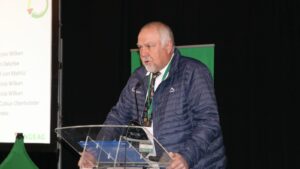
DA spokesperson on Defence, Chris Hattingh, recently stated that the SANDF has almost 200 aircraft in its hangars, of which only 16 are available on a good day.
As a result, the AGSA concluded that the decline in flying hours is indicative of the inadequate air capabilities of the DoD.
“Air defence is a critical component in modern warfare, and an ill-equipped aerial defence unit impacts the ability of the DoD to prevent breaches in territorial airspace and deter aerial attacks.”
The AGSA cites similar reasons for the South African Navy’s decline in the number of hours at sea from 7,338 in 2013/14 to 3,717 in 2024/25.
This decline is even more significant when measured against the peak number of hours at sea, which was 11,081 in the 2014/15 period.
According to the AGSA, this can be attributed to a lack of funding for mid-life upgrades for both frigates and submarines.
This involves structural repairs such as replacing rusted or degraded sections of the hull, installing new engines, and upgrading other key systems to ensure the vessel remains modern and capable.
Of South Africa’s four frigates, which are all roughly 18 years old, only the SAS Amatola has undergone a refit. However, this was only a partial upgrade in 2015.
SAS Isandlwana, on the other hand, is currently undergoing a refit, which is due for completion in early 2026. The cost of this has been set at approximately R600 million.
While the total estimated cost for all the vessels to receive a refit varies, Parliament’s Joint Standing Committee on Defence said in 2023 that R8.5 billion would be needed to upgrade all frigates and submarines “to avert a disaster.”
‘The SANDF is rudderless’

As a result of financial mismanagement and maladministration, Hattingh argues that the SANDF is in freefall and operating without direction.
Pointing to the defence review, he says it acts as a roadmap for the SANDF, asking questions such as what type of defence force is needed, what kind of equipment is necessary, and how the SANDF should modernise.
According to the defence review, implementing the first milestone would arrest the SANDF’s decline, the second would rebalance it, the third would capacitate it, the fourth would enable it to respond to challenges, and the fifth would provide it with limited war capability.
“Not a single milestone from the 2015 Defence Review was implemented, which basically means that the SANDF is rudderless,” Hattingh said.
“Once we become defenceless, we become an easy target. There’s a saying that there will always be a capable military on our soil, whether it’s our own — it’s our own choice.”
Hattingh also said that while South Africa may still have some of its defensive fleet available, that which remains is falling behind technologically.
“We’re not where we were in 2015. The world has moved on, and so has the defence industry,” he said.
“We had the research and development capacity in Denel and Armscor, but we’ve lost most of that because of state capture and cadre deployment.”
Motshekga highlighted her department’s financial woes following its budget allocation for the 2025/26 financial year. However, she attributed this to underfunding, not the mismanagement of funds.
“We have raised the issue of the underfunding of the defence force, which is a major existential threat to the department,” she told Newzroom Afrika.
“According to the defence force, if we are to be where we want to be, the underfunding is in the range of R30 billion. But the fundamental issue we are raising is that the baseline needs to be increased.”




 Loading ...
We had the research and development capacity in Denel and Armscor, but we’ve lost most of that because of state capture and cadre deployment.
As a result of financial mismanagement and maladministration, Hattingh argues that the SANDF is in freefall and operating without direction.
These 2 sentences say it all. Until we have proper leadership, nothing will change. And “proper” has nothing to do with race!