
South Africa’s richest people in 2025



South Africa’s eight richest individuals and families are worth an estimated R727.74 billion at the beginning of December 2025.
This is based on rankings from Forbes’ Real-Time Billionaires List, which tracks and estimates the net worth of the world’s known billionaires.
Luxury goods mogul Johann Rupert, former diamond magnate Nicky Oppenheimer, media mogul Koos Bekker, mining boss Patrice Motsepe and Capitec founder Michiel le Roux finish the year the same as they started as the five richest South Africans.
Retail magnate Christoffel Wiese dropped from sixth to seventh richest this year, with financial services tycoon Jannie Mouton taking this spot.
Finishing off the of South Africans on the Forbes billionaire tracker is Paul Van Zuydam from Le Creuset.
| Global rank | Name | Net worth (December 2025) | Industry | Age |
|---|---|---|---|---|
| 155 | Johann Rupert & family | R278.46 billion | Luxury goods | 75 |
| 285 | Nicky Oppenheimer & family | R179.37 billion | Diamonds | 80 |
| 1042 | Koos Bekker | R64.92 billion | Media, investments | 72 |
| 1148 | Patrice Motsepe | R59.79 billion | Mining | 63 |
| 1346 | Michiel Le Roux | R49.54 billion | Banking | 76 |
| 1859 | Jannie Mouton & family | R35.87 billion | Financial services | 78 |
| 2107 | Christoffel Wiese | R30.75 billion | Retail | 84 |
| 2212 | Paul Van Zuydam | R29.04 billion | Le Creuset | 87 |
More on South Africa’s five richest people can be found below.
Johann Rupert and family – R278.46 billion
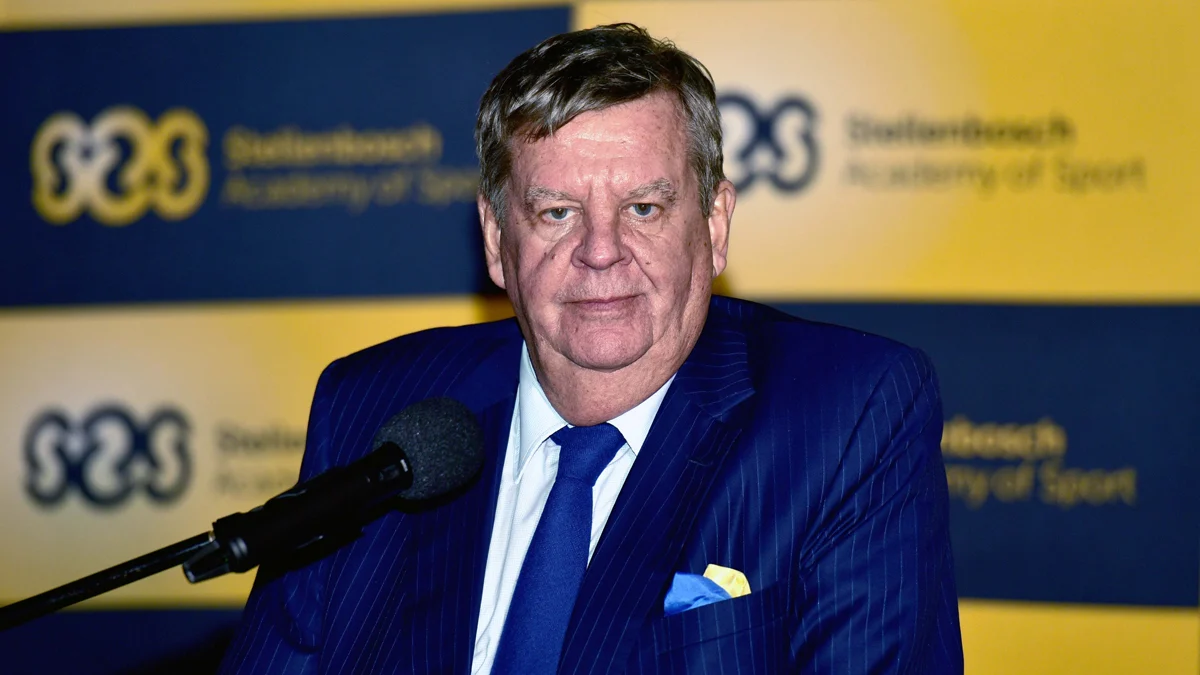
With an estimated net worth of R278.46 billion, Rupert has maintained his spot as South Africa’s richest man.
He is the second-richest in Africa, behind Aliko Dangote of Nigeria, and the 155th richest person globally.
Rupert was raised in Stellenbosch and went to Paul Roos Gymnasium before enrolling at the University of Stellenbosch, where he studied economics and company law but left university to follow a business career.
Rupert served his business apprenticeship in New York City. He then returned to South Africa in 1979 and founded Rand Merchant Bank, which he was CEO of.
He is the chairperson of Swiss luxury goods firm Compagnie Financière Richemont, best known for its brands Cartier and Montblanc.
It was formed in 1998 through a spinoff of assets owned by Rembrandt Group Limited, now Remgro Limited, which his father Anton formed in the 1940s.
He owns 7% of diversified investment firm Remgro, which he chairs, as well as 27% of Reinet, an investment holding company based in Luxembourg.
Nicky Oppenheimer and family – R179.37 billion

Nicky Oppenheimer, heir to South Africa’s Oppenheimer mining dynasty, built his family’s fortune primarily through De Beers, the global diamond giant founded by his grandfather Ernest Oppenheimer.
As former De Beers chairman and a key figure in the Anglo American group, he helped oversee decades of dominance in the diamond trade.
After selling the family’s De Beers stake to Anglo American in 2012, the Oppenheimers diversified into private equity, aviation, and conservation-focused investments, sustaining their multibillion-dollar wealth.
Oppenheimer and his family sold their remaining 40% stake in De Beers to Anglo American in 2011–2012, receiving about $5.1 billion in cash.
Because of that sale, the Oppenheimer family’s more than 80-year direct control of De Beers came to an end, their diamond dynasty transformed into broader investments and interests beyond the diamond business.
Koos Bekker – R64.92 billion
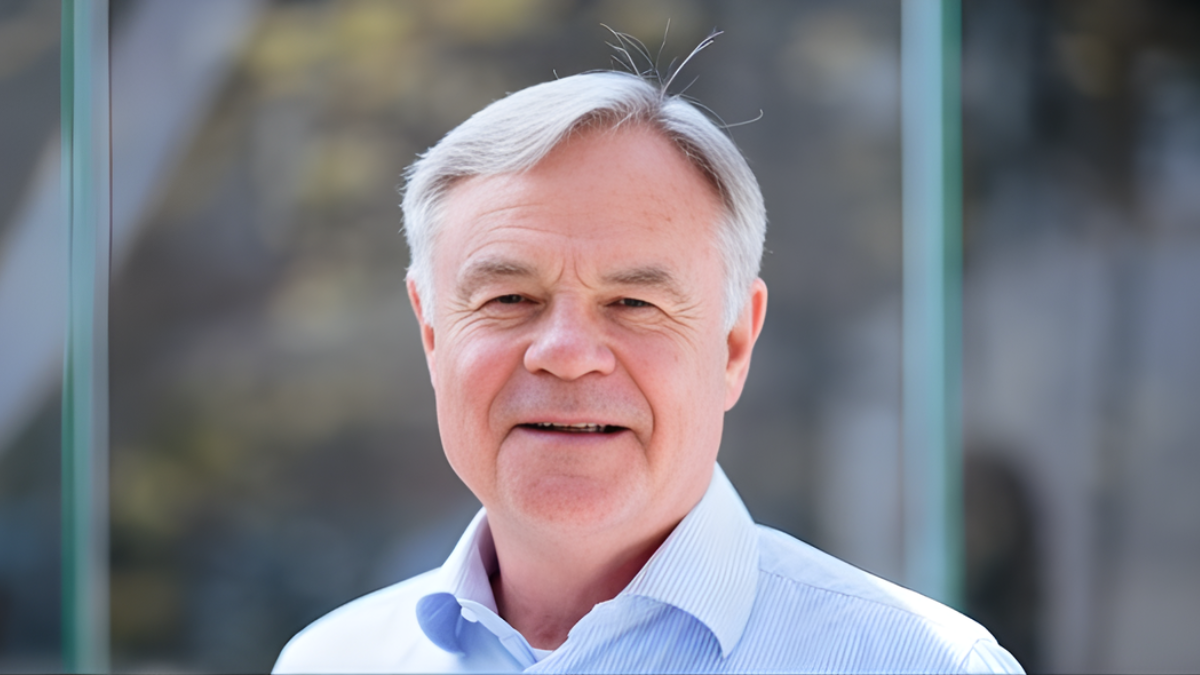
Bekker, cofounder of M-Net/MultiChoice in 1985, the first pay-television service outside the United States, is renowned for transforming Naspers from a South African newspaper publisher into a global technology and media powerhouse.
Under his leadership, Naspers became Africa’s most valuable company, expanding into online retail, media, and international investments.
Bekker’s most notable achievement was the 2001 investment in Chinese social media and gaming giant Tencent, now worth billions and considered one of the most successful corporate investments in history.
In 1999, he made the unconventional decision to forego salary and bonuses, accepting compensation through stock options, aligning his personal wealth with Naspers’ success.
Bekker stepped down as CEO in 2019 and now serves as chairman.
Beyond Naspers, he owns wine estates like Babylonstoren in Stellenbosch and properties abroad, including a luxury estate in Somerset, UK, cementing his reputation as a visionary investor with a global outlook.
Patrice Motsepe – R59.79 billion

Motsepe built his fortune through strategic investments in the mining industry.
After earning a law degree, he initially practiced as a lawyer but soon shifted focus to mining, founding African Rainbow Minerals (ARM) in 1997.
Leveraging Black Economic Empowerment policies post-apartheid, Motsepe acquired stakes in gold, platinum, and other mineral operations.
He later expanded into diversified mining assets, including iron ore, coal, and ferrous metals, often through partnerships and strategic acquisitions.
Motsepe also invested in finance, agriculture, football and more, further growing his wealth.
He became the first black South African to appear on the Forbes billionaire list, cementing his status as one of Africa’s richest individuals.
Michiel le Roux – R49.54 billion
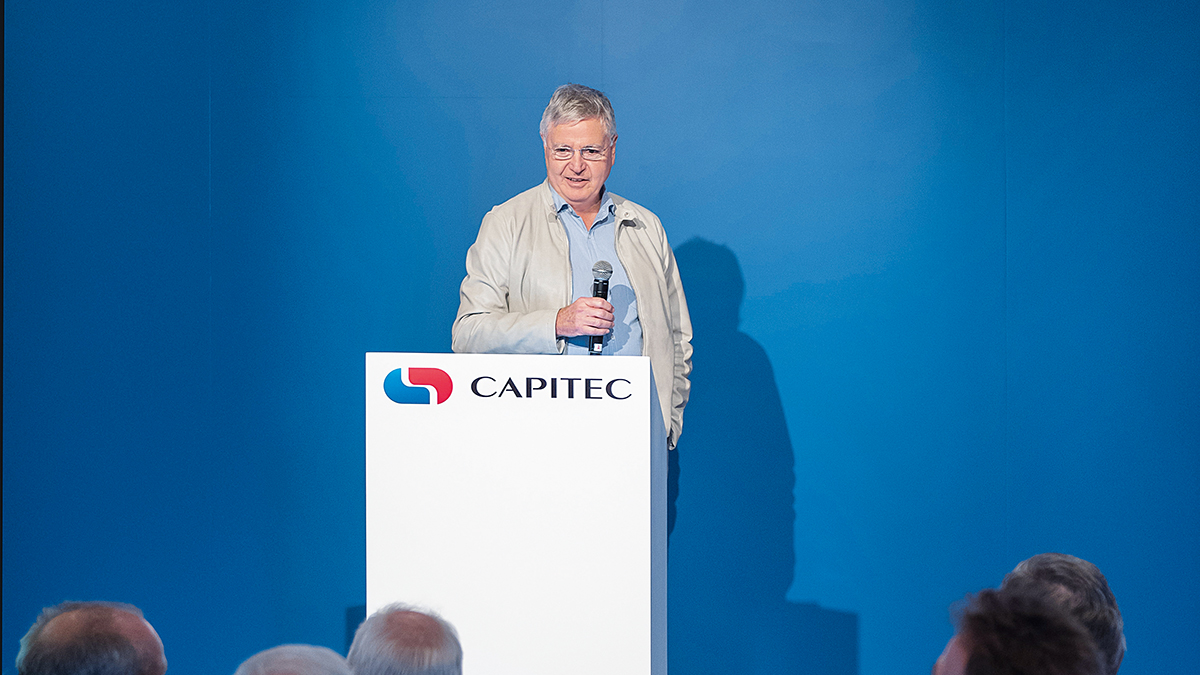
Le Roux made his fortune by founding Capitec Bank in 2001. Originally working in the banking sector, he saw an opportunity to create a simple, low-cost banking model aimed at underserved clients.
Under Le Roux’s leadership, the bank grew from a small startup into one of South Africa’s largest retail banks, achieving strong profitability and high market valuations.
He later stepped back from daily management but retained significant ownership stakes, which appreciated dramatically as Capitec expanded.



 Loading ...
All outstanding individuals, do agree that BEE has been an artificial step up onto the wealth ladder. Admire the individuals who started their own businesses without the help of inheritances or BEE!