
South Africa can kiss democracy goodbye unless it grows its economy



South Africa has reached a point where “we are seeing the rise of gangsters dressed in Gucci outside the constitutional court, eating the flesh and blood of our democracy.”
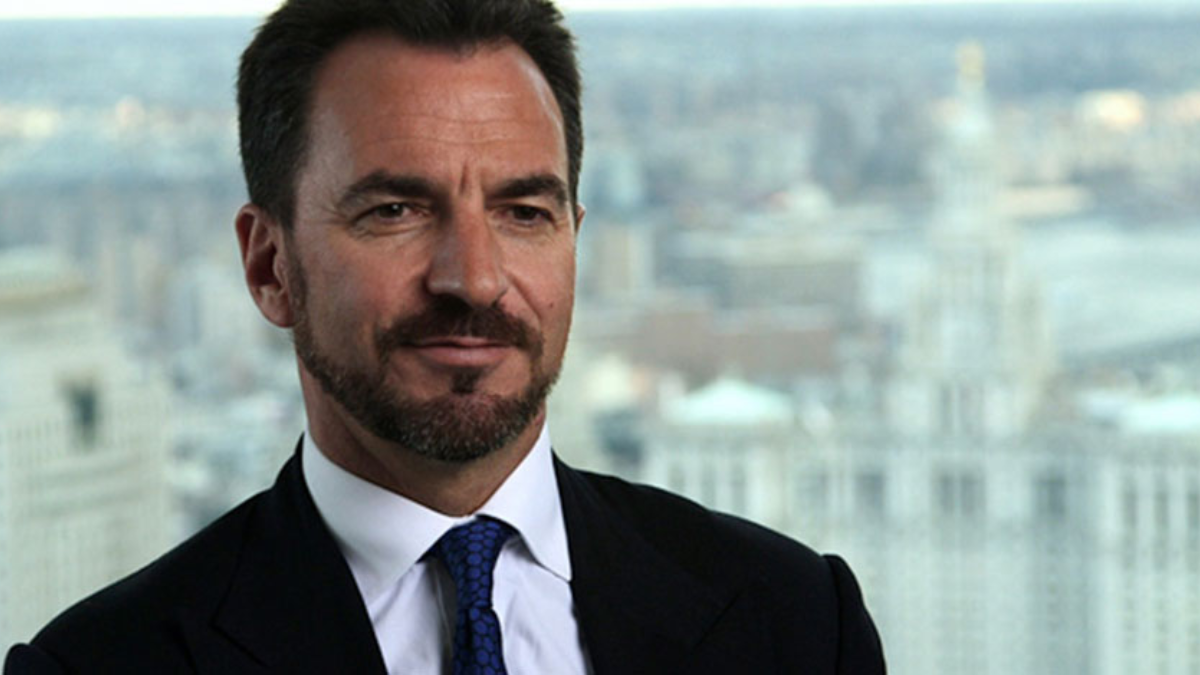
This is according to Colin Coleman, former Goldman Sachs Sub-Saharan Africa CEO and Chairman of the Youth Employment Service, who was speaking in an interview with SMWX.
Coleman said that in 2022, he wrote an article warning that if South Africa does not open up its economy to all, it can “kiss democracy goodbye.”
He noted that unless South Africa succeeds in growing its economy and providing opportunities, it will create space for rising criminal elements and the merging of political and criminal networks.
“I wrote the Two Decades of Freedom report in 2013 when I was at Goldman Sachs, and that showed that economic growth, up until that point, was on average 3.3%, from 1994 to 2013,” he said.
“The record since that is from 2014 till now, we’ve grown at 1%. Our overall GDP of $400 billion today is the same as it was in 2011.”
The Two Decades of Freedom Report credited the government with the rise of a black middle-class, wage growth and the extension of welfare services to the poor.
However, it already raised the problem of unemployment, expressing concern over a 25% unemployment rate, the factor that Coleman believes will bring down democracy.
South Africa’s dollarised GDP has not grown in 15 years, Coleman said. He added that South Africa’s population growth is roughly 1.5%. “So therefore, the country is getting poorer,” he said.
South Africa’s expanded unemployment rate of 43%, coupled with inequality and racial tension, creates a fundamental problem.
Unemployment leads to criminalisation of the state

“The unemployed and the marginalised are not stupid. They’re very alive to their circumstance,” he said.
Suffering under food poverty, he said, those who have been marginalised from the formal economy will look for economic opportunity elsewhere, from the informal economy to criminal activity.
The breaking down of state institutions during the years that Jacob Zuma was president and state capture was taking place further created the space for criminal networks to imbue the ANC, Coleman said.
The breakdown of the rule of law then resulted in a lack of consequences for criminals. This then enters the political realm, as it has, Coleman warns.
“If you’re outside the economic system and you don’t have the skills but you are politically savvy, you can see that the political channel provides the mechanism for you to find economic opportunity,” he said.
In 2022, Coleman warned that the early signs of this were present, but with the recent exposure of corruption and political interference in the criminal justice system, it is clear that South Africa’s democracy is collapsing.
The former CEO was referring to the current Madlanga Commission of Inquiry and parliamentary Ad Hoc Committee investigating police corruption and political interference in the criminal justice system.
“There is now evidence that there has been extensive criminalisation of the state, evidence that gangsterism is feeding off public interest and public goods, and that this has become highly organised and infested our state institutions.”
While some may believe that South Africa has hit the bottom and is slowly turning around, Coleman believes this may be a false bottom, and the country has further to slide.
“With South Africa being released from grey-listing, the upgrade by rating agencies from three notches below investment grade to two notches below investment grade, the turnaround at Eskom, the signs of a turnaround at Transnet, the Madlanga Commission,” he said.
South Africa has further to slide
“These are signs of success,” he acknowledged. However.Coleman is concerned that the fundamentals are not sufficiently robust.
“In order for us to absorb the unemployed every year, we need growth of 3%. That’s to maintain our unemployment rate. We don’t have this level of growth.”
Because of this, he explained, the foundations for the unemployment problem to fester criminality and gansterism is not going to be turned around.
Coleman said South Africa needs to focus on two things: the application of the rule of law and an upgrade of the country’s economic policies.
This makes the Madlanga Commission of Inquiry particularly important. Coleman calls for a complete overhaul of the criminal justice system, including the National Prosecuting Authority (NPA), and more accountable leadership.
This also makes the success of Operation Vulindlela particularly important. Coleman said that South Africa desperately needs to cut spending on projects that are not effective.
“The South Africa Sector Education and Training Authorities (SETAs) for example, that’s R28 billion that’s going into a project many people think is not producing results.”
These bodies were envisioned to be the bridge between education and employment, but have been under criticism lately for corruption and mismanagement allegations.









 Loading ...