
The popular South African restaurant chain that disappeared



South African restaurant chain, Juicy Lucy, first opened its doors in 1973, and from then on it became a household name, opening outlets across the country.
The franchise was known for its freshly squeezed juices and legendary cheeza – a piece of rye bread topped with a mixture of cheddar cheese, tangy mayonnaise and an optional ingredient such as mushrooms or salami.
According to the Franchise Association of South Africa, Juicy Lucy was ahead of its time, a precursor to the health food craze and one of South Africa’s first franchise restaurants.
The restaurant chain fell into a niche, health-centred convenience food category that led to its popularity and growth throughout the 1970s and 1980s.
Its menu staples were smoothies and juices, sandwiches and burgers and freshly brewed speciality coffee.
The Juicy Lucy franchises prided themselves on making sure all of their products were “naturally good and preservative-free”, focusing on fresh ingredients.
However, the restaurant began shutting its stores in the 90s and 2000s. In an effort to combat this decline, in 2009 the brand was reinvented with a new logo, image and menu.
By 2009, there were 30 Juicy Lucy restaurants nationwide. At this point, the growth of the franchise appeared promising.
Trying to keep up with the times, the franchise tried to make the restaurants more open and inviting, moving the service counter to the front and changing the restaurant’s colours and textures.
But the brand held on to its core principles and staple menu items. “The tone of our brand is personable, not pretentious. Warm, rather than cold or distant,” said then-director of Java Brands Craig MacKenzie, which owned Juicy Lucy in 2009.
The first revamped outlets were achieving growth of between 25 and 30% in 2009.
The restaurant did not just appeal to a sophisticated, younger market, as other health convenience outlets began to do at the time, but appealed to the whole family: an underserved market for healthy foods.
Ahead of its time
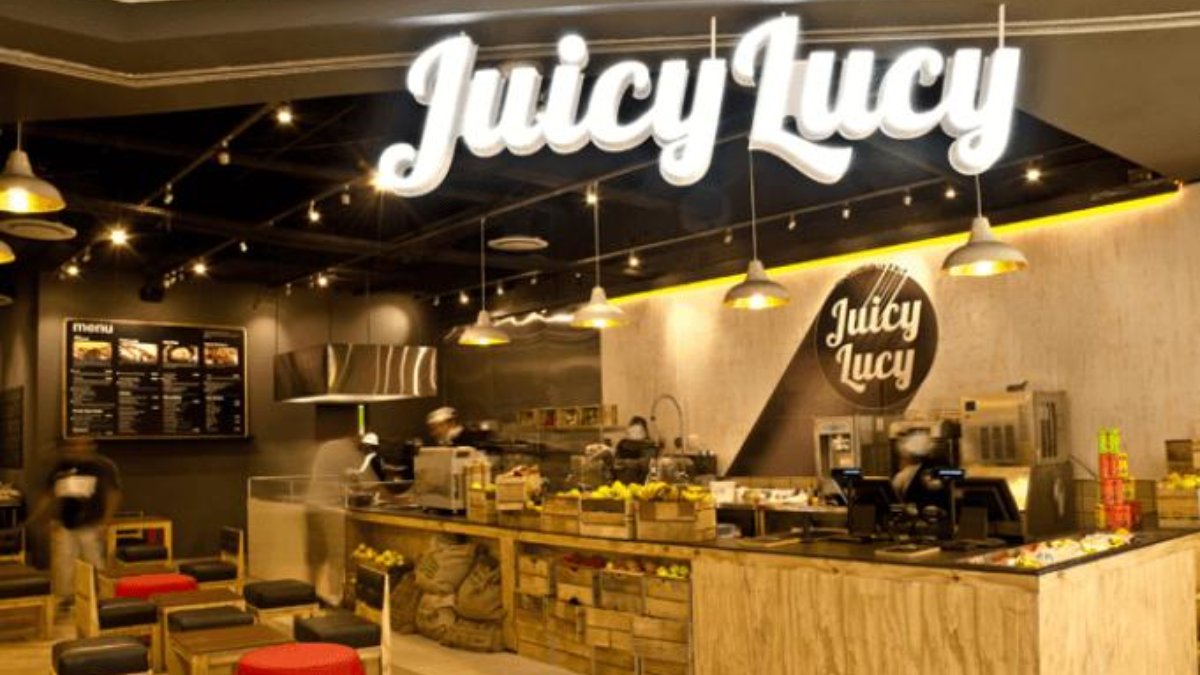
Mackenzie added on the restaurant’s revitalisation that “consumers are becoming more conscious of their choices and more educated and discerning.”
He added that, “while quick meals remain the order of the day in a fast-paced world, there’s a definite move away from greasy processed foods towards wholesome nutritional meals.”
Despite the owner’s optimism, the brand continued to lose popularity. By 2011, when Famous Brands acquired the franchise for R31 million, there were only 18 stores left.
Darren Hele, then-Chief Operating Officer of Famous Brands, still believed the franchise had potential.
“Whilst it has lost its way over time, the potential to restore this offering to its former status is evident, particularly given the current shift by consumers to health-conscious eating,” Hele said upon acquiring the brand.
Then-CEO Kevin Hedderdick said that the acquisition was a “low risk” business venture. The company acquired Milky Lane alongside Juicy Lucy.
He said that the “well-loved niche South African brand” filled a gap in the company’s portfolio. Famous Brands was looking for a specialist, stand-alone health food-focused brand.
However, the number of financially viable outlets continued to rapidly decline. By 2014, there were only three domestic outlets left and one restaurant in Gaborone, Botswana.
By 2015, there were only two domestic outlets left. Famous Brands exited its ownership of the franchise in 2017, when there was only one remaining restaurant.
The company found that “despite remedial efforts, Juicy Lucy offered no potential for growth under our stewardship.”
The last remaining store is the Juicy Lucy in the Kolonnade Mall, Pretoria. The restaurant continues to serve its iconic menu items such as its cheezas, freshly squeezed juices and smoothies.










 Loading ...
Just the other day I was telling a friend about Juicy Lucy but I couldn’t remember where it was in Pretoria, Kolonnade. I loved that Juicy Lucy when I lived in Pretoria – I’m now in Polokwane. But I wish they would come back.