
The man who scored South Africa’s most iconic goal



Very few South Africans can forget Simphiwe “Shabba” Tshabalala’s opening goal in the 2010 FIFA World Cup — that powerful left-footed strike that rocked FNB Stadium and had the whole country on its feet.
It wasn’t just a goal; it was a moment that brought the host nation together, full of energy, pride, and joy, on the world’s biggest stage.
Born on 25 September 1984 in Phiri, Soweto, Tshabalala’s journey to stardom began on dusty township streets.
Like many South African kids, he honed his talent barefoot, with homemade balls and endless passion. Football became both his joy and his escape.
He began with local teams Phiri Movers and Phiri Arsenal, before joining the Kaizer Chiefs youth setup.
When he was released as a teenager, he joined Alexandra United, and later Free State Stars, forcing his way back into the top flight through sheer determination and consistency.
By 2007, Kaizer Chiefs came calling again. This time, he stayed.
Over the next decade, he made close to 300 appearances for the club, helping Chiefs win league and cup titles, while becoming one of the most admired players in South African football.
Preparation meets destiny
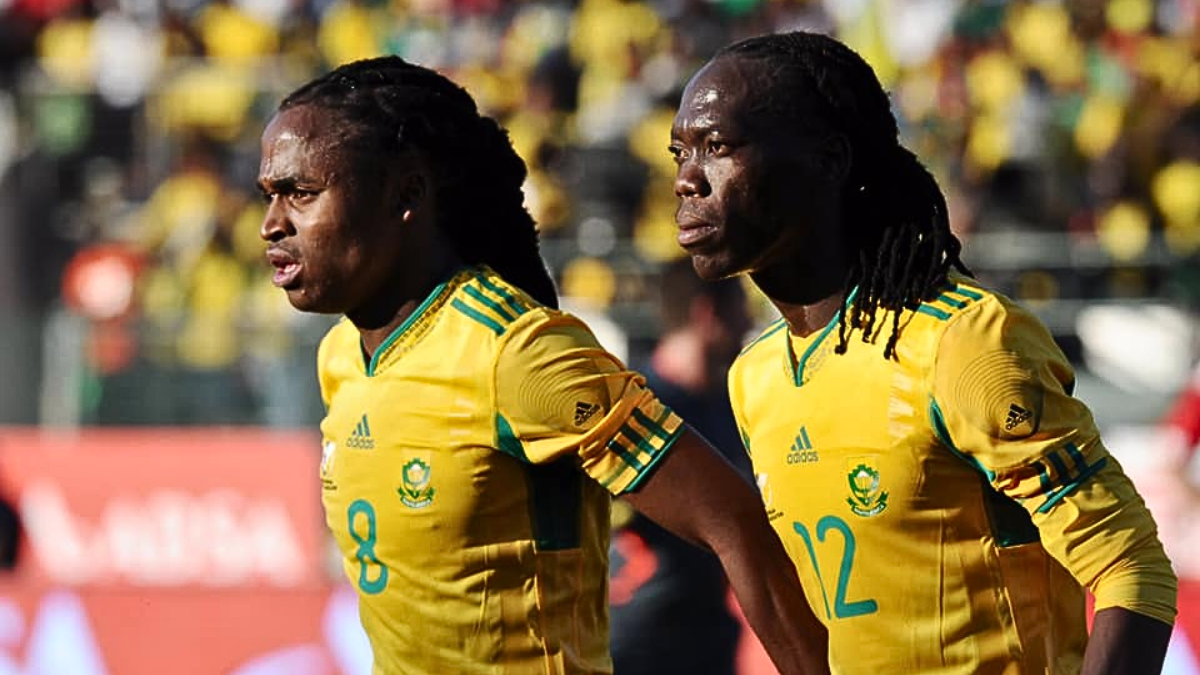
When the 2010 FIFA World Cup arrived, the first ever held on African soil, Tshabalala was in his prime. “I was well prepared,” he recalled with FIFA. “I was in the right frame of mind.”
On the day of the opening game against Mexico, “I have to admit, I got emotional when I witnessed that beautiful picture — when you’re on the bus approaching the stadium and you see the streets come to a standstill.”
“It was colourful. Everyone was wearing bright colors — the national team colors, some even wearing the Mexican colors as well.”
By the time he stepped onto the pitch against Mexico on 11 June 2010, he already felt part of something historic.
“Singing the national anthem with teary eyes,” he said, “that will always be one of the highlights of the World Cup.”
Then came the 55th minute — the moment etched forever in the hearts of South Africans.
“We gained possession… it was two, three touches and then we were out,” Tshabalala explained.
“As soon as Kagisho Dikgacoi received the ball, I was already on my bike from the left-hand side,” said Tshabalala.
“The first touch was good. My intention at first was to just lob the ball over, but on second thought, I just unleashed that powerful shot. The timing was good, even the posture.”
When the ball hit the top corner of the net, the stadium exploded.
“Goal Bafana Bafana! Goal for South Africa! Goal for all Africa!” yelled the commentator.
Tshabalala said that “when I saw the ball going in, I got into my zone,” he remembered. “I was reminiscing from where the journey began — why I wanted this career, why I wanted this dream.”
“It was the reward for my perseverance, for all the obstacles one had to endure to be where I was at that moment.”
Then came the famous dance: perfectly choreographed team celebration that captured the world’s imagination.
“It was well coordinated,” Tshabalala laughed. “We knew that moment would come. We had practiced the dance moves in training, and up until that moment, we were ready to show off.”
Unity, joy, and hope – Tshabalala
The footballer said that goal did more than just put South Africa ahead — it unified the nation.
“It brought unity, it brought joy to everyone,” Tshabalala told FIFA.
“It’s a goal that will always be the best, in a sense that it made everyone happy — regardless of race. One human race celebrating, hugging each other, rejoicing. At that moment, whoever had problems, they left their problems at home.”
He knows how much that goal meant to ordinary people, especially to young South Africans who saw themselves in him. “It gave a lot of youngsters hope,” he said.
“Someone that looks like us, someone who comes from a background that we also come from, someone who had challenges like us — scored the most amazing goal at the big stage when the whole world was watching.”
Inspiring the next generation

Tshabalala later played for Turkish Club Erzurumspor and then moved to AmaZulu FC in 2020.
He retired from professional football on August 9, 2021, after his contract with AmaZulu FC ended.
Even after his international career, Tshabalala’s focus turned to the next generation, as well as giving back to the community.
In the same FIFA interview, he spoke passionately about nurturing African football talent.
“If we put all the resources and investment into development in Africa, I’m too optimistic that there’ll be massive improvement. We’ve got the talent, we’ve got the skill — it comes naturally, but it needs to be nurtured.”
He now mentors young players, emphasizing discipline, values, and education. “I try to instill important values in youngsters at an early age,” he said.
“By the time they get to proper development structures, they’ve got a head start. Those taking over won’t be starting from scratch.”
He believes international exposure is vital too. “It’s important to export youngsters to the best countries in Europe where they can get exposure, learn other cultures and philosophies, and combine them with African flair.
The national teams will be stronger, and in that case, I see Africa competing for — and winning — the World Cup.”















 Loading ...