
Climate transition finance failing to protect workers and communities



A recent report by ActionAid International reveals a stark shortfall in climate finance dedicated to the just transition.
This is the measure of shifting away from fossil-fuel-dependent industries in a way that supports workers, communities, and vulnerable groups.
Titled Climate Finance for Just Transition: How the Finance Flows, the report finds that only 2.8 % of multilateral mitigation finance has been directed towards projects that can be considered just transition initiatives.
The findings raise alarm bells for countries like South Africa, where the twin imperatives of decarbonisation and social equity collide.
In terms of project numbers, fewer than one in 50 projects financed by the two major multilateral climate funds, the Green Climate Fund (GCF) and the Climate Investment Funds (CIF), met the criteria of supporting workers, women and communities meaningfully.
ActionAid warns that this is “jaw-droppingly under-funded,” especially given that industrial transitions will hit workers and communities hardest if foreseen pathways are not in place.
What is a “just transition”?

In essence, a just transition means decarbonising and reshaping the economy in ways that prioritise social justice.
This is through protecting jobs, retraining workers, supporting local communities and ensuring that women, marginalised groups and front-line communities are included in the planning and benefits.
The report emphasises that climate action must go beyond technology and emissions: “people’s priorities are front and centre of every climate response.”
South Africa is a country deeply entwined with the fossil-fuel economy. Coal mining and coal-fired power generation have underpinned large parts of the energy system, jobs, regional economies and infrastructure.
At the same time, South Africa faces severe climate risks such droughts, changing rainfall patterns, heat extremes and is under major pressures to transition to a low-carbon future.
We account for 1.1% and 40% of global and African emissions, respectively. A just transition is therefore not a luxury but a necessity.
However, the just transition experiment following the closure of Komati Power Station in Mpumalanga was termed a “disaster” by several stakeholders, including Gwede Mantashe, minister of Mineral and Petroleum Resources.
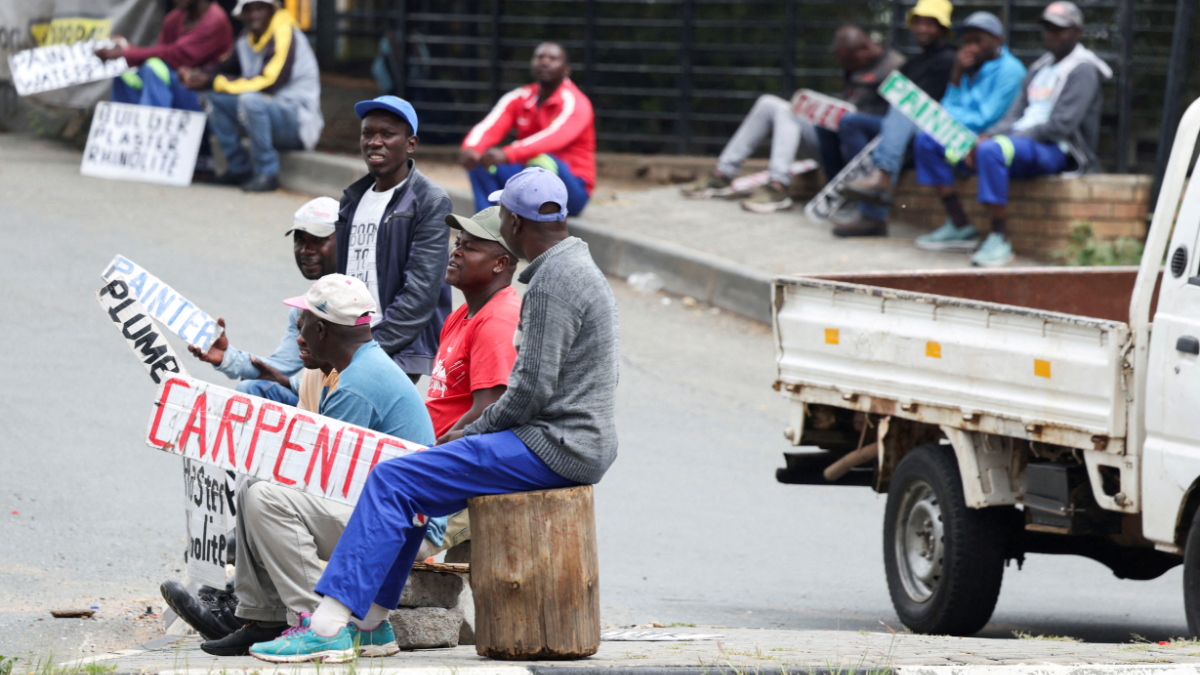
It resulted in the closure of several businesses that supplied the power station with goods and services, leading to massive job losses not only in the plant but in the supply chain entities.
The ActionAid report signals that globally, much of the finance labelled “climate” is not genuinely supporting the people‐side of transition – workers, communities, re-skilling, regionally equitable economic shifts.
Implications for South Africa
- Under-resourcing of people-centred transition:
If only 2.8 % of mitigation funding is going to just transition globally, then South Africa is likely to struggle to mobilise funds specifically targeted at workers in coal regions, communities in mining towns and the affected supply-chains.
- Competition for finite funds:
Climate finance is still limited and contested, with many things that South Africa must contend with.
This includes domestic budget constraints, debt burdens and other development priorities, like health, education and infrastructure, even as it steers a transition into a carbon-neutral future.
- Need for inward social safeguards:
The report emphasises that just transition requires meaningful participation of workers, women and communities.
South Africa’s transition plans must embed these safeguards rather than treat them as after‐thoughts.
The Komati transition was criticised for inadequate communication and consultation of stakeholders and local communities, and benefits for but a few elite.
- Risk of backlash or slowed progress:
If communities feel left behind, or if jobs vanish without alternatives, the political economy can turn against climate reform. In South Africa’s context, socio-economic inequities are already high.
Strategic issues for South Africa
- Directing finance to transition hotspots:
Regions in South Africa that depend on coal mining, coal-powered generation and related supply‐chains must be prioritised for transition finance.
That means jobs-redeployment funds, retraining programmes, new industries (renewables, battery manufacturing, green hydrogen) targeted at those geographies and community investment.
- Ensuring workers’ rights and community agency:
Transition finance must include mechanisms for worker representation, social dialogue, gender equity and community inclusion.
Projects should be evaluated not just by carbon savings, but by the extent to which they serve people.
- Mobilising domestic and international sources:
Domestic South African resources (public budgets, development finance institutions, private sector) must align with international climate finance flows.
Given that global flows of just-transition finance are minimal, South Africa may need to advocate strongly at climate forums for more dedicated grant funding, concessional loans and technical assistance.
- Avoiding stranded labour and assets:
Transition planning must address the phase-out timelines for coal plants, mines and related assets, and provide clear pathways for alternative livelihoods.
The report warns that if transition efforts ignore the human dimension, the journey will take longer.
- Monitoring, evaluation and transparency:
South Africa should incorporate tracking mechanisms to ensure climate finance labelled for transition truly benefits workers and communities, not a small handful of elite.
A moment of opportunity

For South Africa, the challenge of transition is immense, but so too is the opportunity to leapfrog into a low-carbon economy that is more just, equitable and resilient.
Internationally, the global finance architecture for just transition remains weak but that very gap opens space for South Africa to assert its needs, shape funding modalities and partner with development banks, multilateral funds and private finance to craft tailored solutions.
At upcoming global climate forums, such as COP 30, and in national policy processes, South Africa should:
- Press for dedicated just‐transition windows within multilateral climate funds;
- Insist on social justice criteria; and
- Align its Nationally Determined Contribution (NDC) and national transition plans with the human.
The ActionAid report lays bare a stark truth: global climate finance is overwhelmingly focused on mitigation technologies and emissions metrics — but largely neglects the workers, communities and social dynamics of transition.
For South Africa, to make a meaningful shift from its fossil-fuel legacy to a just, green economy, must be front and centre.
Without the human dimension being at the centre of the just transition, even the best technical plans risk falling short, generating new inequalities and resistance rather than shaping inclusive transformation.
- Dr Enock Sithole is the executive director of the Institute for Climate Change Communication.












 Loading ...