
Eskom still spending billions on diesel to keep the lights on



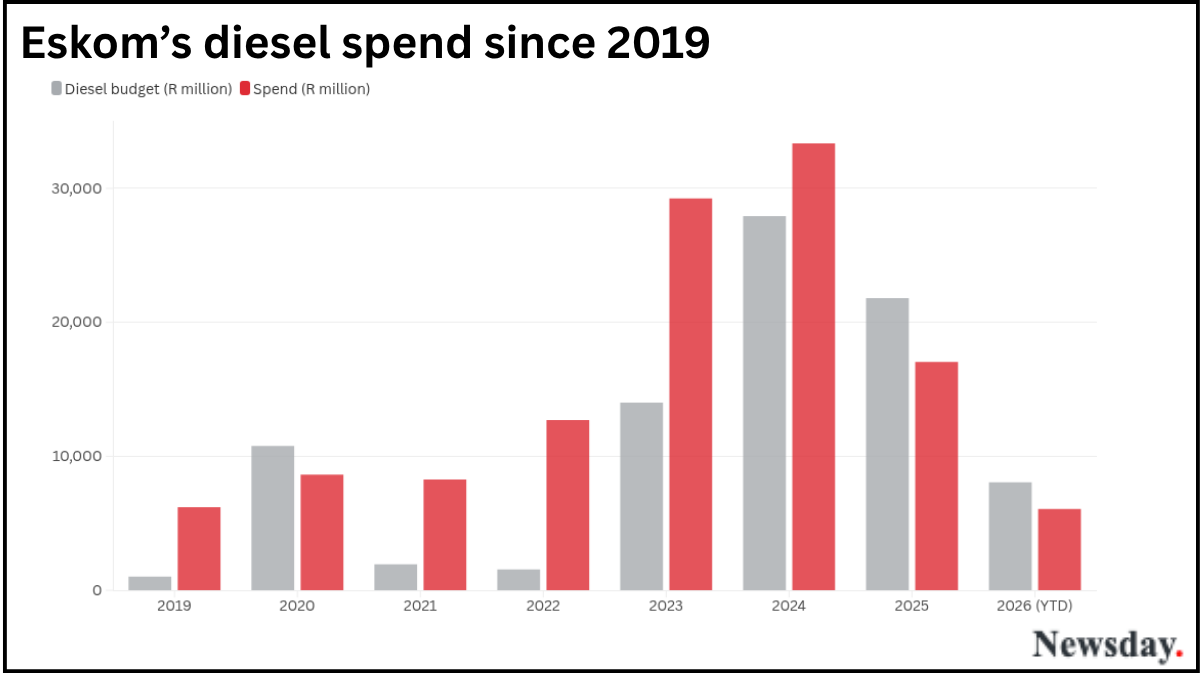
Eskom has spent R6 billion on diesel in the 2025/2026 financial year to date, a feat that the company insists is a significant achievement.
The state-owned utility said that misinformation is being spread, exaggerating its diesel usage, despite consistent efforts to share data publicly.
Eskom cited a significant reduction in diesel spending, dropping from R33 billion in the 2023/2024 financial year to R17 billion in the 2024/2025 financial year, marking the first time the budget has been met since 2020.
The hefty diesel spend is due to Eskom’s use of Open-Cycle gas Turbines (OCGT). These turbines were designed to be used during peak demand periods to maintain system stability, ensure supply and stave off loadshedding.
According to MD of EE Business Intelligence, Chris Yelland, OCGTs serve a vital function for the grid, but they should not make up a significant part of the total load factor.
“The Open Cycle Gas Turbines form a very important role as what we call peaking plants, in other words they are intended to operate for relatively short periods of time, during peak periods,” Yelland told Newsday.
“This is mainly in winter, when all the peak periods are pronounced because of the weather. That is their purpose. They are too expensive to run for extended periods of time,” he said.
However, South Africa’s OCGT fleet has run during extended periods of time in the recent past to make up for the poor performance of Eskom’s coal fleet.
“There were times when they were running eight hours a day or more,” Yelland said. “And that is completely expensive, and it’s the fuel that costs a lot of money.”
Diesel costs not going anywhere
Eskom insists that it is using diesel “strategically and prudently” and that it has shown significant reductions in diesel-fired generation.
In the 2024/2024 financial year, OCGTs made up over 10% of the total load factor. The National Energy Regulator of South Africa has set 1% as the standard for normal operation, with permission to reach up to 6% if needed.
Nersa’s regulations allow for Eskom to transfer the costs of diesel onto the consumer, provided Eskom has only used the OCGTs for less than 6%.
Whenever Eskom exceeds this, as it has done for several years, Eskom must pay for the diesel out of its own pocket.
“Nersa is saying, that’s not how you should be operating, and if you;re doing this, it;s likely because of your own failings. You’re running like that because your other plants are performing so badly,” Yelland explained.
Eskom’s OCGTs have reached up to 30, even 40 per cent, during peak loadshedding periods. “It’s just too expensive for that, but they do that because the cost of load shedding is even more for the economy,” he explained.
For the financial year to date, Eskom says the load factor for OCGTs has averaged 5.84%, and the diesel spend of R6 billion is well below its budgeted R8 billion.
It is unlikely that this high cost will disappear anytime soon, even as Eskom has shown vast improvements in its operations.
No other options
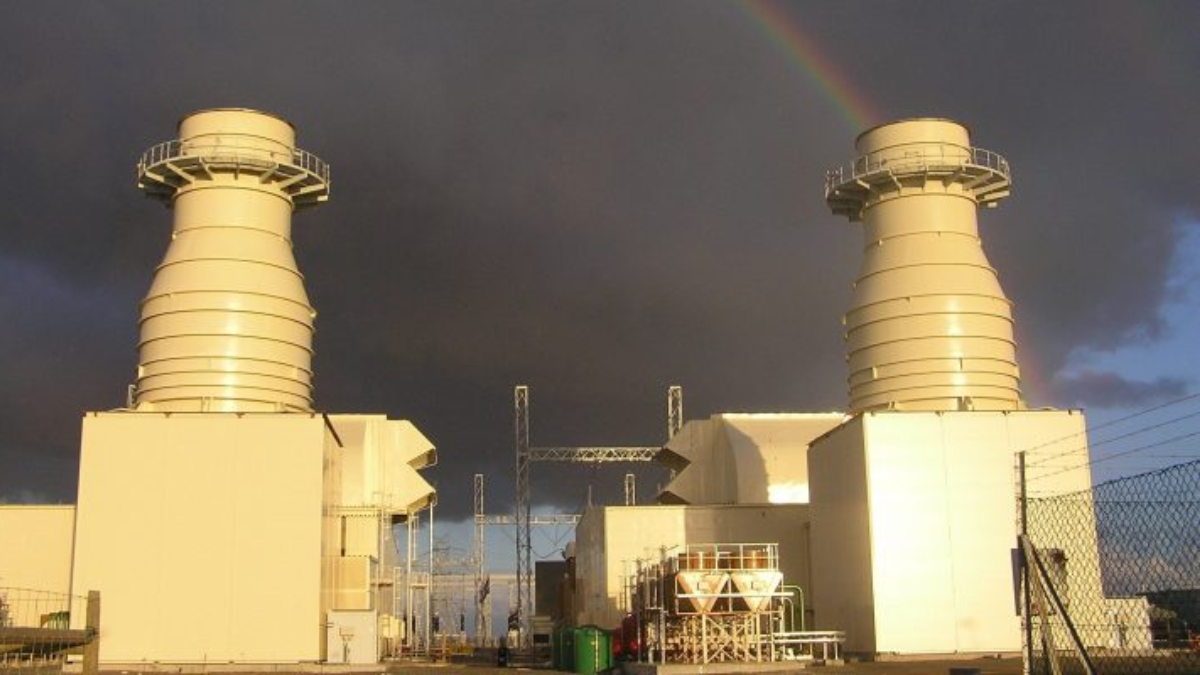
Yelland says he believes that since Eskom has been able to eradicate loadshedding, and improve the Energy Availability factor to 65%, it is fully capable of adhering to an OCGT load factor of below 6% for the financial year ahead.
But the OCGTs fulfil an important role and are not going anywhere. They will remain a hefty item on Eskom’s balance sheet for the foreseeable future.
“There has been talk for many years about converting the OCGTs to run on gas, because gas is cheaper and cleaner, and then you could use it at a higher load factor”, said Yelland.
“That’s all fine, the trouble is that we don’t have any gas in South Africa, especially down in Ankerlig and Gariep and so on where these gas turbines are” he said.
Yelland said the plants could be quite easily converted to run on gas, as they were originally intended before being modified to run on diesel, but the only option for obtaining the gas would be importing it.
This gas would have to be transported as Liquefied Natural Gas (LNG) and then converted to gas when it arrives in South Africa.
LNG also, however, comes with a high price tag, and South Africa doesn’t have the import infrastructure to support this venture.









 Loading ...
And they’re trying to make out they’re doing SO well without De Ruyter!!