
South Africa must change the way the President is elected



Former president Thabo Mbeki argues that the way in which South Africa elects its executive leader is wrong, as it does not consider how capable they are.
Mbeki was delivering the keynote address at the launch of the National Dialogue in the Eastern Cape over the weekend, hosted by Nelson Mandela University.
Currently, the president is elected in the National Assembly following the outcome of the general elections.
The house, proportionate in representation to the outcome of the elections and comprising 400 seats, votes on individuals proposed by members of the National Assembly.
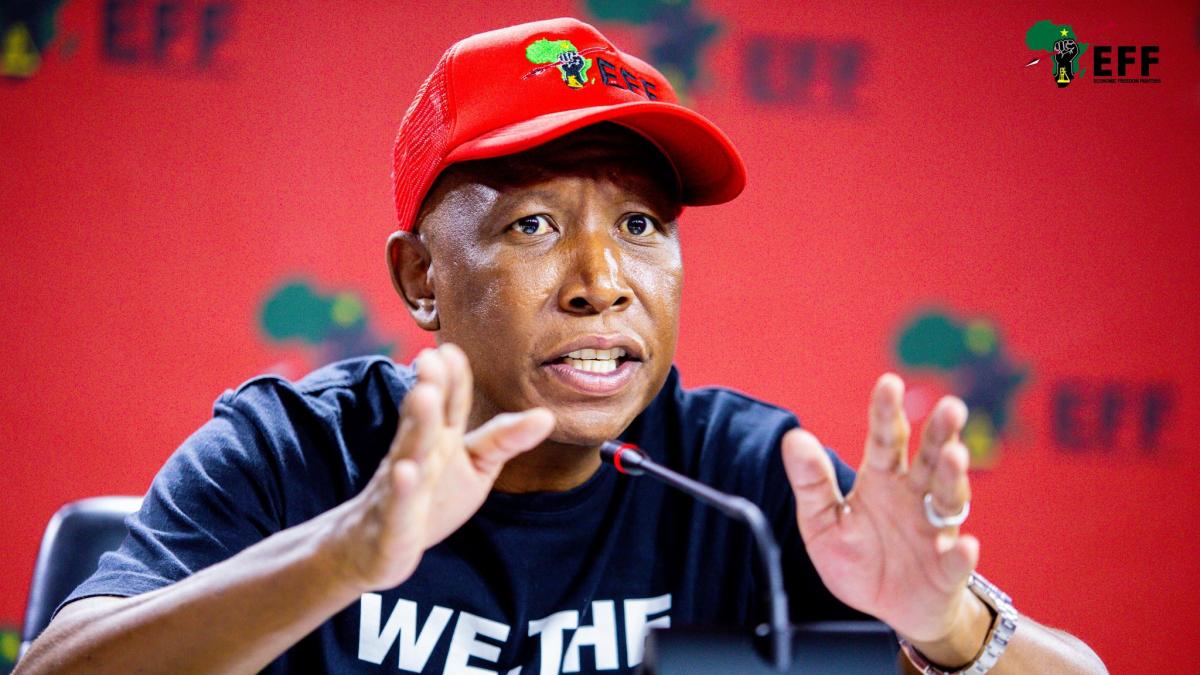
For instance, following the outcome of the 2024 elections, Members of Parliament nominated African National Congress (ANC) leader Cyril Ramaphosa and Economic Freedom Fighters (EFF) president Julius Malema.
Ramaphosa won by a significant margin, receiving 283 votes as opposed to Malema’s 44. Not every MP voted.
However, Mbeki disagrees with this method of electing a national president, instead arguing that South Africans should be able to elect their leader directly.
“The manner in which we are electing the president is wrong,” Mbeki said. The former national leader was referring to a Constitutional Court judgment regarding whether the Public Protector’s decisions are binding.
The judgment raised questions about the president’s responsibilities, which, upon examination, also call into question the soundness of the election process, according to Mbeki.
He argued that at no point does the election process in the National Assembly determine whether the president is competent enough to assume office.
“That question is never asked. It’s never asked. We don’t know whether this person is a fit and proper person to take on these responsibilities.”
“When Parliament said I must become president, they had not the slightest clue what I was capable of doing,” Mbeki told the audience, which erupted in laughter. “And they never asked.”
The former president said that this is a point that must be raised “by the intelligentsia” during the National Dialogue.
“We must make sure that whoever becomes president is competent enough to carry out all the tasks,” he added.
The judgment Mbeki was referring to is Economic Freedom Fighters v Speaker of the National Assembly and Others [2016], presided over by former Chief Justice Mogoeng Mogoeng.
Among the responsibilities of the president listed in the judgment are acting as the head of state, upholding, defending, and respecting the Constitution, promoting national unity and the advancement of the Republic, and maintaining order, peace, and security.
Electoral reform needed

The Electoral Reform Consultation Panel (ERCP) recently recommended an overhaul of South Africa’s electoral system, which, they argue, does not hold leaders to account.
This was then tabled by Democratic Alliance MP Leon Schreiber in Parliament on 18 September 2025, which he was mandated to do by the Elcetoral Amendment Act.
According to the researchers, South Africa’s electoral system has been lacking in accountability since 1994, and several working groups have recommended reforming the system.
When compared to other system options in accountability, the panel said that the current system “performs the weakest and presents limited advantages that the other options considered do not offer.”
South Africa was found to be an “outlier” compared to other countries using a proportional representation system.
This is because South Africa uses the largest constituencies and has half of the seats in the National Assembly allocated to a compensatory tier.
Researchers argue that it is not necessary to have both of these measures in place to ensure proportionality, and the combination of the two has brought significant distance between voters and their representatives.
This is compounded by the fact that representatives are nominated by political parties in a “closed list system”, meaning voters have no say over the party’s candidates.
Two electoral system options have been recommended to address these issues.
The first option is to introduce smaller, multi-member constituencies with 300 constituency seats.
Instead of all 400 NA seats being allocated through large provincial regions, 300 representatives would be directly elected, and the remaining 100 seats would be compensatory.
Alternatively, the panel recommended that the country be divided into 200 single-member constituencies, with one candidate elected per district. This is similar to the UK and the US.
The remaining 200 seats would then be allocated through a national compensatory list. This would create the strongest link between voters and representatives.
his system would, however, require an extensive process to determine the boundaries of constituencies, and these would need to be adjusted for every election, as populations shift.
It is worth noting that the the ERCP’s role in parliament is purely advisory and it remains to be seen whether reforms will be adopted.













 Loading ...
I already commented but you removed it. Who gave you the totalitarian power to decide what is of value.