
Why one of Jacob Zuma’s closest allies chose the EFF over the MK Party



While in the African National Congress (ANC), Carl Niehaus was seen as one of former president Jacob Zuma’s key allies.
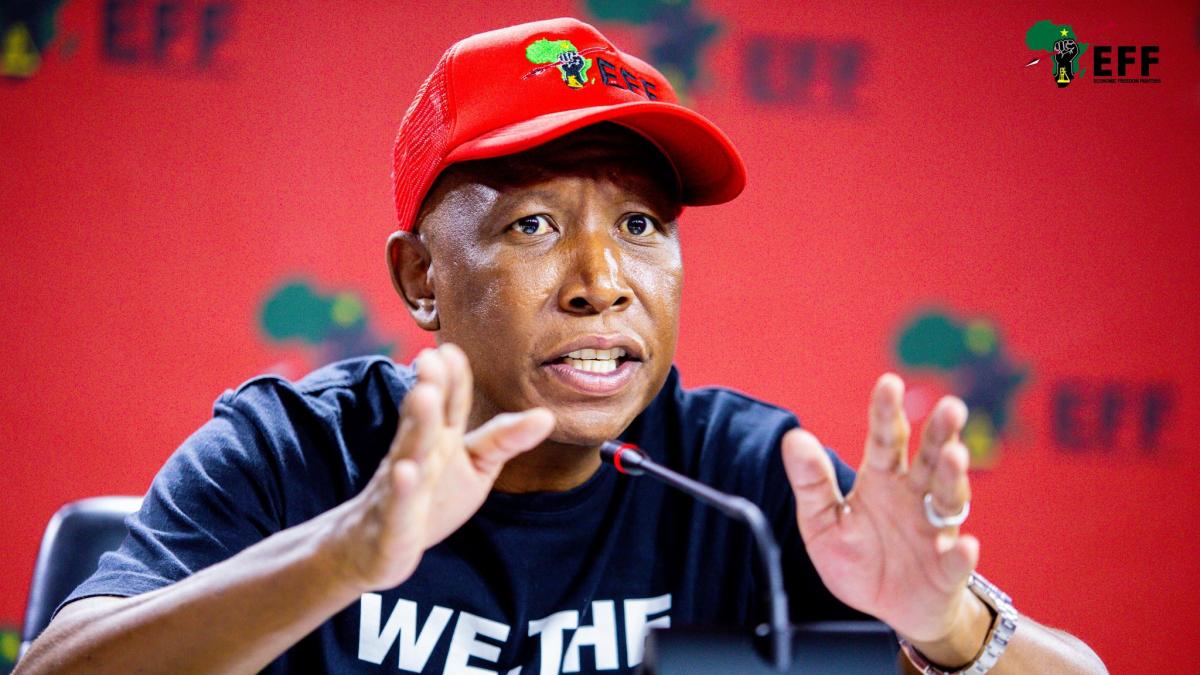
When searching for a new political home, Niehaus chose to join the Economic Freedom Fighters (EFF) in 2023, instead of Zuma’s uMkhonto we Sizwe Party (MKP).
His decision, made despite a personal invitation from the former president, enraged Zuma and ended a relationship that spanned more than three decades.
In a wide-ranging interview with Newsday, Niehaus unpacked this, stating that the MKP lacked a clear ideological foundation and had focused too heavily on Zuma as its leader.
“The support of the MK Party is purely dependent on the leader, as opposed to what is ideologically driven. This is what I don’t like because I believe a political party should be driven by ideology,” he said.
Niehaus was removed from the ANC at the end of 2022, which he says followed years of disillusionment and increasing tensions between him and the party’s top brass.
The party removed its former spokesperson for public remarks he made during and after the arrest of Zuma for contempt of court for refusing to appear at the Zondo commission of inquiry.
He fiercely supported Zuma in the saga. “No-one can let Msholozi go to jail, never,” Niehaus said outside Nkandla in 2021.
In retrospect, he said that he should have departed from the party earlier in his career, possibly around the time Cyril Ramaphosa was appointed deputy president of the ANC.
He was staunchly opposed to Ramaphosa’s “new dawn” camp, and was very vocal about it.
“I’ve always been anti-Ramaphosa, and I still believe that it was a massive mistake in 2012 for the leadership of the ANC to have brought Cyril back into the top leadership.”
Niehaus developed a close relationship with the former president during his two terms, something he attributes not to Zuma’s character, but to his radical ideals.
“It was never the case that I thought Zuma was all and everything. But I believed that Zuma was going to take a more progressive, more radical economic transformation position and make some changes.”
The two first met while Niehaus was detained in Pretoria Central Prison on charges of high treason after he was found to be complicit in plans to sabotage the Johannesburg Gas Work.
Zuma led the ANC’s advanced negotiations team at the time, which were also tasked with negotiating the release of political prisoners.
“He visited me as one of the prisoners the ANC demanded should be released before negotiations could take place in earnest.”
Niehaus’s support for Zuma was also influenced by the opposition he received from Thabo Mbeki in the run-up to the ANC’s 52nd National Conference, held in Polokwane in 2007.
“They weaponised the legal system for political and factional reasons, and I opposed that. So I supported Zuma on those grounds,” he argued.
He says it was his radical ideals that drew him to Zuma, which caused him to become increasingly disillusioned with the party itself.
“I ended up on the more progressive left wing of the ANC. Obviously, that had implications for me in terms of my place within the party,” he said.
“Over the years, I think I became increasingly critical of the ANC’s failure to transform South African society to address radical economic transformation and the issue of land restitution.”
Then, in late 2021, the ANC announced that it had fired Niehaus from his position in Secretary General Ace Magashule’s office, citing that the employment relationship had “completely and irretrievably broken down.”
This followed Niehaus laying criminal charges against the ANC’s top six, excluding Ace Magashule, over the non-payment of retirement and UIF funds to party staffers.
A disciplinary hearing followed, where Niehaus alleges he heard the panel saying they need to “get rid of him before the conference.”
“It was after I was refused entry to the 2022 Nasrec conference that I wrote my letter of resignation as a member. I was literally physically ill for a couple of days. You know, I joined the ANC when I was 19. This was 43 years later,” he added.
Forming ARETA

After resigning from the ANC in December 2022, Niehaus decided to start the Radical Economic Transformation Movement (RETMO).
This later changed to the African Radical Economic Transformation Alliance (ARETMA).
He said that the organisation’s intention, even after registering it as a political party in 2023, was to lobby for radical economic transformation and unify the radical left.
“The central theme that I hammered during that period was that the left needs to unite,” Niehaus said.
“Ace Magashule also started his own political party, and by June 2023, I became more aware that it’s not going to work to have all these small political parties that we have to unite.”
Unifying under the EFF banner

Niehaus said he became increasingly convinced of the need for unification through his discussions with Julius Malema’s EFF throughout the year.
Malema, who had served as the ANC Youth League president, was expelled in 2011 for allegedly “bringing the party into disrepute” following statements made about Botswana’s government.
Two years later, Malema founded the EFF along with allies, including Floyd Shivambu, who was expelled from his position in the ANCYL at the same time as Malema.
“I’ve known Julius for many years. I first met him when he was about 13 or 14 years old after he had hidden on a bus and travelled from Polokwane to attend Chris Hani’s funeral,” he said.
“Julius always stood out as a leader. Despite being the youngest in the group, he was still in charge,” Niehaus added.
Following these engagements, he decided that the existence of small left-wing parties was not the way to go, and they needed to unite under the banner of what he called the strongest political formation on the political left: the EFF.
The MK proposal

Shortly after he began articulating these views, Niehaus, along with members of the EFF, PAC, and several other parties, was invited to Zuma’s home in Forest Town.
“I made a presentation at the meeting about uniting the left and remember saying that the reason there were so many people around the table was because they all wanted to have their photos on lamp posts during elections.”
He went on to ask whether anyone was against the expropriation of land without compensation, the nationalisation of the Reserve Bank, or a fundamental restructuring of the economy.
“They all answered no. So I asked why we all can’t unite under the same group,” he said.
“I remember JZ was sitting at the head of the table, and I realised he was not happy with what I’d said because he also wanted some unity, but he wanted it under his leadership.”
‘No, I’m going to join the EFF’

It was after this meeting that Niehaus realised that it was not logical for ARETA’s continued existence, and he proposed that the movement join the EFF, which all members eventually agreed to.
Niehaus then met with Zuma at his daughter’s home in Hyde Park, Johannesburg, where the former president told him that a party had been registered with the Independent Electoral Commission, which he planned to activate at the end of 2023.
“I went to see him and I said, ‘uBaba, I disagree with what you’re doing. This is wrong. You’re going to create another party. You’re going to cause more division.’”
“Even if you don’t feel you can join the EFF, I think you should endorse the party, I told him”
“He got very upset, and JZ isn’t a guy to shout when he gets angry, so he got up, left the lounge where we were sitting and went to the kitchen to make a cup of tea to calm down,” he added.
Niehaus says that Zuma then asked him whether he was going to join the MK Party, to which he replied, “No, I’m going to join the EFF.”
Still determined to convince Zuma that starting a new party was the wrong decision, Niehaus arranged to visit him at his Nkandla residence that weekend with the ARETA leadership.
The group travelled to KwaZulu-Natal that Sunday. However, they were turned away upon arrival, with the security personnel stating that Zuma was not willing to see them.
“So we left, and the sad thing is that was the last time I spoke to him. I gave a lot of support to JZ, more than anyone, and I can say this without fear of contradiction.”
Niehaus announced that he would be joining the EFF in December 2023 and has served as a Member of Parliament since the 2024 general elections.
“I remain 100% convinced that it was the correct decision. I’m still convinced that the EFF is the only left political party with a clear ideology,” Niehaus added.









 Loading ...
Who knows what the EFF’s clear ideology is and how would they achieve it? All slogans, smoke and mirrors!