
Over 70% of SAPS’ aerial fleet is not operational



Twenty-seven of the 38 aircraft (71%) owned by the South African Police Service (SAPS) are non-operational.
This was revealed by the acting Minister of Police, Firoz Cachalia, in a written response to questions posed to him by Rise Mzansi MP Makashule Gana.
According to the Minister, the SAPS owns 38 aircraft across the country: 12 aeroplanes and 26 helicopters.
Of this total, “11 aircraft are currently in operation,” said the Minister. Twenty-seven aircraft are being maintained, comprising seven aeroplanes and 20 helicopters.
One aeroplane and one helicopter are damaged beyond economic repair and are awaiting permanent boarding.
The Minister said that the department intends to increase the current total number of aircraft by an additional 15 helicopter type aircraft, at a projected budget of R1.1 billion.
“Procurement will take place annually, as and when funding is made available.”
Just last week, National Police Commissioner General Fannie Masemola announced the addition of two brand new H125 helicopters – ZT-REC and ZS-HGA.
“This additional fleet will play a critical role in enhancing SAPS’s operational capacity and capability, as well as strengthening national security,” he said.
“It will enable us to improve our service delivery and increase efficiency in fulfilling our Constitutional mandate of preventing, combating and investigating crime.”

SAPS Air Wing in a dire state – Gana
In response, Gana said that the capabilities, or the lack thereof, of the SAPS Air Wing came under scrutiny “when there was a poor response during the deadly Mthatha floods in June of this year.”
The SAPS Air Wing faced criticism for its inadequate response to the June 2025 Mthatha floods in South Africa’s Eastern Cape, where 149mm of rain in 24 hours caused the Mthatha River to overflow, killing 102 people, displacing over 4,700, and damaging 2,145 homes.
The Air Wing’s delayed deployment, with only 20 operational aircraft due to chronic underfunding and maintenance issues, hindered search-and-rescue efforts, as helicopters arrived late from 500 km away.
Moreover, during a question session in the Eastern Cape Provincial Legislature, the MEC for Community Safety, Xolile Nqatha, stated that the entire province is only serviced by one helicopter.
This exposed systemic weaknesses in South Africa’s disaster response, amplifying calls for investment in aerial capacity to address recurring flood risks.
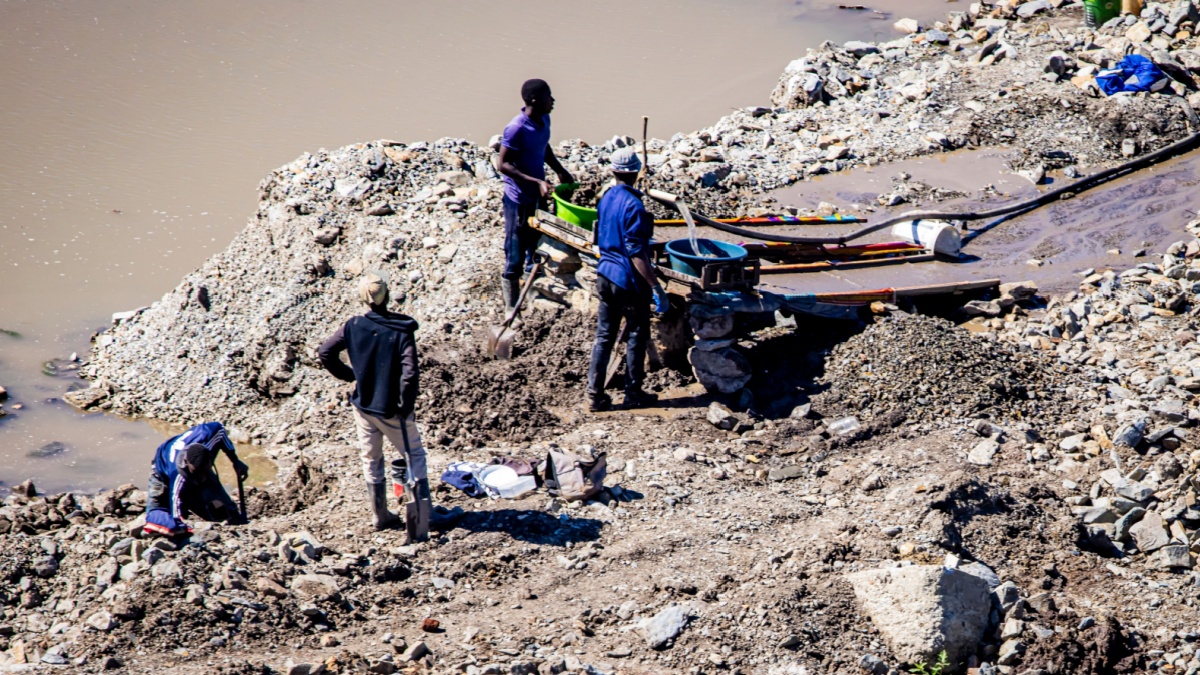
“The dire state of the SAPS Air Wing does not bode well for the fight against crime which often requires air support during various operations such as illegal mining, kidnappings, hijackings, natural disasters, and the theft and damage to critical infrastructure,” said Gana.
“Boots on the ground require assistance from eyes in the sky; therefore, all aircraft need to be in active use,” he added.
Despite this, the party welcomes a process to procure a further 15-helicopeters at a projected budget of R1.1-billion. “RISE Mzansi will maintain oversight over this procurement process.”
SAPS’ full fleet (both operational and non-operational) is made up of:
| Category | Type | Make | Model | Description | Quantity |
| Aeroplanes (Fixed Wing) | Aeroplane | Beechcraft | King Air C90A | Twin-turboprop aircraft | 1 |
| Aeroplane | Cessna Citation Sovereign | CE680 | Mid-size jet (8–12 persons) | 1 | |
| Aeroplane | Pilatus | PC-12 | Single-engine turboprop | 1 | |
| Aeroplane | Pilatus Porter | PC-6B | Utility/STOL aircraft | 9 | |
| Total Aeroplanes (Fixed Wing) | 12 | ||||
| Helicopters (Rotor Wing) | Helicopter | Airbus (Aérospatiale) | AS350 B3 / H125 | Light utility helicopter | 17 |
| Helicopter | MBB | BK-117 | Twin-engine light helicopter | 1 | |
| Helicopter | McDonnell Douglas | MD 500E | Light observation helicopter | 2 | |
| Helicopter | Robinson | R44 | Light piston-engine helicopter | 6 | |
| Total Helicopters (Rotor Wing) | 26 | ||||
| Overall Total | 38 |











 Loading ...
The force is corrupt from the top down. The few honest cops left are being offered early retirement packages and they can’t wait to leave. This will leave the force with few experienced officers. Station commanders are inexperience and are out of their depth and have no clue how to carry out a successful investigation. The situation is beyond critical it will take nothing short of a miracle to rectify.