
Johannesburg should not have any beggars at traffic lights



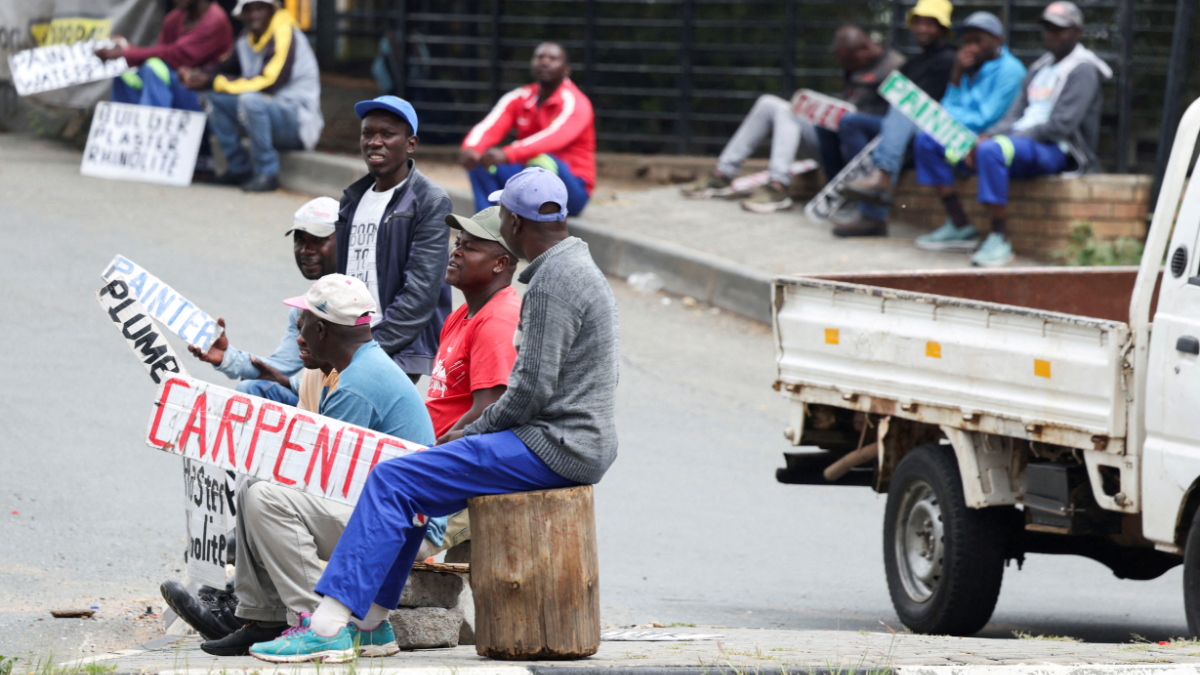
The image of beggars on every street corner in Johannesburg has become an undeniable part of the city’s landscape, but according to Johannesburg’s by-laws, begging is illegal and is a punishable offense.
According to Johannesburg’s Public Roads By-Law, 2024, Chapter 2, section 10:
“No person shall, without the council’s permission, on any public road, cycle lane, or sidewalk, in any way loiter, solicit, inconvenience, or harass any other person for the purpose of begging.”
There should, therefore, technically be no beggars on the street. However, even with a high rate of begging that borders on unmanageable, the local police do little to stop begging, other than telling beggars to move.
The City of Johannesburg’s (COJ’s) official unemployment rate currently sits at 34.5%, above the national average of 32.9%, according to Statistics South Africa (StatsSA).
In a recent StatsSA report: A Profile of Homeless Persons in South Africa, it was found that the count of homeless people in South Africa more than quadrupled between 1996 and 2022, from 13,135 to 55,719.
Johannesburg is the location of 15.6% of the homeless population of South Africa, the second largest share after Tshwane at 18.1%.
High levels of homelessness and poverty have resulted in the prevalence of beggars in the city. According to the Gauteng Department of Social Development, the city has the highest number of hotspots where individuals are found begging at traffic intersections.
Most homeless individuals told StatsSA that their homelessness was caused by economic factors, such as unemployment and a lack of affordable housing.
The Johannesburg Metropolitan Police Department (JMPD) finds itself in a tough position, having to enforce the city’s anti-begging laws.
They have to so this while recognising that this issue stems from broader social problems beyond their control, as well as that of the beggars they penalize.
“The issue of begging in Johannesburg is complex, particularly given the high rates of poverty and homelessness,” Xolani Fihla, spokesperson for the JMPD, told Newsday.
A deep-seated social crisis

The JMPD’s by-laws against begging are guided by the department’s mandate to ensure traffic flow and prevent crime, as many criminals use begging as a cover for smash-and-grabs.
“These by-laws aim to ensure the public safety and the free flow of traffic. Activities like begging, unsolicited windscreen washing, and illegal trading at traffic intersections are targeted because they are linked to an increase in opportunistic crimes,” said Fihla.
According to the JMPD spokesperson, motorists become “sitting targets for theft, assault, robbery and harassment.”
Beggars also frequently use young children as “begging bait,” Fihla said, which is a violation of the child’s human rights. In these cases, JMPD works with the COJ Social Development Department’s social workers to address the well-being of the child.
There is, therefore, a need to manage begging so as to control opportunistic crime, traffic flow, and ensure that children are taken off the street and not used as “begging bait.” However, this is an uphill battle.
The City’s by-laws state that to manage these crimes, any person found contravening the laws against begging is liable to pay a penalty. However, Fihla said that this is rarely ever enforced.
“Enforcement of municipal by-laws on public roads can result in penalties, but at most times, people who are begging are just removed,” he said.
The Department of Social Development acknowledged that this is not an effective way to manage begging, as beggars simply relocate to other areas in the city after they are removed.
When minors are involved, the focus shifts to child protection measures, such as the temporary removal of children and referral to youth care centres if they require care and protection.
Fihla said that the JMPD does not force beggars to pay penalties or push any further punishments because the police department recognises that the high rate of begging is “fundamentally a socio-economic issue.”
“This is driven by poverty, unemployment, and a lack of social security; which goes far beyond the scope of a police department,” said Fihla.
The spokesperson added that a long-term solution to the problem of begging is needed and requires an inter-departmental approach that includes job creation, welfare, and social support systems.
“Law enforcement alone cannot solve a deep-seated social crisis,” he said.


















 Loading ...
Laws and regulations? What’s the point? The biggest offenders are our top ANC parasitic politicians who have set a fine example being followed relentlessly by everyone lower down the totem pole. Ironic that in the Witkoppen Road intersection with Rivonia Road, it’s the street beggars who take over and keep the traffic moving. Not the JMPD who are better positioned next to fast food outlets. Insane!!