
Malema will have a hand in choosing the judge for his appeal case



Economic Freedom Fighter (EFF) leader Julius Malema has announced his plan to appeal the recent convictions handed against him, but if these appeals are heard by the Constitutional Court, Malema will have a hand in choosing the judge.
This is according to Freedom Under Law research consultant Chris Oxtoby, who spoke to BizNews regarding recent meetings of the Judicial Services Commission (JSC).
Malema is a member of the JSC, having been designated by the National Assembly. The JSC is the body responsible for selecting judges for the highest courts in South Africa.
On 1 October 2025, Malema was found guilty by the East London Magistrate’s Court in connection with a firearms discharge incident dating back to 2018.
He was convicted of five offences, including the unlawful possession of a firearm and ammunition, discharging it in a public space, and reckless endangerment.
The case stems from a rally in Mdantsane, Eastern Cape, where he fired shots into the air in front of thousands of EFF supporters.
The first charge carries a maximum 15-year sentence. Sentencing will take place on 23 January 2026.
Two months prior, in August 2025, the Equality Court found that certain statements by Malema constituted hate speech and demonstrated a clear intention to incite harm and to promote or propagate hatred.
In May 2025, the High Court upheld Parliament’s finding that Malema had breached its Code of Ethics for remarks made during a JSC interview in 2021.
The convictions have brought Malema’s suitability to serve in the JSC to the spotlight, and Oxtoby said that the JSC’s recent meeting further highlighted this.
“Malema has been a member of the JSC for over ten years, and I think it’s something he’s used very skillfully as a way of building profile,” said Oxtoby.
He added that prior to the convictions, an earlier finding by the parliament ethics committee, which was later upheld by the High Court, ruled that Malema had abused his position in the JSC for personal gain.
Malema’s comments against the judiciary to hurt his case
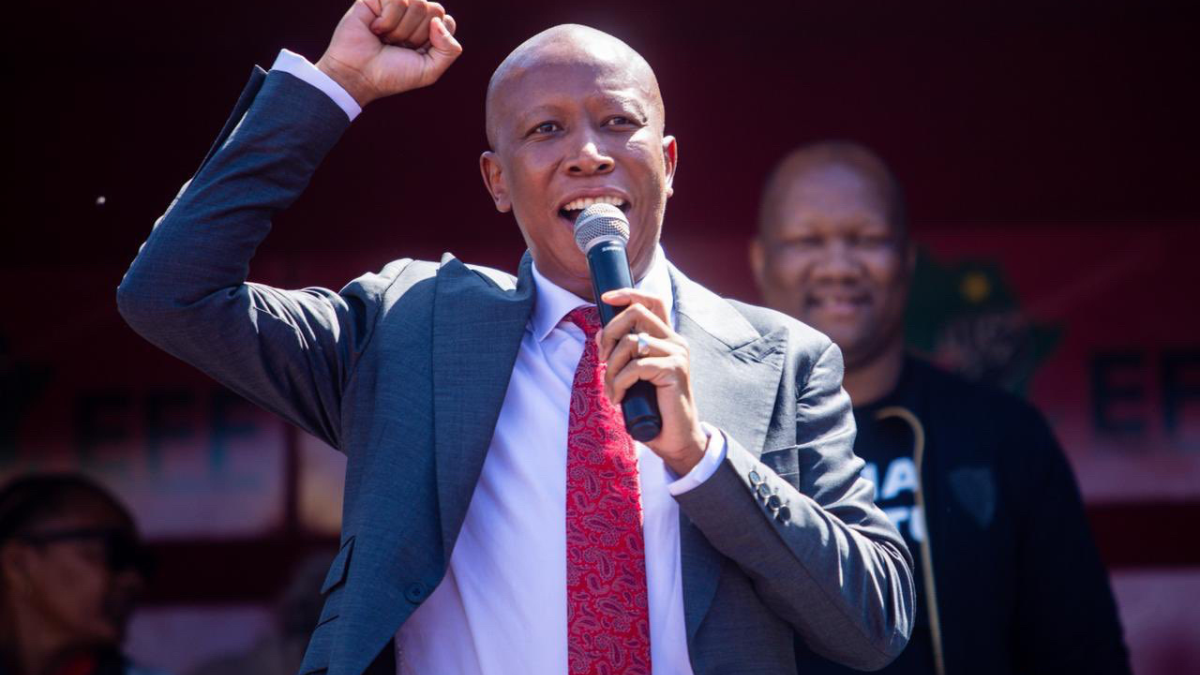
Oxtoby added that Malema’s remarks immediately following his most recent conviction, accusing the magistrate of racism, will not help his case to stay on the commission.
“Those are remarks that ourselves and other civil society organisations regard as completely unfounded,” he said.
“They’re presented without evidence and substantiation. They’re completely inappropriate for someone in that position to make about the judiciary if they’re going to be sitting on the body that plays a central role in appointing judges.”
Oxtoby explained that Malema’s intention to appeal these judgments, particularly the criminal firearm conviction, will likely result in years of legal processes.
The case will be moved up from the Magistrates Court to the High Court, the Supreme Court of Appeal, and potentially the Constitutional Court, where the JSC selects the judges.
“That obviously raises a potential conflict of interest if he’s going to be sitting on the body that is constitutionally responsible for selecting judges,” Oxtoby said.
“If he is sitting on the interviews and the selection process for judges, these judges may end up hearing cases that relate to his own legal challenges.”
Oxtoby said the JSC discussed Malema during meetings over the last week, in which the Commission was selecting candidates for the Constitutional and Supreme Courts.
Malema did not attend these sittings, as he was involved in the Parliamentary Ad Hoc Committee hearings on allegations of corruption in the South African Judicial system following allegations by Lieutenant General Nhlanhla Mkhwanazi.
JSC members must be “fit and proper”
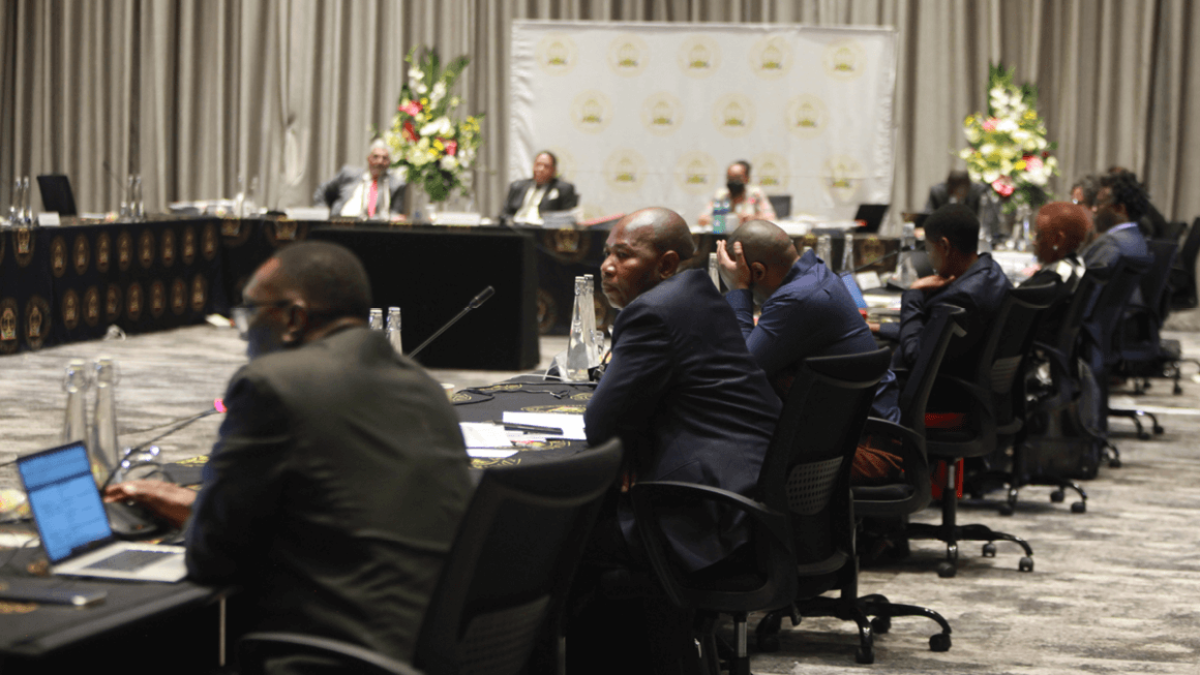
The suitability of Malema to serve on the JSC was brought to question. This should be framed by the precedent of a High Court Judgment from 2024, according to Oxtoby.
The Western Cape High Court set aside the possble membership of former judge Dr John Hlophe, now an MP for the MK Party in the JSC, ruling that the requirement for members of the JSC to be fit and proper is implicit in the constitution.
According to Oxtoby, Hlope’s statements about the judiciary were factors considered when he was ruled not to be a suitable candidate for the JSC.
“So the conduct as evidenced in the court cases and the recent statements as well as the conflict of interest aspects makes his position on the JSC untenable,” he said.
Speaking on the likelyhood of malema being removed from the JSC, however, Oxtoby said it;s “easy ot be skeptical” and cite examples of parliament inaction to say that the action of removing Malema won’t be pushed.
However, Oxtoby added, given the nature of Malema’s convictions and remarks against the judiciary as well as the importance of the selection of judges, the parliament should be considering the issue of Malema’s JSC membership very seriously.
Oxtoby concluded that Malema’s removal won’t drastically affect his political agenda. “I don’t think this is a fatal problem for his political prospects, but I think it does do some harm.”















 Loading ...
How can the assumption that malemma can choose his own judge , surely everyone even a grade 4 child knows that there will be a conflict of interests and therefore not acceptable in court of law. He must face the wrath of the law and b a man accept the unlawful utterances abd unethical behavior he had displayed.