
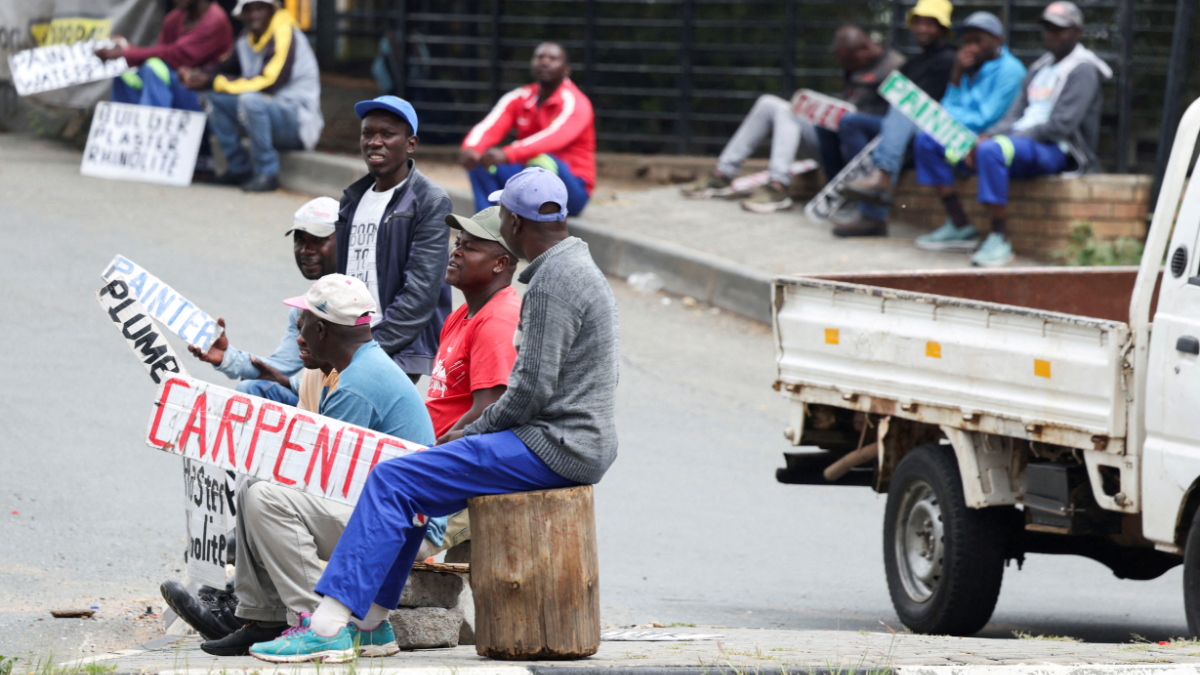
People in South Africa vote for unemployment and poverty



South Africa faces a crucial moment in redefining voter behavior and political accountability.
This is according to Professor William Gumede, founder of the Democracy Works Foundation, associate professor at the Wits School of Governance and a multiple-time bestselling author.
Speaking to Newsday on the importance of shifting to “competence-based voting,” Gumede warned that many citizens currently “vote for their own poverty” by electing leaders who are ill-equipped to manage the state effectively.
“Up to now many voters vote for their own poverty. They vote to increase their unemployment. They vote to increase poverty in the country and they vote to get low growth and they vote for state failure,” Gumede said.
He explained that voters often choose candidates who are criminals, have no management experience, or run campaigns based solely on ideologies that have failed in other countries.
Many political parties in South Africa rely on catchy slogans and populist messaging to gain support, often appealing to voters’ immediate frustrations rather than presenting viable solutions, he said.
Gumede explained that many voters are drawn to these ideological slogans or populist messaging without evaluating whether the policies have been successful elsewhere or whether the candidates possess the necessary skills to implement them.
“People may vote for political parties that campaign on economic policies that have failed to last 100 years in most countries.”
“They sell slogans as in for economic policies because of our high levels of economic illiteracy in the country,” he said.
“If you vote for a person whose campaign is only ideology and ideology that has failed, you’re going to get poverty and unemployment.”
The criteria for competent political leadership

Gumede outlined what he sees as the essential criteria for competence in political leadership.
“The first thing that people have to look at is: did the person run or manage any entity, even a shop or business, outside politics or the state?”
“If a person’s whole life has been in politics and government, do not vote for such a person because such a person will deliver poverty and unemployment and state failure,” he said.
Beyond managerial experience, Gumede emphasised integrity and economic literacy as key aspects of competency.
“Are you an honest person? Are you not corrupt? Do you have some grasp of economics?”
“Do you make decisions in the best interest of your community, your town, and your country rather than the interest of one color, one community, one political party, or based on ideological interest?” he asked.
“That is a set of competencies people must look at.”
For Gumede, the push for competence-based voting is about more than just political strategy; it is about ensuring that voters make choices that advance development, reduce poverty, and strengthen institutions.
“Voters must be much more discerning and conscious about who they vote for if they want their lives in their communities, towns, and villages to change,” he said.
“Competence voting means do not vote for a person just because they look like you, speak the same language, or share an ideological view, vote for competency.”
With municipal elections approaching in 2026, Gumede’s warning serves as both a guide and a challenge.
The next wave of elected leaders, he insists, must be evaluated not on slogans or appearances, but on experience, honesty, and ability to deliver tangible results for South Africans.
Voting for competence is voting for your future, Gumede concluded. “If we do not, we will continue to vote for poverty, unemployment, crime, and state failure.”

















 Loading ...
Exactly. Which is why I wrote a book about it: https://www.amazon.com/-/es/Conrad-Smit-ebook/dp/B0F3255KRF