
EFF eyes the removal of numerous statues across South Africa



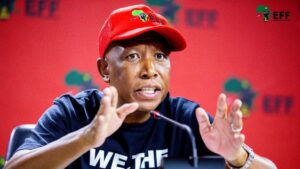
The Economic Freedom Fighters (EFF) have reopened the debate over apartheid- and colonial-era statues and memorials in South Africa, calling for an investigation into their presence in public spaces.
This has met strong opposition from the Vryheidsfront Plus (VF+) party, which called the move a disingenuous attempt against contemporary history, as well as civil rights group Afriforum, who called it “a direct attack on Afrikaners’ right to exist.”
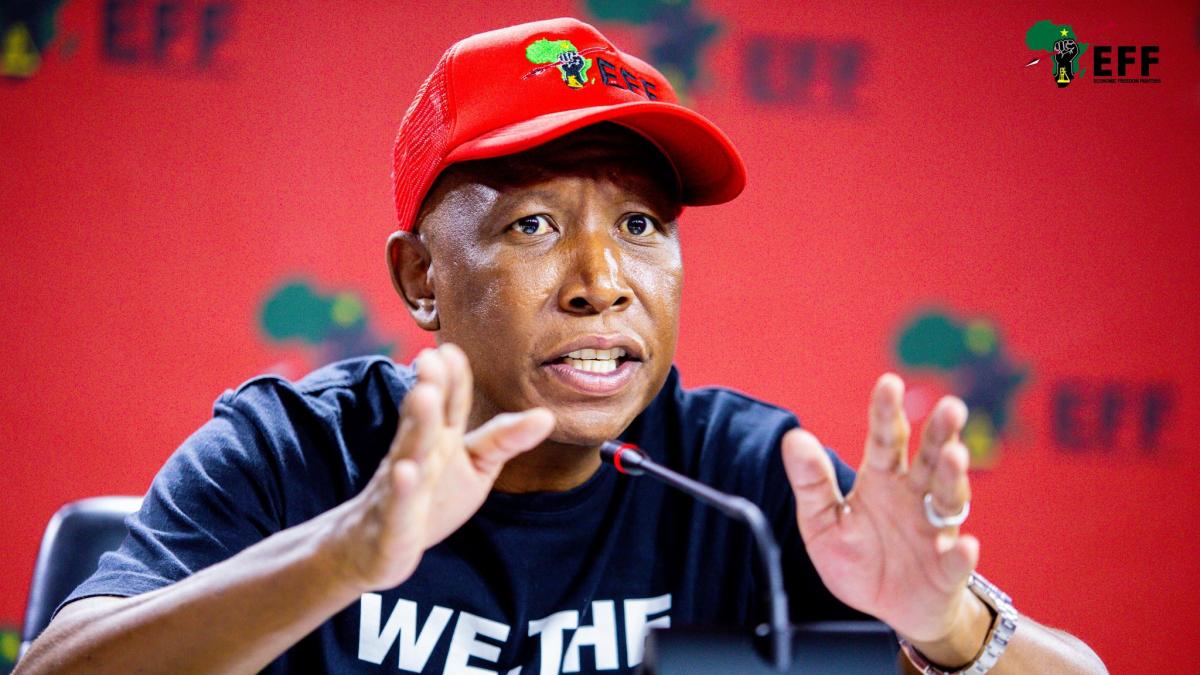
EFF National Chairperson Nontando Nolutshungu tabled a draft resolution in Parliament proposing an Ad Hoc committee in the National Assembly to examine the status of symbols and statues across the country.
Her arguments echo the #RhodesMustFall movement, which began at the University of Cape Town in 2015 with the removal of a statue of Cecil John Rhodes.
That campaign, aimed at highlighting the “colonial legacy and systemic racism,” evolved into nationwide debates over monuments, including those of Louis Botha and Paul Kruger, with several sites vandalised during protests.
“Across South Africa, in front of this very parliament, and in the heart of Tshwane, statues of colonial conquerors and apartheid leaders stand unchallenged,” said Nolutshungu.
She described many statues as monuments of colonialism and reminders that, although apartheid has ended politically, the ideological and economic structures of conquest remain intact.
“A statue is never innocent, it is a form of political communication – a claim to space, a declaration of who belongs and who does not belong,” she added.
Nolutshungu called for the removal of the Louis Botha statue outside Parliament, saying it glorifies a “general of violence, a prime minister of white supremacy, and a defender of racial segregation.”
“We, as African people, remain visitors in our own legislative chambers.”
She also called for the removal of the Paul Kruger statue outside the Union Buildings and criticised the presence of Jan Van Riebeeck’s statue in Cape Town, and Queen Victoria statues in Durban, Cape Town, and Gqeberha.
In Tshwane, the Voortrekker monument “towers over the capital,” while the Settlers Monument in Makhanda celebrates “the conquest of Africans.”
The EFF proposed replacing these statues with figures like Chief Maqoma and King Hintsa, and questioned why leaders such as King Mosheshoe and Solomon Mahlangu are not commemorated more.


Reigniting the debate
The resolution has drawn criticism from the VF +, as well as lobby group Afriforum.
VF+ Party leader Dr. Corne Mulder criticised the EFF for bringing the debate to parliament, arguing that there are more urgent issues, such as the stagnant economy and high unemployment rate.
Mulder said that the critique of the statue of Paul Kruger was invalid as “there is no statue of Kruger in front of the Union Buildings, and no one can make you feel inferior except you.”
The Tshwane Paul Kruger statue is found in Church Square. The Union buildings display a statue of former President Nelson Mandela as well as the Delville Wood memorial, commemorating South African soldiers who died during World War 1.
Commenting on the potential removal of the Botha statue, Mulder said that there is another statue in Durban that commemorates Botha and his friendship with King Dinuzulu keCetshwayo.
King KeCetshwayo sought assistance from Botha in a conflict with Chief kaMaphita, who challenged the King’s claim to the throne, said Mulder.
“General Botha helped defeat his enemy,” Mulder said. “Today, at the corner of Berea Road and Warwick Avenue in Durban, two statues stand facing each other, depicting this remarkable friendship.”
“This is the same Louis Botha whose statue is now suddenly deemed unwelcome.”
The VF + leader called those wanting to remove the statues as “breakers… who want to tear down everything relating to the past and our shared history.”
“They will eventually realise that it will make no difference to the harsh realities faced by South Africa today,” he added.
The party urged people to collectively start building a future, as “nothing can be done about the past.”
Civil rights group Afriforum has vowed to do “anything in its power to oppose the EFF’s campaign,” seeing it as a direct attack on Afrikaners’ right to exist in the country.
Head of Public Relations at Afriforum, Ernst van Zyl, labeled it as an “anti-white hate campaign.”
“History offers numerous examples of cases where the physical suppression of, or violence aimed at, specific communities was preceded by similar actions,” he said.
“If, according to the EFF, there is no place for statues of Botha or Kruger or the Voortrekker Monument, the place of the Afrikaner is also in serious jeopardy.”














 Loading ...
Yet another attempt by a party that brings nothing to the table to ‘Blackwash’ South Africa’s history.