
The party that has built a war chest from its membership fees



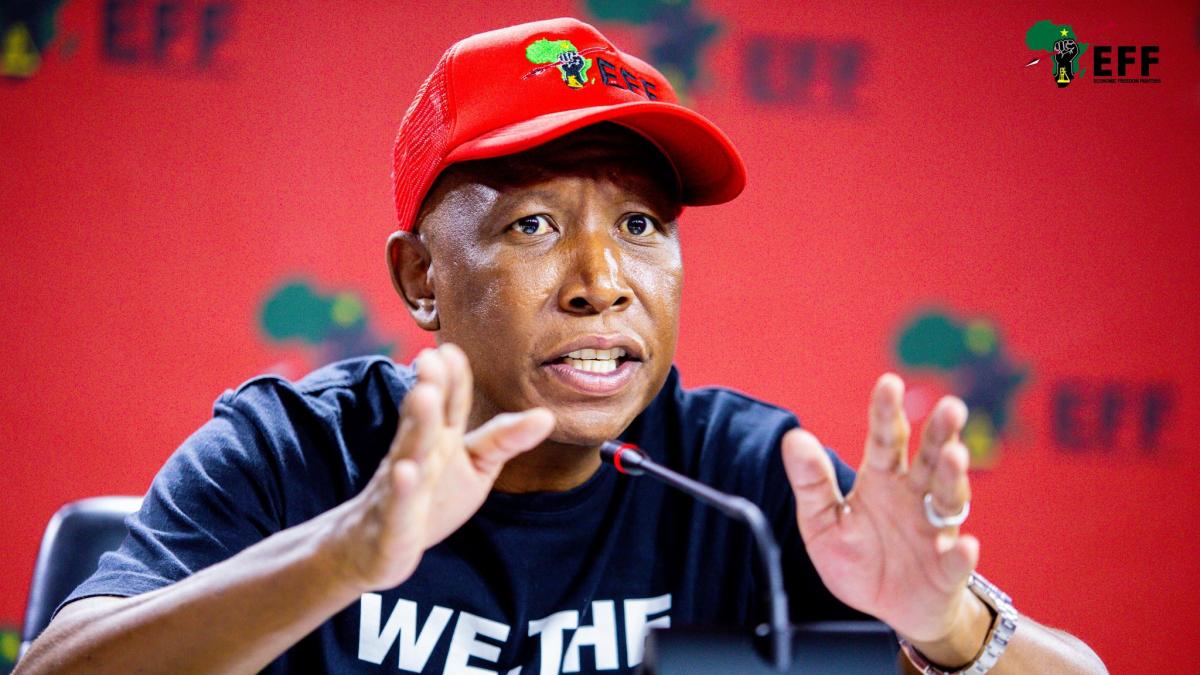
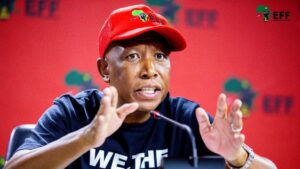
The Economic Freedom Fighters (EFF) collect more in membership fees than any other political party in South Africa, generating approximately R162 million over the past three audited financial years.
This is seen in an analysis of disclosed audited annual financial statements of political parties from the 2021/22 to the 2023/24 financial years, submitted to the Electoral Commission (IEC).
Political parties are required to submit audited annual financial statements to the IEC, which include statements of income relating, but not limited to, donations, membership fees, and levies.
According to figures submitted to the IEC and analyzed by civil watchdog My Vote Counts (MVC), five represented political parties generated over R400 million in membership fees over the three financial years leading up to the 2024 general elections:
- Economic Freedom Fighters (EFF): R162,001,843
- African National Congress (ANC): R83,625,099
- Democratic Alliance (DA): R76,954,752
- Inkatha Freedom Party (IFP): R68,105,813
- Vryheidsfront Plus (VF +): 9,577,942
In the 2023/24 financial year, the EFF disclosed R44,818,740 in membership fees and levies, about R300,000 more than second place ANC.
While the EFF did not disclose to Newsday how many members it has, in 2023 it boasted about having a membership base of over 1.09 million card-carrying members. It is unclear what the figures are post 2024 general elections.

The bigger picture
Membership fees make up only a small portion of political parties’ income, excluding private donations and public allocations.
Between 2021/22 and 2023/24, political parties received at least R7.5 billion: R5.3 billion in public funding and R2.2 billion in declared private funding.
Before a landmark Constitutional Court ruling in 2018, South Africa’s political funding system was largely opaque.
Civil society organisations such as My Vote Counts successfully challenged this secrecy, leading to the Political Party Funding Act (PPFA) of 2021, which established donation disclosure rules, thresholds, and other funding parameters.
Recent amendments to the Act, now called the Political Funding Act (PFA), increased the threshold for undisclosed donations from R100,000 to R200,000 and capped annual donations at R30 million per donor or entity.
The PPFA also created the Represented Political Party Fund (RPPF) to channel public funding from the IEC to parties in the National Assembly and provincial legislatures capitalised by the National Treasury.
In 2023/24, R2.19 billion was distributed among 15 parties, with over 90% going to the ANC (R905 million), the DA (R311 million), and the EFF (R180 million).
A significant loophole remains in the category “other income outside the ambit of the Act,” which includes proceeds from property sales, investments, or fundraising events.
For the ANC, this accounted for 78% of its private funding, leaving nearly R500 million in private income undisclosed, with no way for the public to verify the sources.
MVC said that loans present another transparency concern. During the reporting period, the EFF received a R60 million loan, more than all its other private funding combined, which News24 reported was from Standard Bank.
While auditors confirm that loans are on commercial terms, the IEC cannot verify repayment, guarantees, or the legitimacy of these transactions.
MVC’s Joel Bregman said that this creates a potential loophole: parties could receive donations disguised as loans, with terms deferred, written off, or guaranteed by anonymous donors.
Without disclosure, these loans could effectively function as undisclosed private contributions.
“Without greater access to information about parties’ funding sources, their lending activities, and their expenditures, our ability to hold parties to account and detect cases of private interests influencing our politics remains limited,” said Bregman.
Overall, political parties received R3.24 billion between 1 April 2023 and 31 March 2024, based on what was disclosed to the IEC.














 Loading ...
The new Malema book sheds even more light on the finances of the EFF, and specifically its leaders. It is not at all good, though.