
Nobody is watching over the water sector



Many strategic sectors in South Africa are monitored by independent regulatory bodies, from electricity to broadcasting, but the water sector has been left without such governance despite its dire state.
One hundred and five municipalities are underperforming in their water service delivery mandate, out of 144, according to Leon Basson, Parliamentary Committee chairperson on Water and Sanitation.
Non-revenue water is averaging about 47% and the Department of Water and Sanitation and its entities are under investigation by the Special Investigating Unit (SIU).
The Department’s water boards are subject to probes for financial irregularities, mismanagement, and corruption, with the SIU recently expanding their investigation in both time and scope, pointing to serious maladministration.
Despite these mounting challenges, the water sector lacks a regulatory body such as the National Energy Regulator of South Africa (NERSA) or the Independent Communications Authority of South Africa (ICASA).
Regulatory responsibilities are split across multiple levels of government, from the Department itself, to municipalities, provincial governments, and the treasury.
Plans are in the pipeline to introduce a National Water Resources Agency to centralise water management, but, according to Water Expert Professor Anthony Turton, there is little hope that this would save South Africa’s water crisis.
“When South Africa became a democracy, the ANC rejected all policies and laws relating to water and replaced them in their entirety,” Turton explained to Newsday.
“They consequently ignored the findings of the Commission of Inquiry into Water Matters from the 1970s that had provided much of the empirical basis of water policy,” he said.
He said this has resulted in the ANC’s water policy being grounded more in ideology than in empirical reality.
“As a result, the role of the Department of Water was eroded and given to municipalities that has never had those responsibilities before. This means there was no institutional memory to build on,” he said.
Where the crisis began

Turton said that South Africa’s water crisis began when the ANC split water laws into the management of water as a resource, under DWS, and the management of water services, under municipalities.
Organisations such as Rand Water, the Organisation Undoing Tax Abuse (OUTA), and Water Shortage SA have been calling for such regulation for many years.
The implementation of a water regulator and a national water resources infrastructure agency are key aspects of Operation Vulindlela, but despite commitments, there has been little progress in bringing this regulation into existence.
In August 2024, President Cyril Ramaphosa said that the national water resources infrastructure agency would be implemented to address the current fragmentation of resource management.
The current regulatory model creates gaps, overlaps, and inconsistent standards across levels of government that prevent clear regulation and effective management.
In phase two of operation Vulindlela, an independent water regulator is part of the National Water Action Plan, to be developed alongside private sector participation.
Both of the suggested entities would help raise and manage funding for water infrastructure projects and strengthen governance in the sector.
Turton is concerned, however, that in a water sector ruled by water mafias controlling procurement processes, centralising this process will likely deepen this crisis of mafia control.
“The elements within the ANC that want the infrastructure agency are the same elements that are part of the water mafia,” he said.
“They want total control over all procurement, not to improve services, but to capture the cash value for themselves.”
The infrastructure agency will dominate the tender value chain and force out any professional service provider that is not linked to their patronage networks, Turton said.
Under these circumstances, Turton said South Africa is left with two options: amending the Cooperative Governance clause to give DWS the right to intervene at a municipal level, or instituting an independent water regulator that is not associated with DWS.
A Global Standard

OUTA and Water Shortage SA began their call for a regulator in the water sector in 2019.
“South Africa’s water sector is inadequately regulated,” he said. “The Department’s shortcomings in regulating South Africa’s water sector require serious and effective intervention.”
OUTA reported that DWS identified the need for a National Water Resources and Services Regulator as far back as 2019.
“Identifying this need points to the Department’s shortcomings as the regulator of the water sector,” the organisation said.
The need to establish an independent water regulator was also mentioned at the Presidential Water and Sanitation Indaba in March 2025.
In a recent meeting of the parliamentary portfolio committee on water and sanitation, the committee emphasised the need to implement all of these commitments made at the Indaba.
Leon Basson, Chairperson of the committee, said that all of these recommendations “might have the necessary ripple effect to resolve challenges within the system.”
Ramateu Monyokolo, chairperson of the Rand Water board and the Association of Water and Sanitation Institutions of South Africa, is confident that a regulator would help turn the water sector around, having been successful in other countries in the past.
“This includes NWASCO in Zambia, which uses a licensing regime and performance reporting to drive efficiency, ERSAR in Portugal, which oversees quality, pricing, and planning, and the UK’s Ofwat,” he said.
Monyokolo said that the use of regulatory bodies in other key sectors has provided independent licensing, secured funding, and safety enforcement, even in high-risk areas.
He said that such a regulator should have the authority to license water-service providers and monitor and enforce technical and service standards, as well as review and approve bulk and retail tariffs.
It should provide a dispute-resolution mechanism for consumers and publish annual performance audits and benchmarking reports.
“The regulator must report to parliament, be funded independently from service providers and operate transparently,” he said.
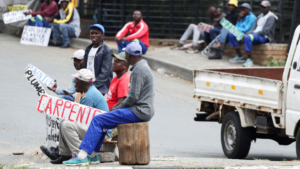
The urgency to create an independent water regulator has been made clear in the recent violent protest action that broke out in northern Johannesburg suburbs such as Westbury over water cuts.
Turton worries that further mass unrest will soon follow as a result of the worsening water crisis, triggering a further loss of investor confidence in South Africa. This would be “catastrophic”, he warned.










 Loading ...
So now we will get a new overpaid minister and still doing nothing and a week in the job will brag all the good he have done.