
Where South Africa coins it the most in trade



South Africa’s trade balance received a major boost in 2024, driven by five of its largest trade surpluses, which together added over R350 billion.
Trade with Mozambique generated the biggest surplus at R99 billion, followed closely by the United Kingdom (R70 billion), Botswana (R69.9 billion), Zimbabwe (R63 billion), and Zambia (R51 billion).
A country’s trade balance measures the difference between its exports and imports over a given period. When exports exceed imports, a nation runs a trade surplus; when imports are higher, it faces a trade deficit.
South Africa recorded a trade surplus of R20.3 billion in July 2025, with exports of R184.3 billion outpacing imports of R164 billion.
Despite these gains, increasing imports from countries across the Middle East and Asia are placing pressure on the trade balance.
China, South Africa’s largest trading partner by volume, is also the country with which it has the largest deficit, standing at negative R108 billion in 2025.
This figure has grown substantially from negative R24 billion in 2010, highlighting a long-term trend. Other significant trade deficits include Oman, Saudi Arabia, and India, each at just over R30 billion.
China is also among South Africa’s top export destinations, along with Germany, the United States, Mozambique, and the United Kingdom.
Similarly, Germany, India, the US, and Oman are among the largest sources of imports.
While trade deficits are not inherently negative, they indicate that the country is spending more on imports than it earns from exports with those nations, underscoring the importance of careful management.
Economic experts point to factors such as declining local production or reduced demand for South African products abroad.
For example, the country’s trade surplus for the second quarter of 2025 fell from R211 billion to R177.1 billion, largely due to a slowdown in mining and agricultural commodities.
These dynamics highlight the delicate balance South Africa must maintain between leveraging export opportunities and managing the rising cost of imports.

South Africa’s biggest trade surpluses
Conversely, a trade surplus means that a country generates revenue from trade with another and stimulates its local economy.
South Africa’s biggest surplus in 2024 was generated from trade with Mozambique, totalling R99.6 billion for the period.
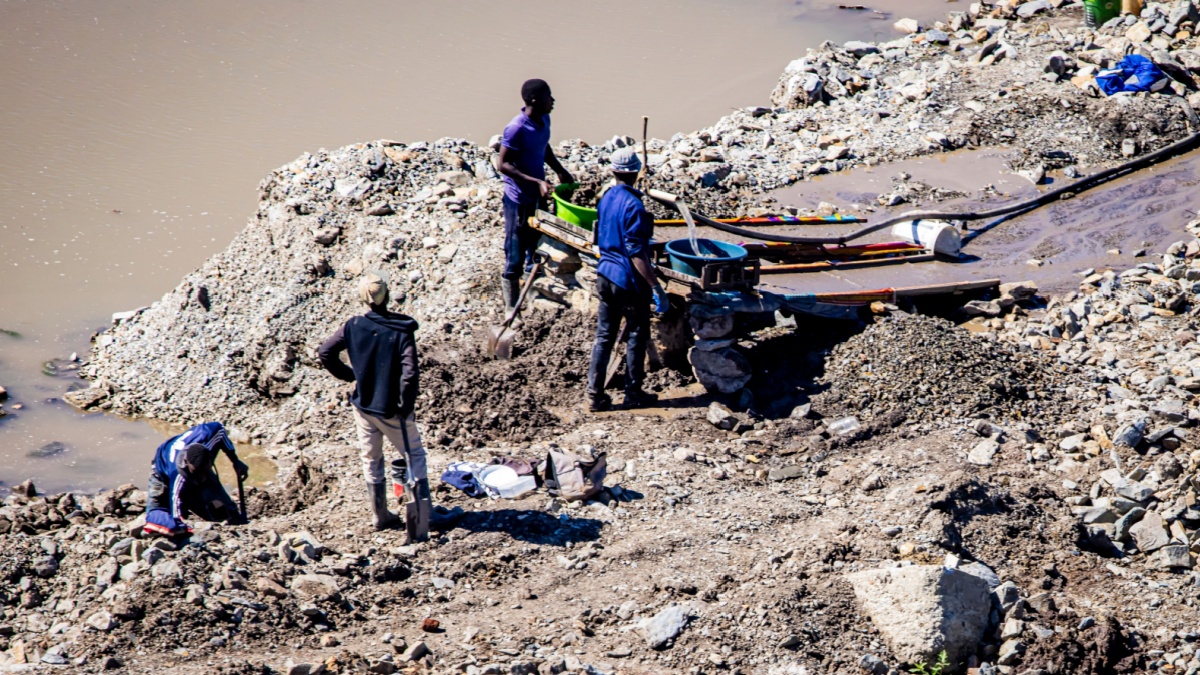
According to SARS, just over 48% of goods exported to the neighbouring country were mineral products, followed by Iron and steel products (16%), and prepared foodstuffs (7.26%).
Mineral products comprised the bulk of imports at 75.9%, followed by iron and steel, fruit and nuts, beverages, spirits and vinegar.
Trade with the United Kingdom generated the country’s second-largest surplus at R70 billion.
Unlike Mozambique, South Africa’s exports to the United Kingdom are more diversified. Only 45% comprise mined resources. Other categories include vehicles, aircraft, vessels, and vegetables.
Over a quarter of imports are machinery, with other major categories including chemicals, vehicles, aircraft, vessels, prepared foodstuffs, and equipment components.
The UK was the only country outside Africa to feature in South Africa’s top five trade surpluses. South generated a R69.9 billion trade surplus with Botswana, ranking it third.
As with other nations, minerals are the most exported goods to Botswana, followed by machinery, prepared foodstuffs, vehicles, aircraft and vessels, and chemicals.
Imports include machinery, chemicals, precious metals, live animals, mineral products, and plastics, and rubber.
Similar to Botswana and Mozambique, South Africa benefits from trade with another of its neighbouring countries, Zimbabwe, which saw a R63 billion surplus in 2024.
Unlike other countries, Zimbabwe’s most significant import from South Africa is vegetables. Minerals and metals only comprise about 20% of goods sold to the nation.
Conversely, more than half of the goods imported from Zimbabwe are mineral products, amounting to just over R3 billion in 2024. Other imports include prepared foodstuffs, vegetables, iron, and steel.
South Africa’s trade balance with Zambia is the country’s fifth-largest surplus at R51 billion.
More than two-thirds of goods imported from Zambia are iron and steel, valued at just over R3 billion in 2024. South Africa also imports ceramic products, prepared sugars, vegetables, fruits, and nuts.
Catalytic converters, computers, mechanical appliances, fertilisers, chemical products, and vehicles and accessories are among the products exported to Zambia.



















 Loading ...