
Solidarity declares dispute with government over mass retrenchments



Trade union Solidarity has declared a formal dispute with the government in the National Economic Development and Labour Council (NEDLAC) over a wave of retrenchments.
They have also done so for South Africa’s foreign policy in relation to US export tariffs.
In a press conference on 16 September, Solidarity said that it “had no choice” but to take the matter to NEDLAC in terms of section 77 of the Labour Relations Act.
They said that this is after the president and Minister of Trade, Industry and Competition, Parks Tau, did not respond to them.
According to NEDLAC’s rules, there must now be a formal mediation process between Solidarity and President Cyril Ramaphosa.
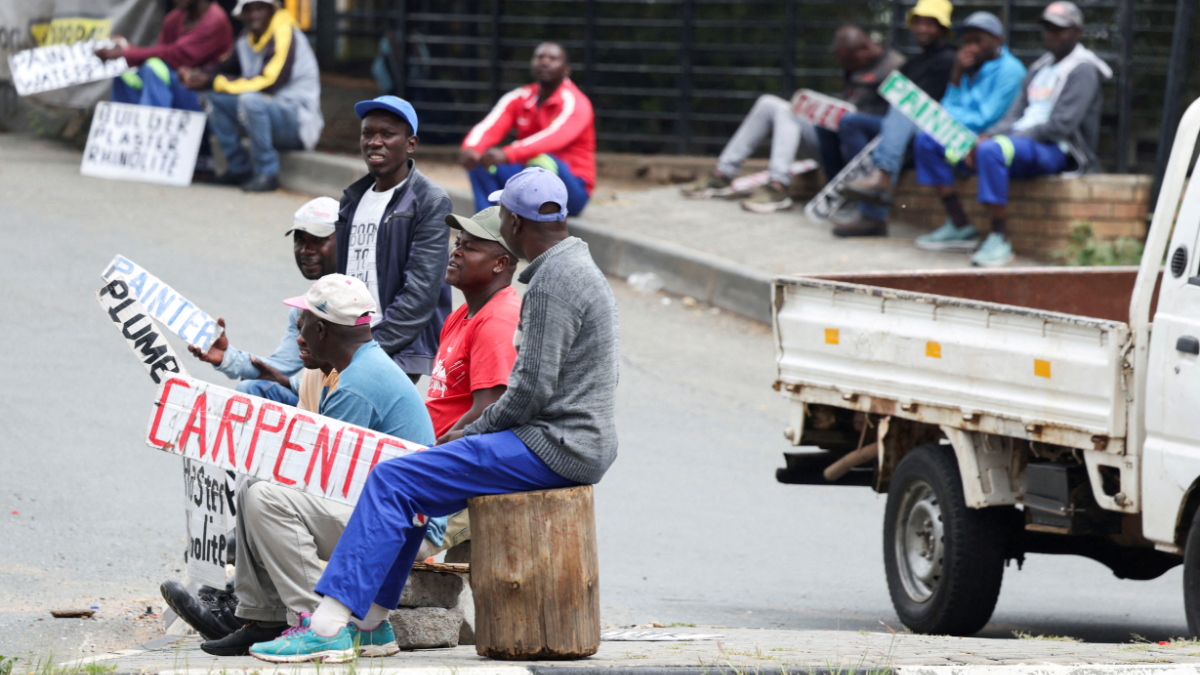
The union said that recent retrenchment notices received by the union in the past month alone directly and indirectly affect approximately 350,000 people.
Major companies, including Glencore-Merafe, ArcelorMittal, Ford Motor Company, African Rainbow Minerals, and Goodyear SA, issued the retrenchment notifications.
Solidarity blames these retrenchments on “systematic failures” that have “rendered the operating environment increasingly untenable for industrial and export-driven companies.”
This includes the sharp rise in Eskom’s electricity tariffs, which has made local production less competitive than South Africa’s global counterparts.
The union added that the “near collapse of Transnet’s railway and freight infrastructure” is severely hampering the movement of goods, increasing costs, and disrupting supply chains.
Finally, Solidarity added that the retrenchments are also a result of the government’s failure to secure a timely and favourable agreement with the US regarding export tariffs.
“It is a matter of public record that Solidarity has been critical of the government’s foreign policies of late,” the union said in its section 77 application.
“This is, and has never been, because of some sort of inborn animosity towards the state, but due to our allegiance to our country and through concern for what further diplomatic fallout will mean to all its people.”
350,000 people affected

President Cyril Ramaphosa visited Washington in May to negotiate a trade deal, but this ultimately failed and a 30% US tariff on all South African exports took effect on 8 August.
The US said that South Africa did not adequately address trade imbalances or align on economic and national-security matters.
South Africa faces the highest tariffs the Trump administration has introduced in sub-Saharan Africa.
IThis followed earlier measures, including a 31% tariff announced in April 2025 (effective April 9) and additional 25% tariffs on steel, aluminum, automobiles, and auto parts under Section 232.
These tariffs effectively nullify benefits from the African Growth and Opportunity Act (AGOA), which previously provided duty-free access for many South African goods.
The US justified the tariffs based on perceived trade imbalances, though South Africa accounts for only 0.25-0.4% of total US imports.
The South African government has said that it adopted a non-retaliatory, multifaceted strategy to minimise impacts, focusing on diplomacy, economic support, and diversification.
They said that this approach avoids escalating tensions with the US (South Africa’s third-largest trading partner) while protecting jobs and growth.
Solidarity said that it plans to visit Washington this week to “mitigate the negative consequences of the harsh trade tariffs and to help facilitate a trade agreement.”
The union said it has reached out to the President and the Ministry on many occasions, but “has only been met with silence and allegations that Solidarity is undermining the sovereignty of the state.”
Solidarity urged the president to prioritise a US trade deal, engage with affected companies and labour, fast-track energy tariffs, and form a task team to tackle infrastructure and trade bottlenecks.











 Loading ...
Expecting Parks Tau to respond – that was good for a chuckle.