
Political parties pocket billions from taxpayers



South African political parties raked in a whopping R3.24 billion in the 2023/24 financial year, a sharp increase compared to the R2.03 billion in the previous cycle.
Around R2.18 billion of this came from the fiscus and R1.05 billion in private donations.
This was revealed in the Electoral Commission’s (IEC’s) annual political party funding report, and analysed by civil society watchdog My Vote Counts (MVC).
The 2023/24 report shows that five parties received roughly 90% of the funding.
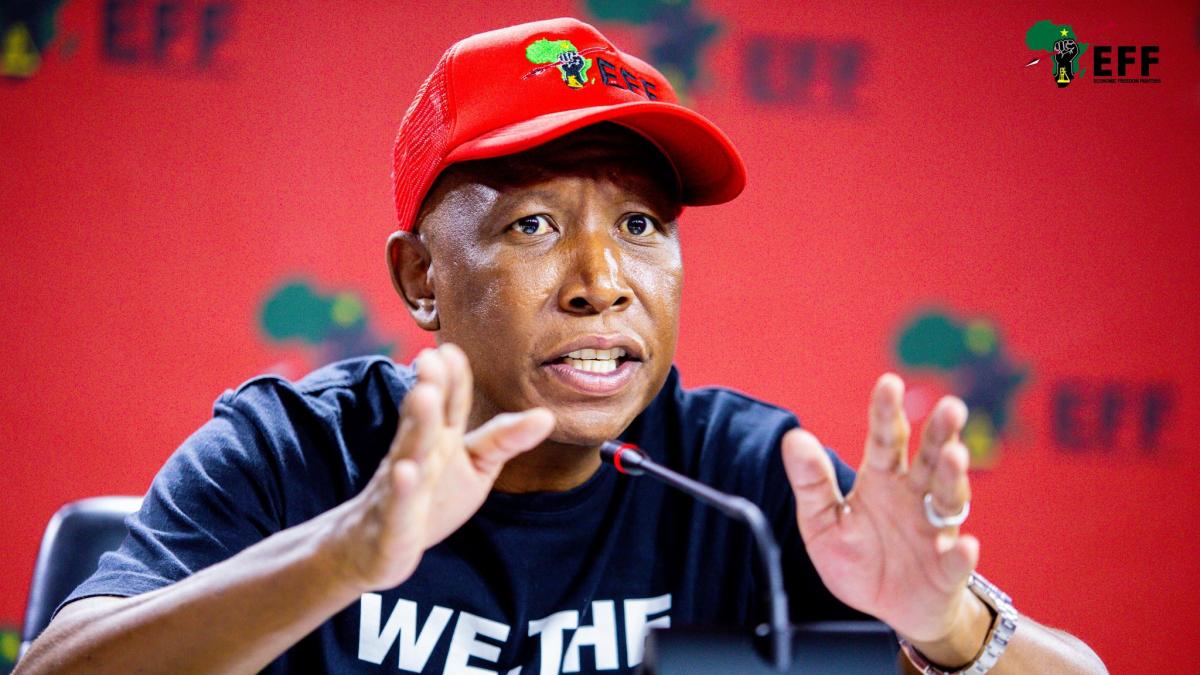
The African National Congress got about R1.72 billion, the Democratic Alliance R644 million, the Economic Freedom Fighters R309 million, the Inkatha Freedom Party R132 million, and the Freedom Front Plus R94 million.
For most of South Africa’s democratic era, political party funding operated in the shadows, with no legal requirement for disclosure of private donations.
Civil society organisations, led by MVC, challenged this secrecy in court, arguing that voters had a constitutional right to know who funds political parties.
In 2018, the Constitutional Court agreed, ruling that Parliament must create legislation to regulate and disclose party finances.
This judgment paved the way for the Political Party Funding Act, now the Political Funding Act, which came into effect in April 2021, introducing for the first time rules on disclosure, donation caps, funding oversight by the IEC, and crucially, public access to this information.

Billions from the public purse
The IEC showed that over the reporting period, represented parties received over R2.18 billion from the public purse, a sharp increase from the R1.05 billion from the previous year.
Public funding is taxpayer money channelled through three streams:
- The IEC’s Represented Political Parties Fund (RPPF), which distributes money quarterly using a formula based on parliamentary representation;
- Parliamentary allocations, provided to all represented parties in the National Assembly; and
- Provincial legislature allocations, given to parties with seats at provincial level.
Political parties receive public funding from the National Treasury to enhance multi-party democracy. The funds are provided on a largely proportional basis for their functioning.
These funding models, possibly by design, significantly benefit large and established political parties, to the detriment of new and smaller political parties.
In 2023/24, the Treasury allocated R350 million to the IEC’s RPPF, along with an extra R300 million top-up to help parties cover election campaign costs.
The ANC was the largest recipient by a wide margin, taking R1.19 billion, more than half of all public funds distributed.
The DA received R432 million, while the EFF collected R259 million.
Smaller parties got significantly less: the IFP received around R80 million, the Freedom Front Plus (FF+) R57 million, and the United Democratic Movement (UDM) R19 million.
The uMkhonto weSizwe Party (MKP), which entered Parliament only after the May 2024 election, did not feature in this reporting year.
Private funding

Private funding amounted to R1.05 billion, which includes donations from companies and individuals, membership fees and levies, and other income raised by parties themselves.
Donations above R100,000 (now R200,000) must be disclosed with the donor’s name, while smaller donations are disclosed only in total, so the public has no clue where it comes from.
However, any income that does not fall under these rules can be listed as “other income,” a category not regulated by the Act.
But while the amount surged ahead of the elections, only 31.8% was disclosed with donor details, leaving most private income untraceable.
The ANC dominated, reporting R527 million in private income, but only R69 million came from disclosed donations. The bulk, R413 million (78%), was listed as “other income,” a category outside the Political Funding Act that requires no detail on the source.
The DA followed with R213 million in private funds. Unlike the ANC, it disclosed most of its donations, including R126 million above the threshold and R29 million below it, while the rest came from small fundraising events, merchandise sales, and bank interest.
The EFF declared R50 million in private income, but its profile was unusual: just R2.6 million in disclosed donations, while nearly R45 million came from membership fees and levies, more than any other party.
Among new entrants, ActionSA raised R50 million, mostly from large disclosed donations, Rise Mzansi R33 million, and Build One South Africa (BOSA) R19 million.
Smaller but notable sums went to the FF+ at around R18 million, and the IFP, which reported R15 million.
By contrast, the MKP reported just R2.8 million in private funding, despite its large rallies, highlighting the gaps between visible campaign activity and reported finances.
The IEC also disbursed about R7 million from the Multi-Party Democracy Fund, which is made up of voluntary donations from private individuals and companies who want to support democracy in general rather than one party directly.
Loopholes and opacity
The funding system has improved transparency compared to the past, but loopholes remain.
Donations below the disclosure threshold need not be linked to donor names, loans must only be confirmed as “commercial” without further detail, and “other income” is not regulated at all.
This means disclosing who the funding came from is not mandatory.
“While much progress has been made in South Africa’s political party funding transparency landscape, we have since taken a big step backwards,” MVC’s Joel Bregman told a recent funding symposium.
In May 2025, Parliament approved changes to the Political Funding Act that doubled the disclosure threshold from R100,000 to R200,000 and raised the annual donation cap from R15 million to R30 million.
President Cyril Ramaphosa signed the amendments into law just days before the release of the IEC’s report.
“Donations above the R100,000 threshold only account for about one third of private funding. We know very little about the remaining two thirds, and this proportion will likely increase now that the threshold has been raised to R200,000,” it said.
“This change will greatly weaken legislation that already has several loopholes hindering its efficacy.”
For example, “it is alarming that we don’t know where almost 80% of the ANC’s private funding came from for the reporting period,” something that will increase since the amendments were made, MVC added.
“Without greater access to information about parties’ funding sources, their lending activities, and their expenditures, our ability to hold parties to account and detect cases of private interests influencing our politics remains limited,” said Bregman.
Read more: We do not know where 78% of the ANC’s private funding came from









 Loading ...
Why must anybody or group, registered as a political party, receive any money from the state?
Independant Persons or Groupings such as NPO’s receive no money at all.
Plain and simple: Not a Democratic Principal at all.