
South Africa, Namibia, and the Orange Basin


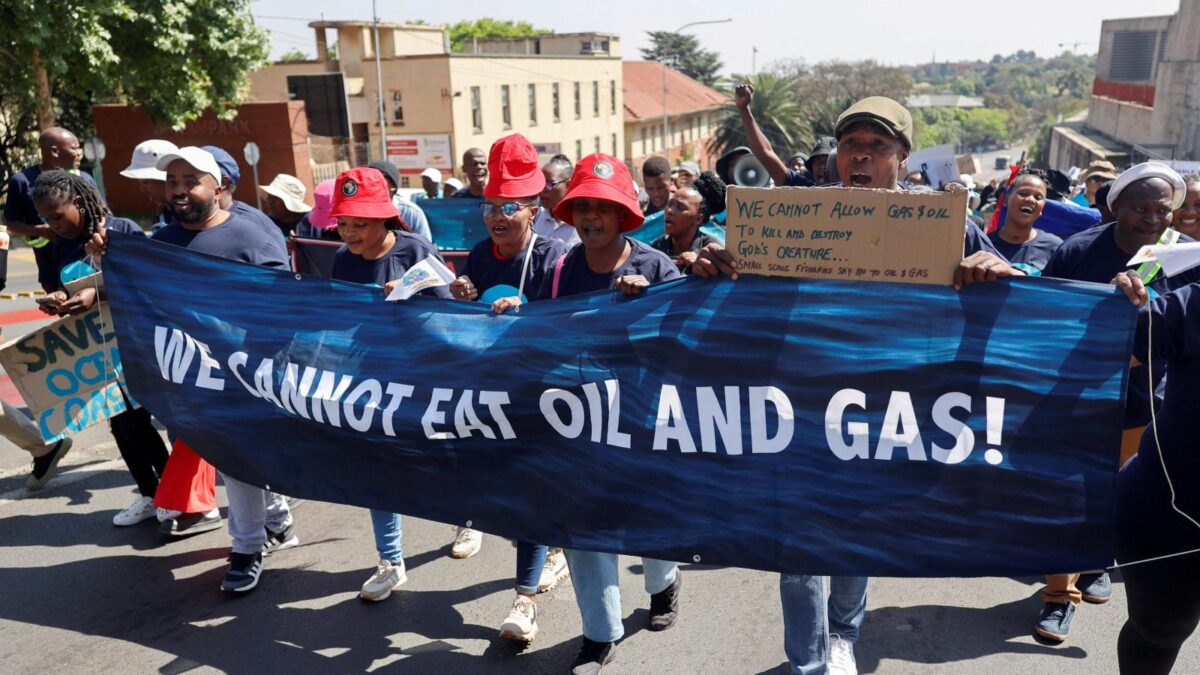
The Orange Basin petroleum province shared by Namibia and South Africa has become a test case for how African states balance the demands of oil companies and local groups, with billions of dollars in investment, jobs and tax revenues at stake.
The province has made Namibia a global exploration hotspot, pushing for first oil by 2030 and expected to initially produce around 150,000 barrels per day via TotalEnergies’ Venus project. South Africa has yet to unlock similar reserves.
Two events in June highlighted the widening gap between how the two countries are handling the basin’s development.
On June 9, Shell put out a statement describing a new find offshore Namibia as having the “most promising subsurface results to date” in petroleum exploration licence 39, home to multiple promising wells since 2022, including the country’s first major oil discovery, Graff-1X.
A week earlier, in a packed Cape Town courthouse, environmental groups and fishing communities launched a bid to overturn a permit allowing TGS to conduct offshore seismic surveys in South Africa’s area of the basin.
Environmental groups and local communities have launched at least four court cases and numerous other appeals against South African offshore ventures and proposed onshore liquefied natural gas projects since 2021, according to eco-justice group Green Connection.
That has delayed up to 10 wells that were expected to be drilled by 2030, South Africa’s petroleum regulator, PASA, said.
“We cannot explore, we cannot spend money in a geography if we have to face courts permanently and the permitting becomes really too complex,” TotalEnergies CEO Patrick Pouyanne said during October’s results presentation when asked about South Africa and Namibia.
Permits can take up to five years to secure in South Africa
Formed millions of years ago when South America broke away from Africa, the Orange Basin is named after a river that drains into the Atlantic Ocean along the border of South Africa and Namibia.
In South Africa, where around two-thirds of the basin lies, non-governmental organisations and environmental activists have taken a more aggressive approach to contesting projects in the extractive industries than in Namibia, with mixed success.
Current regulations there, which cut across different ministries, allow for wide-ranging internal appeals against environmental and social impact assessments, as well as judicial reviews in court, whose outcomes can then also be appealed.
Industry body the Offshore Petroleum Association of South Africa says exploration permits can take up to five years to secure in South Africa, compared with three to nine months in other African countries.
“A similar route of long delays threatens to frustrate South Africa should there be any discoveries,” OPASA spokesperson Niall Kramer said.
TotalEnergies has acquired acreage along South Africa’s west coast and aimed to drill its first exploration well this year, but its plans are now uncertain.
Commercial interests vs communities
Attention is now focused on a ruling, potentially later this year, from South Africa’s highest court that could make getting offshore exploration permits easier or more onerous.
The case, first launched in 2021, concerns a challenge by environmental groups and local communities to a Shell-led seismic survey along the tourism-dependent Wild Coast.
Among other things, the court is expected to determine whether commercial interests can outweigh the rights and dignity of coastal communities, environmental lawyer Ricky Stone said.
“This judgment will be one of the most significant precedents in South African environmental and constitutional law in a generation, whatever the Constitutional Court decides,” he said.
Shell declined to comment, citing its close period ahead of earnings.
We drilled, and nothing happened
Although some South African politicians advocate renewables, petroleum minister Gwede Mantashe backs oil and gas development and supports industry calls for specialised courts to handle energy disputes.
South Africa’s west coast has offered glimpses of potential, including the Ibhubesi gas field, estimated to contain about 540 billion cubic feet of gas and 4.3 million barrels of condensate.
A well drilled by Eco Atlantic Oil & Gas in 2022, Gazania-1, also found light oil-associated gases, but not enough to develop.
“We drilled, and nothing happened,” Eco Atlantic CEO Gil Holzman told Reuters.
“So, we are living proof that one can actually drill in the basin, leave the surface untouched, and it has zero negative impact on the local communities, zero impact at all on the environment,” he said.
Outside the courtroom in Cape Town last month, where the TGS case was being heard, Stanley Young, a 65-year-old small-scale fisherman from Port Nolloth, disagreed.
“The ocean provides for us for generations, and we must protect it,” he told Reuters. “If oil and gas come in here, it will destroy our livelihoods completely.”





 Loading ...
Extracting hydrogen from Sea water seems like a much easier and viable environmentally friendly choice if you ask me……