
ANC won’t have a majority in 7 out of the 9 provinces after 2029 – study



South Africa’s political landscape is undergoing a significant transformation, with a notable shift away from the African National Congress (ANC)’s long-standing dominance towards an era of coalition governance.
The 2024 elections hit the ANC hard, getting 40% of the vote nationally, and the party was unable to achieve a majority in Gauteng, KwaZulu-Natal, the Western Cape, and the Northern Cape.
Much to the dismay of the ANC, this trend is not likely to reverse.
A recent study from the Mapungubwe Institute for Strategic Reflection shows that the ANC is increasingly likely to lose its outright majority in most provinces, necessitating complex power-sharing arrangements.
Professor Susan Booysen, a prominent South African political analyst and the lead researcher for the report, noted that in the 2029 general elections, the ANC is projected to retain outright control in only two provinces – Limpopo and the Eastern Cape.
Speaking to Channel Africa, Booysen explained that analysis of provincial outcomes is “based on a very simple trends analysis of provincial results of the ANC in elections.”
She notes a “consistent unchanged downward curve” for the party since 2004, which took “a quite a big dip in the last election”.
This consistent decline, Booysen said, highlights a significant erosion of the ANC’s support base across the country, with players like the Democratic Alliance, uMkhonto we Sizwe Party, Economic Freedom Fighters and the Patriotic Alliance continuing to absorb former ANC voters.
Analysis of the study
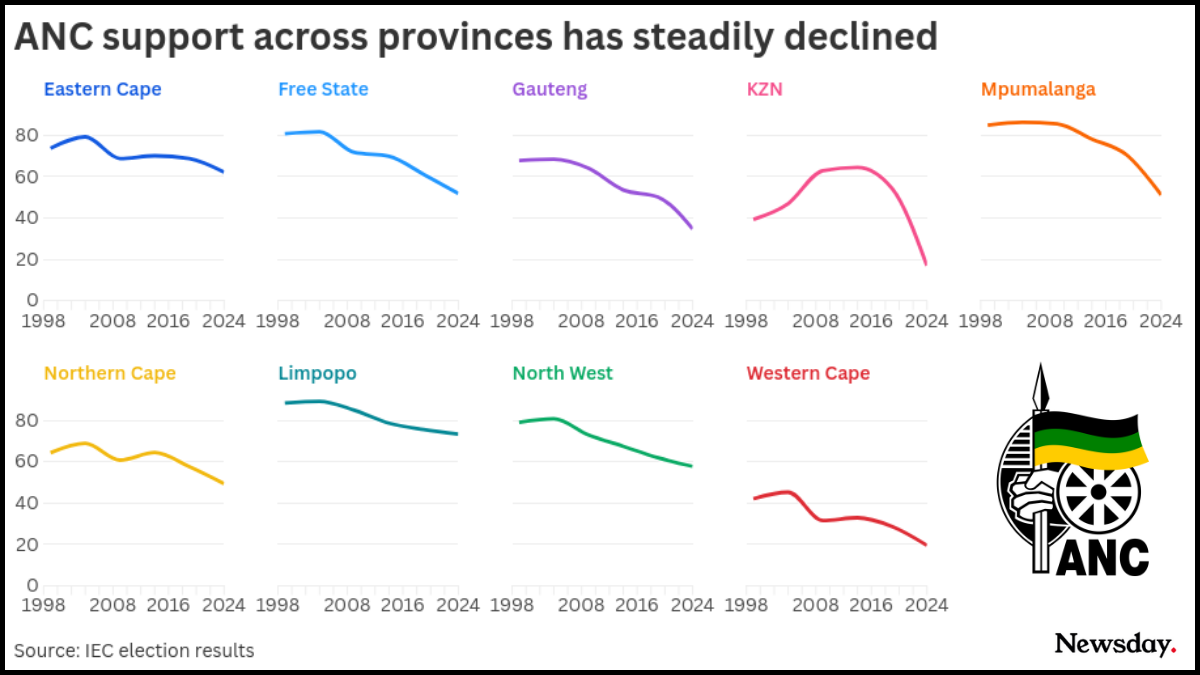
Booysen said that the Free State and Mpumalanga have emerged as the two provinces where the ANC’s majority is most tenuous.
She notes that both provinces are hovering just above the 50% support threshold, and if current trends continue, the ANC risks slipping into a minority position.
Booysen sees little on the political horizon to reverse this trajectory.
“There is nothing transpiring politically, nothing inspiring, a newfound or reinvigorated faith in the ANC in those provinces—or in other provinces,” she says.
For the ruling party to stem the decline, it would require strong, inspirational leadership, unambiguous clean governance, and a clear mission statement.
This is an incredibly daunting task for the party that has been in power for over three decades. According to a Afrobarometer survey, 83% believe that the country is going in the wrong direction – more than double the 41% recorded in 2011.
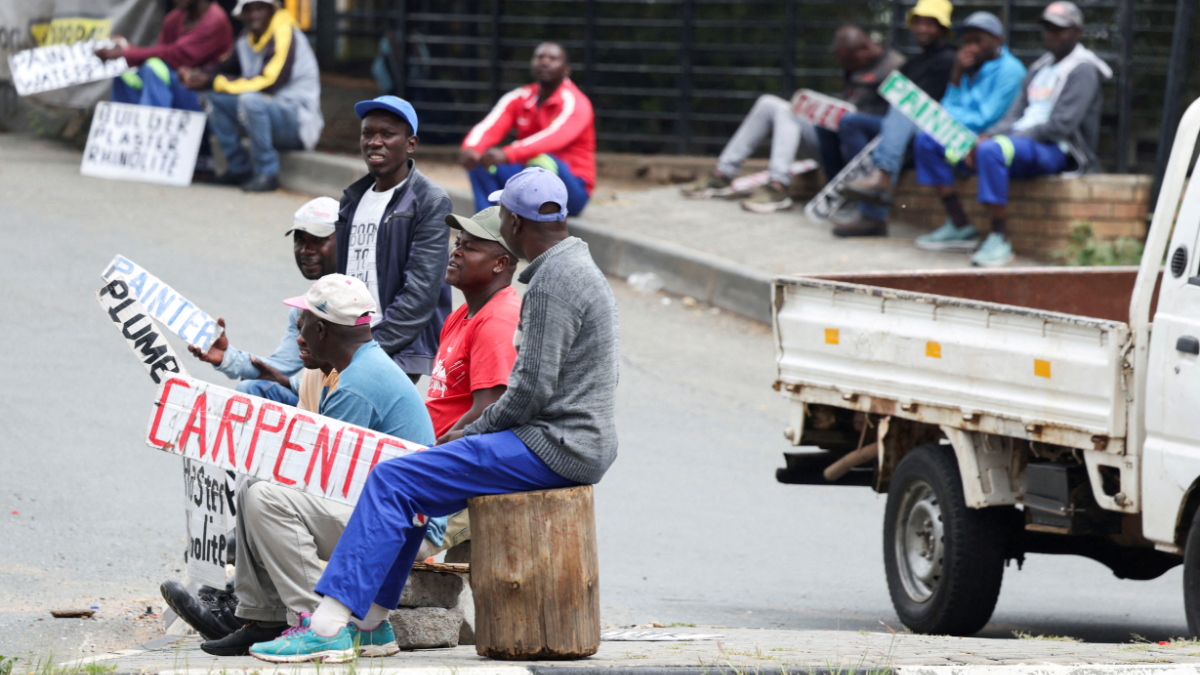
Official unemployment is at 33.2%, expanded at 42.9% and youth at 46.1%.
However, the nature of coalition government makes addressing this challenging, as significant policy decisions require extensive consultation among partners.
South Africa’s emerging coalition culture, particularly at the national level, is described by Booysen as “very transactional and very hollow in terms of convergence.”
Unlike in countries where coalitions coalesce around a core set of policy priorities, coalitions in South Africa often lack a shared foundation.
While broad objectives such as economic development and job creation are common, the proposed paths to achieving them vary sharply, leading to conflict.
This divergence, she adds, fuels acrimonious disputes that often spill into the courts.
As a result, South Africa is entering a phase where political survival frequently takes precedence over public service.
Coalitions, though increasingly necessary, remain fragile and fractious.
The outlook suggests that the ANC’s era of unilateral governance in most provinces is drawing to a close, giving way to an era of complex and often contentious coalition politics.

















 Loading ...
And the moment the ANC loses control, Civil war.