
South Africa is facing a crisis worse than load shedding



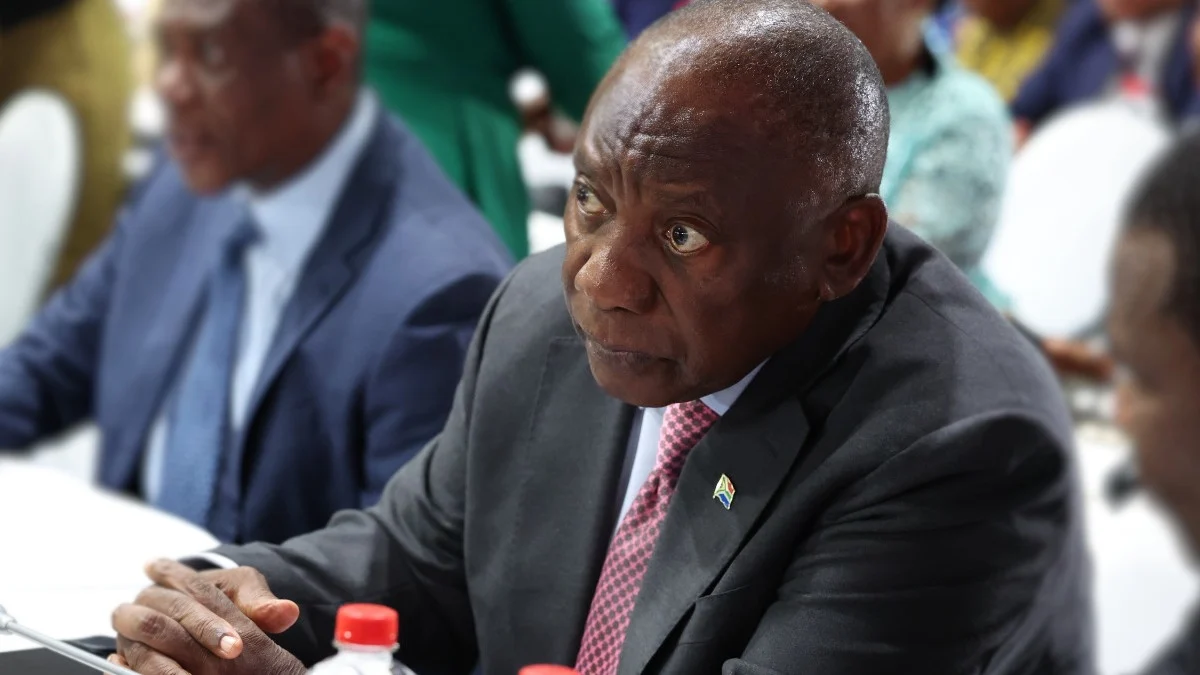
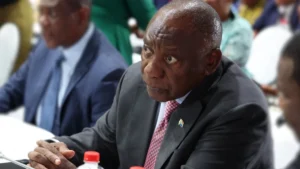
President Cyril Ramaphosa has vowed that the basic human right of the provision of water across the country will be a top priority for government.
He added that they will lay criminal charges against municipal officials who fail to deliver water to communities.
Ramaphosa made the same remarks in January 2025, noting in his party’s January 8th statement that “load shedding has been supplanted by the crisis of water security, which poses a similar if not greater threat to the quality of life and economic prospects of all South Africans.”
Taps across the country are running dry due to, but not limited to, inadequate investment in infrastructure, corruption, the proliferation of illegal connections, water scarcity, climate change, and other inefficiencies in the system.
From major metros like Johannesburg in Gauteng, to small towns like Knysna in the Western Cape, many communities across South Africa are being denied what is guaranteed to them in Section 27 of the Constitution – access to sufficient water.
For example, residents of Johannesburg held scattered protests this week after taps had been dry in some neighbourhoods for over three weeks.
“Water outages are a symptom of a local government system that is not working,” said Ramaphosa. “We will hold to account those who neglect their responsibility to supply water to our people.”
As such, the President said that he will personally chair a new National Water Crisis Committee. This mirrors the approach taken with the energy crisis to bypass municipal bottlenecks.
As has been reported for years, Ramaphosa said that new state-owned entity will be established to tackle South Africa’s water crisis.
Like he said in 2024, the government “is in the final stages” of establishing the National Water Resource Infrastructure Agency to monitor water infrastructure.
Almost a decade after government launched its “war on leaks,” South Africa is still losing nearly half its potable water.
Non-revenue losses sit at 47.4%, with pipe leaks at 40.8%, far above the global average.
“Billions have been spent on upgrades that never materialised or were riddled with corruption,” said Adam. “The problem is less about not having water than not managing water.”
Just this week, Minister of Water and Sanitation Pemmy Majodina said it would cost an estimated R400 billion to fix the country’s dilapidated water supply network.
She said in an interview with the SABC that the current crisis is not due to a lack of water in the country’s dams, but rather a failure of local government to deliver it.
She argued that the DWS has fulfilled its mandate by providing sufficient bulk water supply.
The “last mile”, getting water from reservoirs to household taps, is the constitutional responsibility of municipalities.
The department blames crumbling municipal pipes, “water mafias” who sabotage infrastructure to secure water tanker tenders, and a lack of technical skills at the local level.
Governance failures

While government entities often shift the blame to residents for overconsumption, some experts say that this is just a ploy to divert blame.
“There is a 100% correlation with governance failure, as nowhere in South Africa do we have an absolute water scarcity,” water expert Professor Anthony Turton recently told Newsday.
“Taps are dry because municipalities have failed for a variety of reasons. These include the mismanagement of funds, inability to collect revenues, lack of ring-fencing for finances and the loss of technical skills due to purges,” said Turton.
WaterCAN’s Dr Ferrial Adam echoed this, telling Newsday that “the majority of dry taps we see today are not caused by natural scarcity, but by governance failures.”
“Without competent governance, no amount of rainfall or dam storage will translate into reliable taps.”
“Mismanagement of infrastructure, endemic corruption, political interference in appointments, and a collapse in technical capacity mean that even where water is available, it cannot reliably reach households.”
Turton likens the system to pouring into a leaking bucket: no matter how much bulk suppliers deliver, broken municipal infrastructure ensures it never fills.
The waste not only drains a scarce resource but costs cities billions in lost revenue that could fund urgent repairs.
Adam said that “there is a clear lack of urgency when it comes to fixing governance failures.”
The WaterCAN executive director said that reforms have stalled largely because of political patronage networks, resistance to transparency, and the fear that independent monitoring would expose entrenched corruption.
There is also a chronic skills drain from municipalities, with many engineers leaving for the private sector or abroad.
Additionally, “national government oversight has been weak, with limited accountability for underperforming Water Services Authorities,” added Adam.
The problems and solutions

Turton said that in his professional opinion, the core problem is South Africa’s constitution.
“There is no accountability built into the constitution, and the Cooperative Governance Clause means that the Department of Water and Sanitation is unable to reach out across tiers and spheres of government to regulate effectively.”
South Africa either needs to change the cooperative governance clause, or get an independent water regulator if jobs are to be created and investors are to be enticed back into South Africa, explained Turton.
Speaking about practical reforms needed to turn around failing municipalities and prevent deeper water crises, the water expert urges for the government to:
- Ring fence finance in municipalities.
- Roll out Special Purpose Vehicles (SPVs) to build capacity.
- Depoliticise the management of water by employing only technically competent people into key leadership positions.
WaterCAN has consistently called for:
- Professionalising water services by ending political appointments and hiring qualified engineers.
- Transparent reporting of water quality and infrastructure data.
- Ringfenced budgets to prevent diversion of water funds.
- Expanding citizen science initiatives like Water Testing Week.
- Stronger independent oversight through Chapter 9 bodies and civil society action.










 Loading ...
These past 30 years in South Africa are a microcosm of why Africa, the continent, doesn’t work. Surely, freedom is about human dignity, not about going without basic services. Once again, a criminal government has brought a proud nation to its knees.