
Easy way to make healthcare more affordable in South Africa



Nicholas Woode-Smith, a senior associate of the Free Market Foundation, argues that training more doctors is the path to lowering healthcare costs.
He shared his views about healthcare in South Africa in an article published in the Rational Standard on 29 January 2026.
He argued that South Africa’s healthcare costs cannot be solved by a taxpayer-funded universal healthcare system or the National Health Insurance (NHI).
“Any state-run healthcare initiative will soon collapse under the intense weight of corruption and incompetence,” he said.
He cited public hospitals, like Tembisa Hospital, which have become a cesspool of wasted money and wasted lives.
Even without corruption, there would still be a major problem with the affordability of healthcare.
South African taxpayers, who are already overburdened, would ultimately carry the cost of an inefficient system.
The public healthcare budget sits at R298.894 billion as of 2025/2026, and is set to rise to R300 billion.
“Despite this, private spending still makes up 51.76% of healthcare spending,” Woode-Smith said.
He argued that the solution isn’t to spend more money on healthcare. It’s to reduce the costs of delivering medical services.
There are many factors that determine healthcare costs, but the most notable factor is, of course, the supply of doctors.
He said South African doctors are notoriously overworked and face tremendously challenging conditions in emergency rooms.
“Doctors, especially still in training, are expected to work ungodly hours under intense pressure. Burnout isn’t a risk. It’s a certainty,” he said.
South Africa needs more doctors
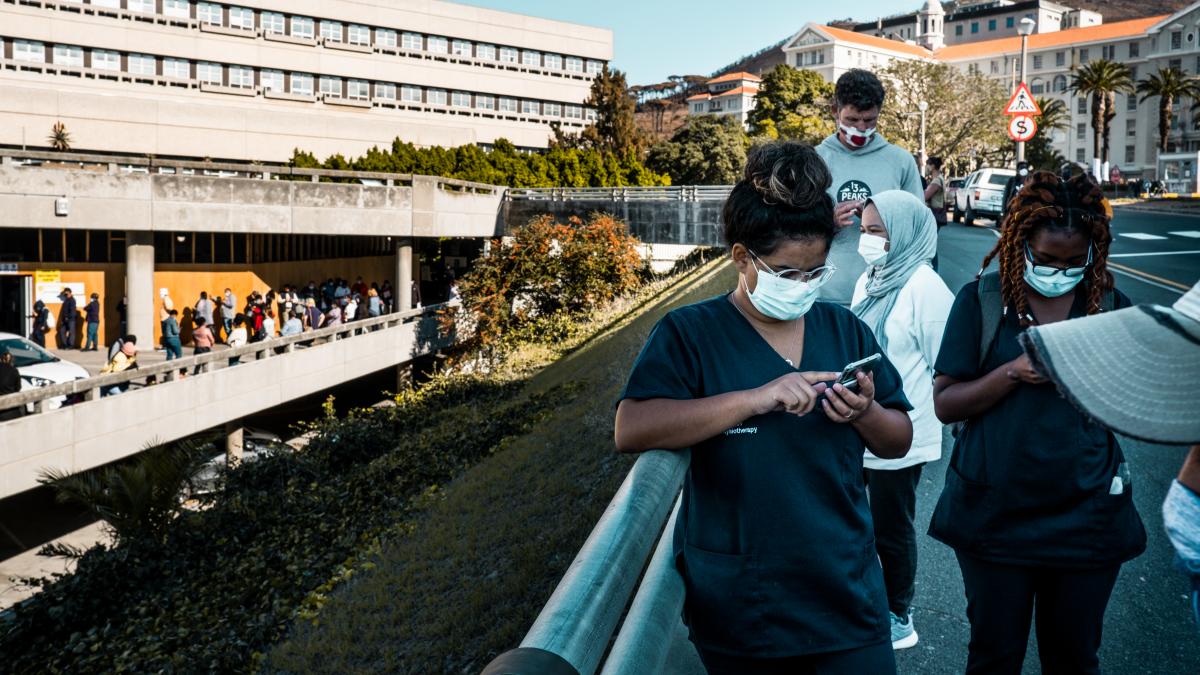
Nicholas Woode-Smith said South Africa needs more doctors to take the pressure off existing doctors and increase the supply.
Training more doctors will create more competition in the South African medical sector and drive down prices.
Woode-Smith argues that the healthcare crisis is driven by artificial bottlenecks and government-imposed gatekeeping rather than a lack of student merit.
Despite thousands of high-achieving applicants, the country’s ten medical schools only offer about 1,900 positions annually.
Consequently, South Africa maintains the second-lowest doctor-to-population ratio among 36 OECD-measured countries.
He accused the Health Professions Council of South Africa (HPCSA) of suppressing competition to maintain high salaries for existing doctors.
An easy solution will be to allow the private sector and private higher education institutions to train doctors.
Currently, the private sector is barred from opening medical schools, which removes this possibility.
Woode-Smith wants the state to allow private colleges and accredited private facilities to handle internships, citing India’s success with private medical education.
He also bemoaned South Africa’s mandatory community service for doctors, saying it creates an arbitrary bottleneck.
Inefficient bureaucracy often leaves doctors unable to practice for months while they wait for placement, worsening the manpower shortage.
The solution to South Africa’s high medical costs lies in liberalization, not government centralization, he said.
Woode-Smith said that abolishing the monopoly on medical training and ending mandatory service would increase the supply of doctors through market competition.
This would ultimately make healthcare more affordable and accessible, facilitating human flourishing by matching healthcare supply with demand.

















 Loading ...