
Government promises that cronies are not first in line for the FMD vaccine


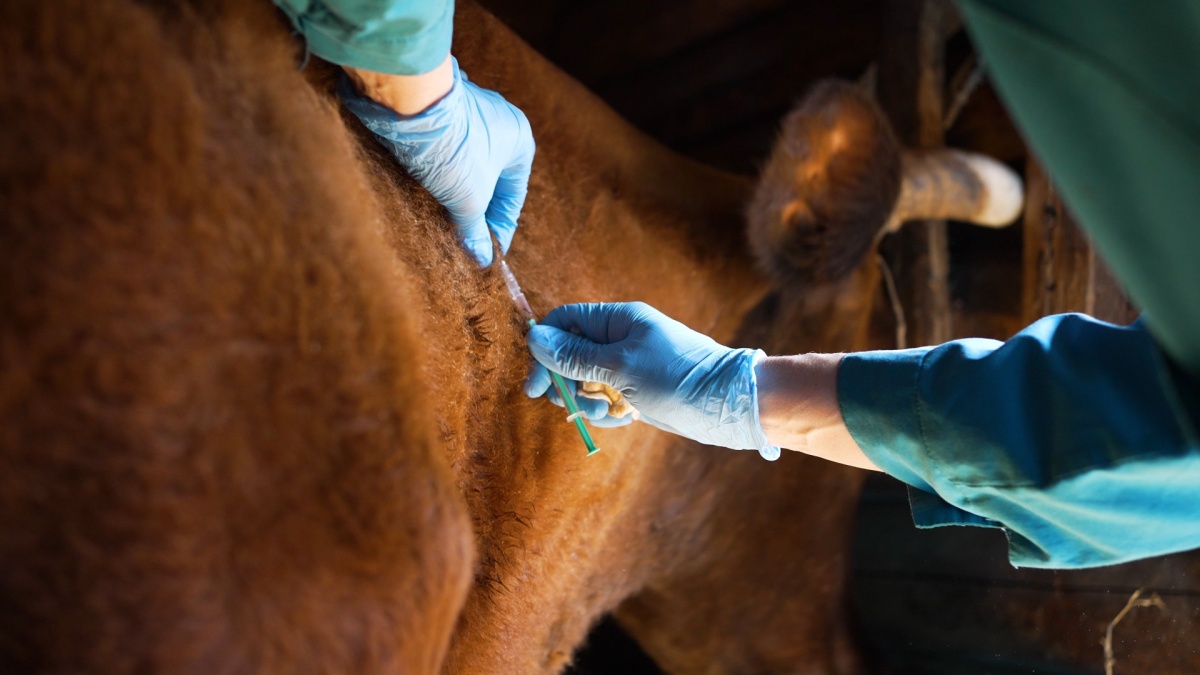
South Africa’s Department of Agriculture has promised that well-connected farmers will not be prioritised during the rollout of the state-controlled Foot and Mouth Disease vaccinations.
With the national herd standing at approximately 15 million cattle and local vaccine production only just restarting with a pilot batch of 12,900 doses, competition for the limited supply is fierce.
The scarcity has sparked fears that politically connected farmers and “cronies” might bypass the queue, leaving smaller or less influential operations exposed to the virus.
In response to direct questions from Newsday regarding whether “large cattle businesses, politically-connected farms, and those belonging to bureaucrats” would be pushed to the front of the line, the Department of Agriculture insisted that the rollout is strictly scientific.
“All along, FMD has been classified as a controlled animal disease in terms of the Animal Disease Act,” the Department stated.
“We have a risk-based vaccination strategy… distributed based on risk. The rollout of our plan is in place and those who are in the high risk areas will be vaccinated”.
The government contends that the “protection zone” areas, buffers preventing the spread from infected to free areas, must be the priority to salvage the nation’s export status.
Government has also initiated a national state of disaster to unlock emergency funding, while distribution is being centrally coordinated to ensure prioritised access and cold-chain management.
The planned vaccination programme is aimed at covering more than 7 million cattle, with government targeting the wider national herd of about 14 million cattle under a two-dose protocol requiring an estimated 28 million doses.
The Department has secured major vaccine imports, including 1.5 million doses from Turkey’s Dollvet delivered in the third week of February 2026, with a further 5 million expected in March.
Meanwhile, while Biogénesis Bagó of Argentina is reportedly supplying 1 million doses in mid-February followed by 5 million more in March.
The Botswana Vaccine Institute is also allegedly set to deliver 700,000 doses by end-February, with monthly supplies of 700,000 doses planned for April, May and June.
At the same time, local production has resumed through the Agricultural Research Council, producing an initial pilot batch of 12,900 doses and an additional 12,000 doses in mid-February.
Output is expected to rise to 20,000 doses per week by March 2026, with a longer-term goal of 200,000 doses per week by 2027, enabling annual capacity of 10 million to 20 million doses.
The trust deficit
However, agricultural lobby groups and opposition parties remain sceptical. They argue that a centralised system, where the state holds a monopoly on decision-making, inevitably breeds bottlenecks and opacity.
A coalition comprising Sakeliga and the Southern African Agri Institute (SAAI) has launched litigation to break the state’s “centralised monopsony” on vaccine procurement.
Anton Meijer of Sakeliga told Newsday that the issue is not just supply, but control.
“When vaccination is exclusively state-controlled, practical bottlenecks are inevitable,” Meijer said.
He argued that centralisation prevents the “immediate, widespread responses” that private farmers, who have the strongest financial incentives to act, could provide.
The scepticism regarding fair distribution is rooted in historical mismanagement.
ActionSA MP Athol Trollip pointed to the collapse of the Onderstepoort Biological Products (OBP) facility, noting that R500 million earmarked for upgrades allegedly went missing.
Critics argue that a department unable to account for half a billion rand in infrastructure funds faces a credibility crisis when asking farmers to trust its distribution protocols.
“No skin in the game”
Trollip further criticised what he labeled as the disconnect between the bureaucrats managing the “risk-based strategy” and the farmers living through the crisis.
He argued that Pretoria-based officials “have absolutely no skin in this fight” because they receive their salaries regardless of the outcome.
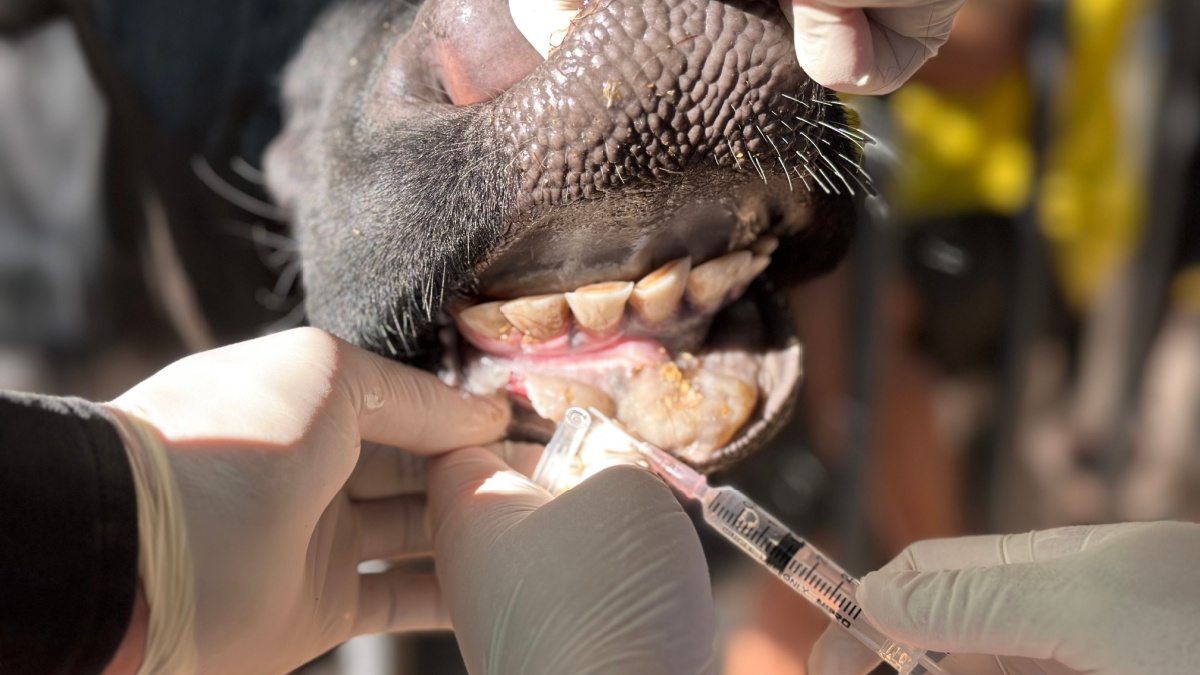
“They will get their salary at the end of the month, whether one cow dies or 10,000 cattle die,” Trollip said, contrasting this apathy with the visceral reality of farmers watching cattle suffer with “hoof walls falling off” and udders bursting from mastitis.
Dr. Wynand Boshoff of the Freedom Front Plus echoed these concerns, stating that the state’s insistence on control assumes a “world-class state veterinary capability” that no longer exists.
“The state does not have the capacity. Private veterinarians should be key in this fight. There should not be a monopoly on vaccination,” Boshoff said.
State control vs. free market

Minister of Agriculture John Steenhuisen has defended the state’s tight grip, labelling calls for a private-sector free-for-all as “short-sighted and reckless”.
The government maintains that to regain FMD-free status with vaccination from the World Organisation for Animal Health (WOAH), South Africa must prove strict state oversight.
This requires verifiable data that the state claims is impossible to generate without centralised monitoring.
To mitigate capacity issues, Steenhuisen has committed to integrating private veterinarians into the rollout, but only under “rigid official state oversight”.
The Minister argues this hybrid approach ensures that only high-potency vaccines matched to South African viral strains are used, preventing the emergence of new variants.
The Department has also authorised private agents to import vaccines from suppliers like Biogénesis Bagó (Argentina) and Dollvet (Turkey) to bridge the gap. However, the distribution of these imports remains under state directive.
For the coalition of farmers suing the government, this is insufficient.
They contend that Section 11 of the Animal Diseases Act obligates them to take reasonable steps to prevent infection.
The groups say that this is a duty they cannot fulfil if the state, which cannot supply enough vaccines, also forbids them from acquiring their own.
As the legal battle looms, the Department reiterates that its strategy is immune to political pressure. “Our prevention zone areas are also considered a priority area,” the Department noted.
Whether this scientific assurance will satisfy farmers watching their herds face imminent ruin remains to be seen.












 Loading ...
I have no doubt that the ANC’s agenda to successfully Expropriate the Afrikaners Farmland’s is to withhold the Vaccine, ultimately killing off their livestock, bankrupting the Farmers and forcing them to sell at a massive discount.