
Government pulls R3.8 billion lifeline for South African Post Office



The business rescue plan for the South African Post Office is failing, as the taxpayer-funded bailout the state-owned entity was counting on will not materialise.
This is according to the latest update from the Business Rescue Practitioners (BRPs), Anoosh Rooplal and Juanito Damons, in the latest update on the business rescue plan.
The BRPs say that they are seriously considering the possibility of exiting business rescue and returning the company to its shareholder, the government, under a newly appointed board and a cloud of financial woes.
The business rescue plan is dependent on a funding tranche of R3.8 billion from the government, which, despite promises, has not materialised.
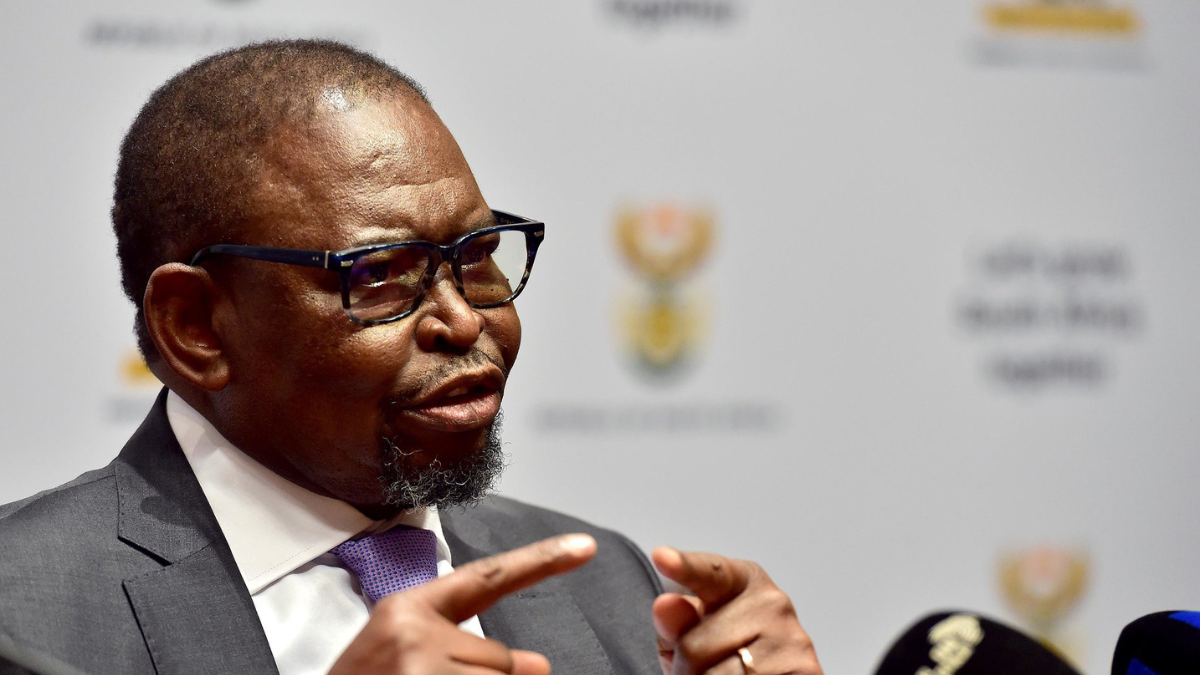
On 7 February, the Parliament Portfolio Committee on Communications and Digital Technologies requested a meeting with Finance Minister Enoch Godongwana to explain why the SAPO has not received the funding.
According to the committee, responses from the Treasury have been that it did not commit itself to providing the R3.8 billion, and that this was subject to an approval process.
The BRPs have now shared that they received correspondence from the government confirming that this money will not be provided.
While the BRPs did not share the reasoning behind the decision, it was said by Joe Maswanganyi, Chairperson of the Standing Committee on Finance, in November 2025 that the government would not be handing out any more bailouts to SOEs.
“SOEs have been an albatross to our budget,” the chairperson said to Newzroom Afrika. However, he added that with some SOEs ‘turning the corner recently’, Parliament feels comfortable in its decision to halt bailouts from the National Treasury.
Considering the news that this funding is no longer on the cards, the practitioners say it is now necessary to reassess the business rescue plan and the future viability of the South African Post Office – neither appears positive anymore.
The decline of the South African Post Office

The business rescue plan further depended on a Temporary Employer Relief Scheme (TERS) from the Department of Labour to support the post office in paying salaries.
The amount of R381,297,863.83 was to be paid monthly until 30 November 2025. However, of the six payments, three are still outstanding as of the end of January 2026.
This is now becoming a serious cash flow issue for the post office, according to BRPs. The Department has not explained the delay in this payment.
“This has created additional pressures on the already tight cash flow position of the entity,” they said.
The latest confirmation that this funding will not be provided comes less than two months after SAPO’s monopoly on parcels less than 1kg was ended.
The Post Office was granted a 25-year exclusivity period under the Postal Services Act of 1998, which ran from 1 April 2000 until 1 April 2025.
Minister of Communications Solly Malatsi announced in March that he intended to review the Post Office’s exclusivity on reserved postal services, and invited interested parties to submit their views on the subject.
He revoked the SA Post Office’s exclusivity on small parcels nine months later, in a Government Gazette published on 12 December 2025.
“This would negatively affect SAPO’s future postal and courier operations,” BRPs said. However, the practitioners are working to get the regulator, ICASA, to review the Minister’s decision. The exclusivity remains in place for now while this process concludes.
The practitioners argue that the legislated exclusivity was modelled into their turnaround strategy. This, coupled with the cancellation of bailouts, has made it increasingly impossible for SAPO to improve its position.
Business rescue plan on the rocks
Declining mail volumes from the early 2000s and eroding trust among the South African public, caused by slow deliveries and stolen parcels, saw the post office report a financial loss for the first time in 2013.
Since then, it has been downhill for the postal service, which cost South African taxpayers R7.9 billion in bailouts over the next several years.
This ultimately led to the postal service being placed in business rescue in 2023, resulting in a further R2.4 billion bailout.
While the Post Office attempted to get its finances in order, the private sector stepped in to fill the gap, which continued to grow given the rising popularity of e-commerce in South Africa.
The Parliament Portfolio Committee on Communications and digital technologies has requested a meeting with Finance Minister Godongwana to explain what happened to the R3.8 billion bailout, which will be scheduled within the next few days.
Rooplal and Damons say they continue to believe in the meaningful role the post office can play in South Africa, particularly for underserved communities.
“However, in the absence of funding to further upgrade the infrastructure and digitise the entity, the Business Rescue Practitioners, as has been noted in the past, must assess their position,” they said.









 Loading ...