
John Steenhuisen’s message about a major crisis in South Africa


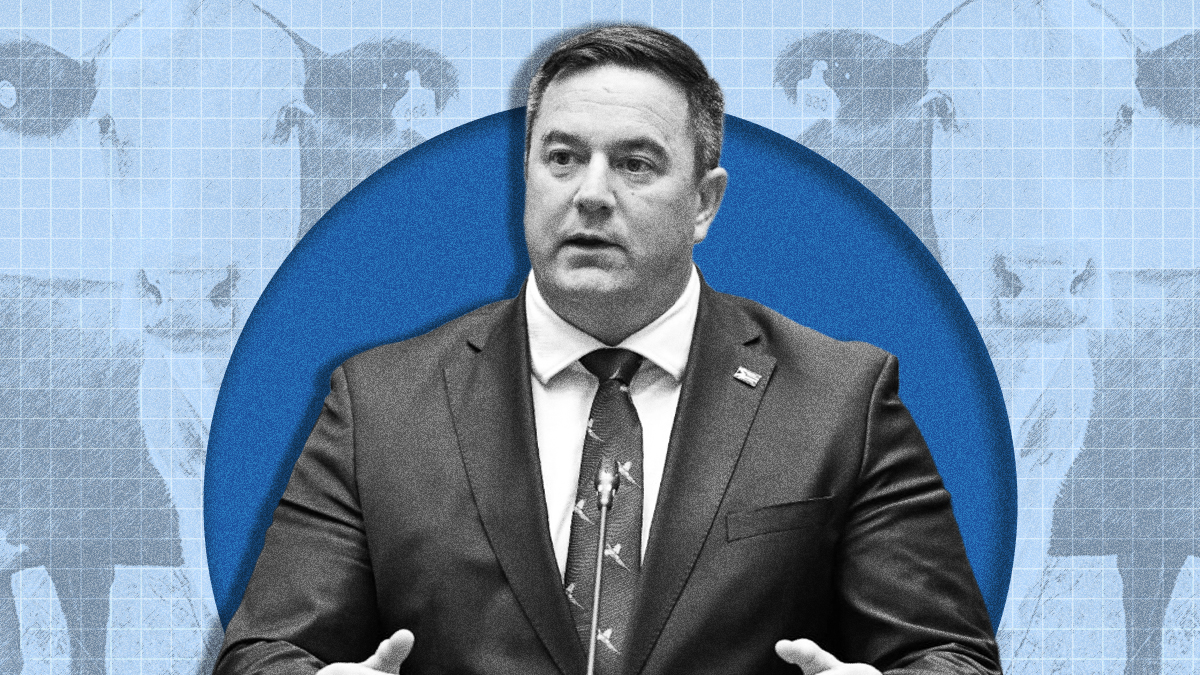
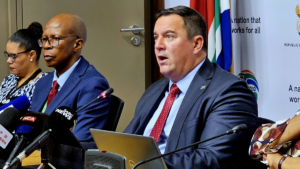
A deepening crisis over the management of South Africa’s worst Foot and Mouth Disease (FMD) outbreak in history has escalated into a legal showdown between Minister of Agriculture John Steenhuisen and a coalition of private agricultural lobby groups.
On January 31, 2026, following the expiration of a deadline for the Minister to provide legal justification for the state’s prohibition on private vaccinations, the coalition announced it had instructed attorneys to approach the courts to review and set aside the ban.
These groups comprise Sakeliga, the Southern African Agri Institute (Saai), and Free State Agriculture.
At the heart of this conflict is a fundamental disagreement over how to contain a disease that threatens to decimate the national herd.
FMD causes severe lameness and reduced productivity in cloven-hoofed animals, representing a catastrophic economic threat to South African agriculture.
While the lobby groups argue for a decentralised approach that empowers farmers to act, Minister Steenhuisen maintains that strict state control is the only path to recovery.
The legal challenge mounted by the agricultural coalition is rooted in the assertion that the government’s centralised management of the outbreak is failing.
The groups contend that the current outbreak is “severely out of control” and that the Department of Agriculture lacks the capacity to administer vaccines effectively in affected areas.
According to the coalition, the prohibition on private vaccination is not only irrational but potentially unlawful.
Their legal demand relies heavily on the interpretation of the Animal Diseases Act.
Specifically, they argue that Section 11 of the Act places a legal obligation on land managers and animal owners to take “reasonable steps” to prevent infection.
By blocking farmers from procuring and administering vaccines to their own livestock, the state is effectively forcing them to neglect their legal duty to protect their herds.
Furthermore, the groups argue that current regulations do not actually contain a “direct prohibition against private individuals administering vaccines to their own livestock”.
They assert that a “centralised monopsony” on vaccines is unacceptable, given the magnitude of the crisis, particularly when private suppliers are reportedly ready to assist immediately with ample supplies available for import.
“The situation is dire, so much so that a significant portion of livestock farmers, across all backgrounds, now face the imminent threat of total operational collapse,” lawyers for the coalition stated.
Sakeliga CEO Piet le Roux said that the restrictions preventing private farmers from protecting their own animals are “unlawful and irrational.”
Steenhuisen’s rebuttle

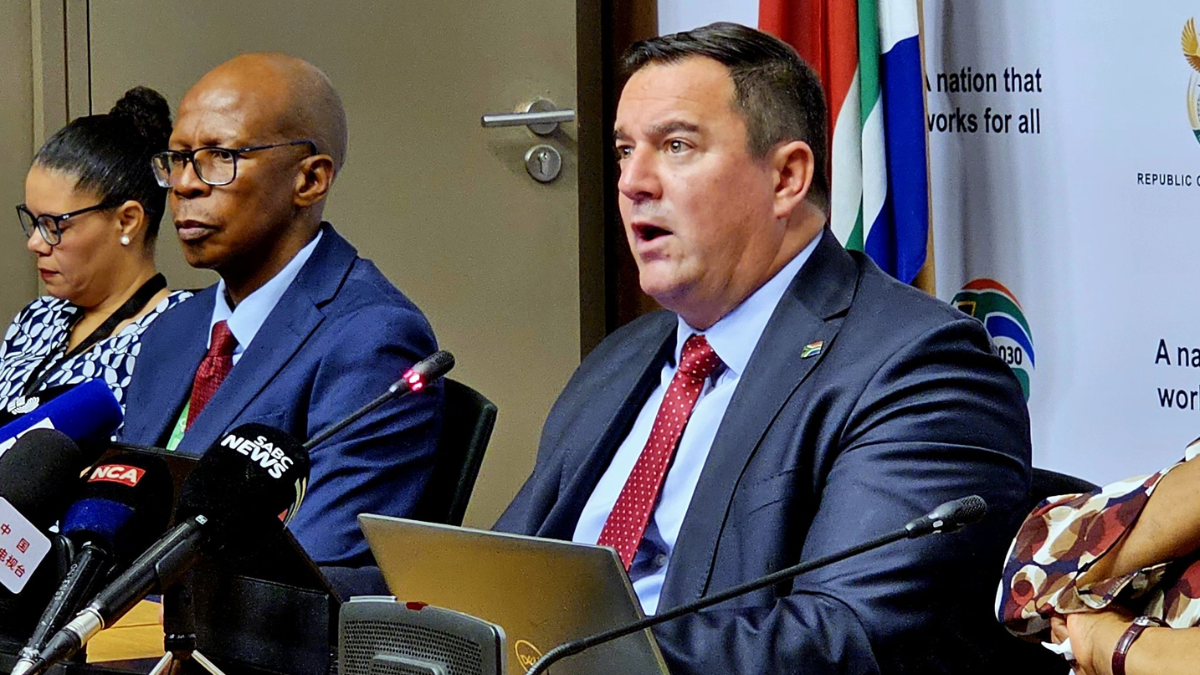
Steenhuisen responded sharply to the threat of litigation, describing the proposal for a private vaccination scheme as “short-sighted and reckless.”
In a statement addressing the legal challenge on 1 February 2026, Steenhuisen argued that FMD is a “state-controlled animal disease” strictly governed by the Animal Diseases Act, which obliges the department to follow specific legal frameworks.
The Minister’s primary argument against privatisation rests on international trade standards, but argues that the legal case could ‘derail the plans.’
In another statement, he said that “without centralised monitoring and State-led control, we will fail to achieve this goal.”
Steenhuisen said that for South Africa to regain its FMD-free status with vaccination from the World Organisation for Animal Health (WOAH), the country must demonstrate strictly controlled vaccination rollout, official surveillance, and verifiable coverage.
The government contends that verifying coverage is not possible without centralised monitoring, citing similar rollouts in Argentina and Brazil.
He further warned that a “vaccine free-for-all” could lead to disastrous effects, citing prior issues with illegally imported vaccines.
Steenhuisen also highlighted that the state has recently formulated a roadmap to defeat FMD developed by a Ministerial Task Team comprising private and public sector scientists and veterinarians.
The vaccination plan
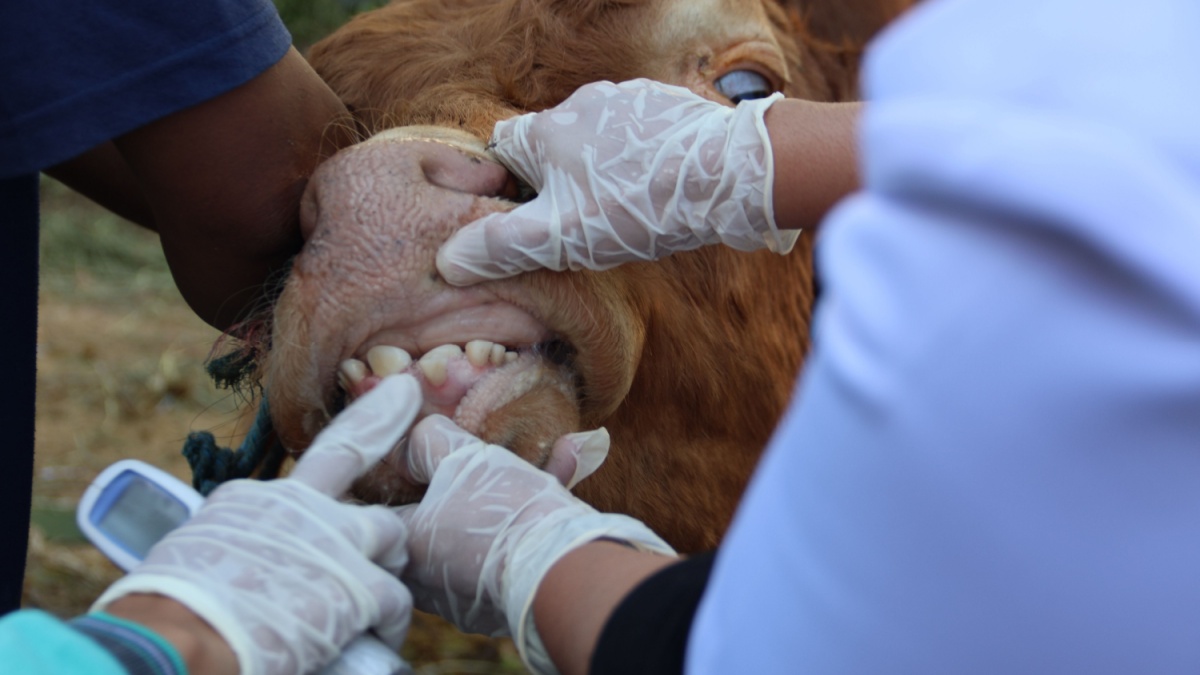
In January, Steenhuisen unveiled a “Rigorous Strategy” to regain South Africa’s FMD-free status, a process he characterises as a “monumental task” spanning ten years.
This roadmap serves as the government’s counter-narrative to legal challenges from agricultural lobby groups, emphasising a state-led, but scientifically collaborative approach.
Developed by a Ministerial Advisory Task Team, he said that the plan prioritises “Targeted Vaccination” rather than a deregulated approach.
The strategy is phased, moving from stabilisation and consolidation to the eventual withdrawal of vaccination to secure recognition from the World Organisation for Animal Health (WOAH).
Key components of the roadmap include:
- Vaccination Targets: The state aims to reduce outbreak incidence by over 70% within 12 months in high-risk provinces. This involves achieving 80% coverage in communal areas and 100% in feedlots and dairy herds. Hard-hit provinces like KwaZulu-Natal and the Free State will see immediate mass vaccination, repeated within three months.
- Procurement Diversification: To address supply shortages, the government is securing millions of doses from Biogénesis Bagó in Argentina and Dollvet in Turkey, alongside existing supplies from the Botswana Vaccine Institute (BVI) and ramped-up local production.
- Surveillance and Technology: The plan introduces a “Livestock Identification and Traceability System (LITS)” and utilises real-time digital heatmaps to track verified cases. Additionally, field strains are being sent to the Pirbright Institute for “antigenic matching” to ensure vaccine efficacy.
The fallout

The tone of the dispute has become increasingly acrimonious.
Steenhuisen accused the lobby groups of using the “war on Foot and Mouth Disease” to drive membership recruitment and solicit donations, urging farmers to be wary of those “attempting to profit from the hardships farmers are currently enduring”.
Saai’s Francois Rossouw denied these accusations, stating the group is litigating because “this is the worst animal biosecurity failure in a century.”
He said that “entire farms are being destroyed while the Department of Agriculture plans and centralises away”.
The standoff has also reportedly caused internal friction within the Democratic Alliance (DA).
For example, an editorial from the Common Sense suggests there is concern within DA ranks that Steenhuisen’s firm insistence on state control risks alienating the party’s core farming constituency.
Despite the Minister’s plea for unity and his warning that litigation could “derail” the procurement and rollout of vaccines, the lobby groups remain undeterred.
Sakeliga noted that Steenhuisen’s failure to respond to their initial letter of demand contradicts his stated desire to avoid litigation.
As the case moves toward the courts, the agricultural sector remains in a precarious position.









 Loading ...
An epidemic of super great destructive proportions and Steenhuisen and the ANC are concerned about the law and court cases – it is apparent that they have never owned and run cattle farming operations on a daily basis. Steenhuisen is incompetent and this is going to come back and harm the decision making ability of the public that have voted DA AND CLEARLY that know what is going on on the ground with this individual who is clearly so far out of depth as he is dealing with physical animals that are suffering and dying on a daily basis never mind the fall out of the short to medium term legal contracts of semen and genetic sales to local and international clients.