
Basic food prices in South Africa increased by 75% in seven years



The latest data released by the Pietermaritzburg Economic Justice and Dignity Group (PMBEJD) reveals that the rising cost of living is making it near impossible for low-income households to put food on the table.
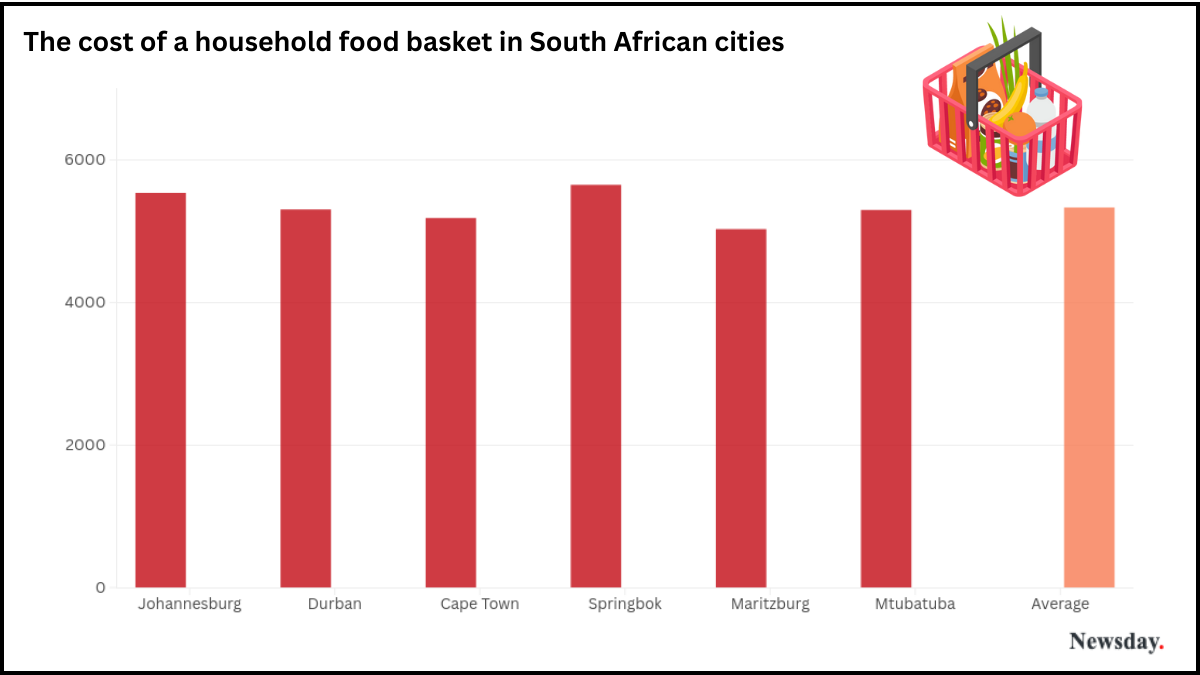
The PMBEJD’s latest Household Affordability Index shows that the cost of a basic nutritional food basket in December 2025 was R5,333.45, a 75% increase from December 2018.
The combination of rising food prices and almost-stagnant minimum wages is putting immense pressure on South Africans.
Although the Minister of Employment and Labour gazetted a 4.4% increase on the National Minimum Wage in March 2025, for a worker, this translates to an extra R1.21 an hour, or R203.28 per month.
The rising cost of food is driven by a variety of factors, including harvest volumes, energy costs, logistics constraints, biosecurity threats, and exchange rate volatility, all of which directly impact retail prices.
“South Africa is deeply linked to the global economy, and many of our agricultural inputs – fertiliser, seeds and agrochemicals – are imported,” explained Agriculture Minister John Steenhuisen in February 2025.
“This means we are directly affected by supply chain disruptions, currency fluctuations and international trade policies,” he said.
Events such as the COVID-19 pandemic and the Russia-Ukraine conflict cause global shortages, pushing prices up. While some of these pressures have eased, their ripple effects are still being experienced.
On top of this, climate change and extreme weather affect local farming, lowering crop yields and further pushing prices up.
Families are, therefore, forced to cut back on essential, nutritionally rich foods, impacting their health and well-being.
The 2025 December basic food basket cost of R5,333.45, while a decrease from the 2024 figure of R5,383.38, remains stubbornly high since a spike between 2020 and 2022 driven by global factors.
A core staple food basket that cost R2,908.14 in 2024 now costs R2,777.73, still a rapid and sustained spike from 2018, when the same basket cost R1,274.39.
These are essential items that low-income families in South Africa prioritise to avoid hunger.
The prices of core staple foods over the past 7 years in South Africa are listed below.
| Food item | December 2018 cost | December 2025 cost | Change |
| Maize meal (30kg) | 226.18 | 332.20 | +46.87% |
| Rice (10kg) | 76.49 | 170.16 | +122.49% |
| Cake Flour (10kg | 76.32 | 125.55 | +64.52% |
| White sugar (10kg) | 138.83 | 217.46 | +56.64% |
| Sugar beans (5kg) | 85.16 | 223.72 | +162.76% |
| Samp (5kg) | 24.49 | 67.85 | +177.17% |
| Cooking oil (5L) | 79.66 | 154.10 | +93.45% |
| Salt (1kg) | 14.19 | 15.38 | +8.38% |
| Potatoes (10kg) | 60.23 | 106.44 | +76.71% |
| Onions (10kg) | 52.92 | 89.82 | +69.76% |
| Frozen chicken pieces (10kg) | 324.98 | 403.27 | +24.09% |
| Curry powder (200g) | 25.82 | 39.52 | +53.06% |
| Stock cubes (48 cubes) | 31.65 | 49.31 | +55.80% |
| Soup (800g) | 24.65 | 52.25 | +111.99% |
| Tea (250g) | 28.82 | 31.67 | +9.89% |
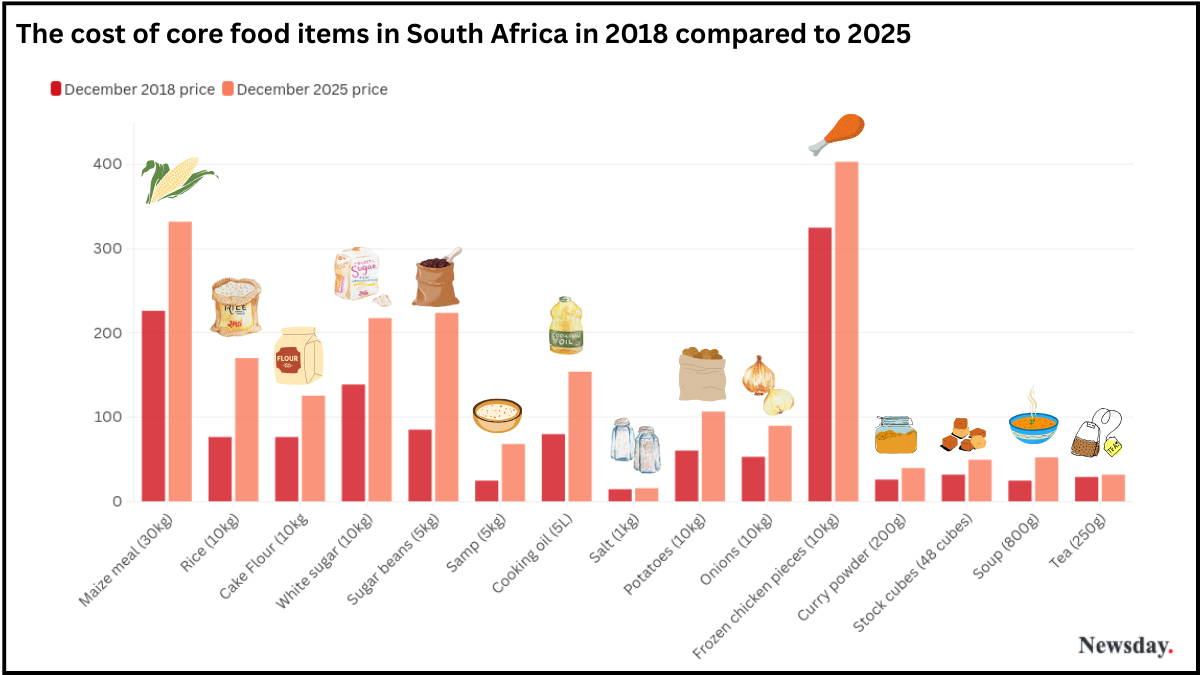
This is potentially adding fuel to the fire of South Africa’s ongoing malnutrition crisis. According to the Human Sciences Research Council (HSRC), food insecurity affects 63.5% of households, and 17.5% suffer from severe malnutrition.
“The death in early February of a 9-year-old South African boy, Atli Willard, who drank poison while scavenging for food in rubbish bins with his father, is a tragic reflection of the persistent food insecurity crisis in the country,” the HSRC said.
Data from the PMBEJD shows that, for those living on minimum wage, there is no scenario where they find themselves with sufficient money to buy enough nutritional food after covering costs of electricity, transport and basic necessities.
In the organisation’s best-case scenario, for a minimum wage worker who was able to work 20 days in December 2025, this would amount to a wage income of R4,606.40 for the month.
However, after transport of a return taxi trip, and 350kWh of prepaid electricity, absolute necessities, this would leave the worker with R1,824.55 for food and all other expenses.
With the basic cost of a nutritional food basket for a family of 4 being R3,678.87 for the month, this leaves the worker with a shortfall of R1,854.32.
For those who cannot work for as many hours, this could amount to a shortfall of R3,901.47.
Data shows that minimum wage increases, child welfare grants and old-age grants have not kept up with the spike in basic food costs.
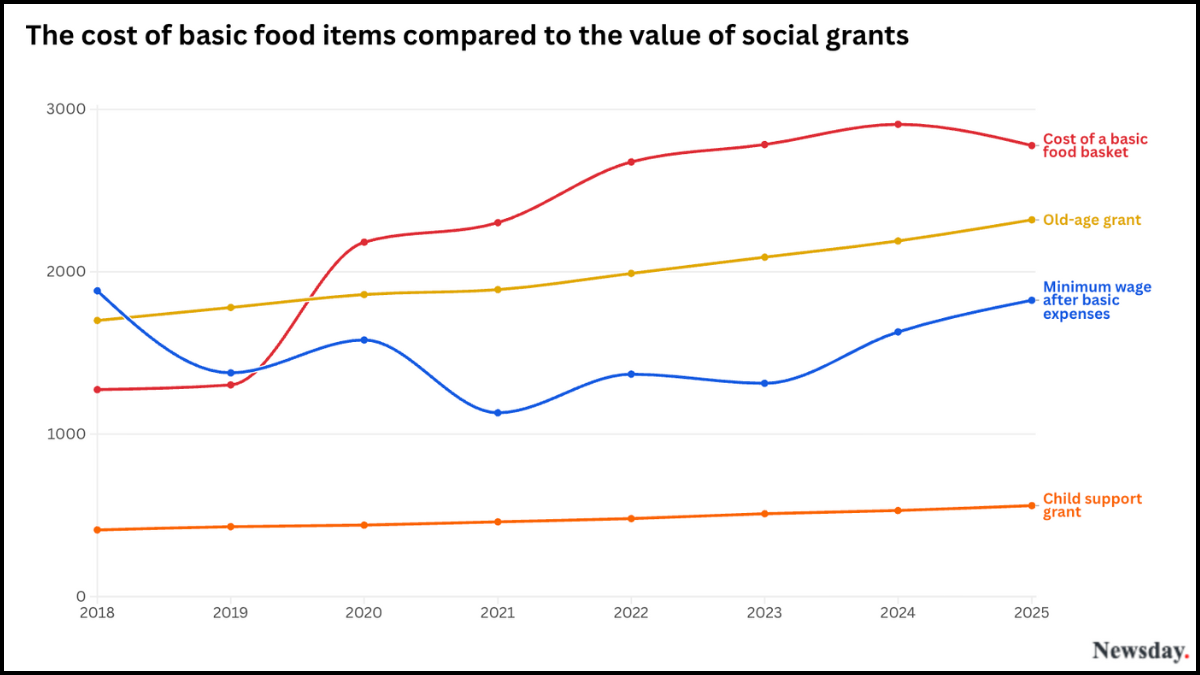
“South Africa has the highest number of people who rely on social grants. Some of these are aimed at addressing food insecurity and nutrition, particularly among children,” the HSRC said.
“Despite safety nets, food insecurity persists, suggesting that they are either inadequately resourced or poorly targeted.”
The organisation found that 1,000 children die each year due to preventable acute malnutrition, and 2.7 million children under six live in households where poverty levels prevent their basic nutritional needs from being met.
















 Loading ...
I suspect a marketing trick by the suppliers as all these items are purchased by the underprivileged at huge volumes. Who is profiteering here?