
Controversial former Transnet and Eskom CEO appointed to head MK Party’s finances



South Africa’s official opposition, the uMkhonto weSizwe (MK) Party, has appointed corruption-accused Brian Molefe, a former CEO of Eskom and Transnet, as its new treasurer general.
The announcement, made on 12 January 2026, comes as the former President Jacob Zuma-led party continues to grapple with internal leadership instability.
Molefe, who is currently serving as a Member of Parliament (MP) for the MK Party, replaces Mpiyakhe Limba, who has been relieved of his duties with immediate effect.
The MK Party, formed in late 2023 as a breakaway from the African National Congress and spearheaded by Zuma, has become synonymous with rapid leadership changes and factional infighting.
In the same statement announcing Molefe’s elevation, the party also confirmed the sacking of Colleen Makhubele as its chief whip in Parliament.
Party spokesperson Nhlamulo Ndhlela described Molefe as bringing “extensive experience in public administration, governance, finance, and organisational leadership” to the role, emphasising his potential to strengthen the party’s financial management as it struggles with debt woes.
Molefe’s appointment marks the latest chapter in a career that has spanned high-level public sector roles, political activism, and persistent legal battles over allegations of corruption.
Born in 1966, Molefe has been a political figure since the 1980s, actively involved in anti-apartheid struggles. He holds a Master’s degree in Law, which he obtained in 2025.
His professional journey in the public sphere began in earnest in the early 2000s, where he served as Deputy Director-General at the National Treasury before rising to prominence in state-owned enterprises.
Controversial SOE CEO tenures
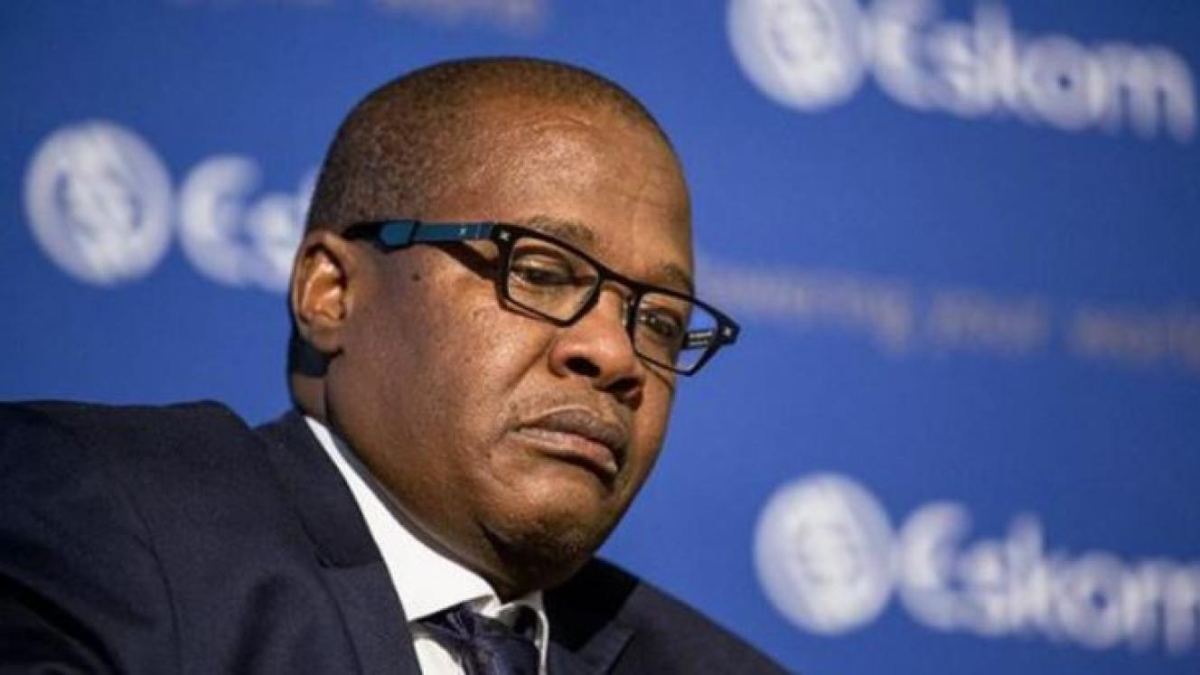
In 2011, Molefe was appointed CEO of Transnet, South Africa’s freight and logistics giant, under the presidency of Zuma.
During his tenure, he oversaw ambitious infrastructure projects, including a massive rail expansion plan aimed at modernising the country’s transport network.
However, this period would later become mired in controversy, particularly surrounding the infamous locomotives procurement deal.
Valued at over R50 billion, the contract involved acquiring 1,064 locomotives from international suppliers.
However, investigations revealed irregularities that allegedly facilitated the siphoning of funds to entities linked to the Gupta family, who played a central role in the State Capture era.
Molefe’s move to Eskom in 2015 as group CEO further elevated his profile but intensified scrutiny.
Appointed amid South Africa’s crippling load-shedding crisis, he was credited by some with stabilising the power utility’s operations and averting blackouts for a time.
Yet, his leadership was overshadowed by revelations in the Public Protector’s 2016 “State of Capture” report, which detailed extensive phone communications between Molefe and members of the Gupta family.
The report suggested that Molefe had visited the Guptas’ Saxonwold residence multiple times and that Eskom, under his watch, had assisted in maneuvers that led to the distress sale of the Optimum coal mine to Gupta-linked Tegeta Exploration and Resources.
These allegations culminated in Molefe’s resignation from Eskom in November 2016, which he framed as a step toward good governance.
However, controversy followed when it emerged that he had received a R30 million pension payout, later deemed irregular by courts.
The Solidarity trade union challenged the payment, leading to a series of legal defeats for Molefe, including rulings from the High Court, Supreme Court of Appeal, and ultimately the Constitutional Court in 2019, forcing him to repay R11 million already disbursed.
Civil society group OUTA (Organisation Undoing Tax Abuse) laid fraud charges against Molefe and former Eskom board chair Ben Ngubane over the matter, accusing them of manipulating pension rules.
Legal woes
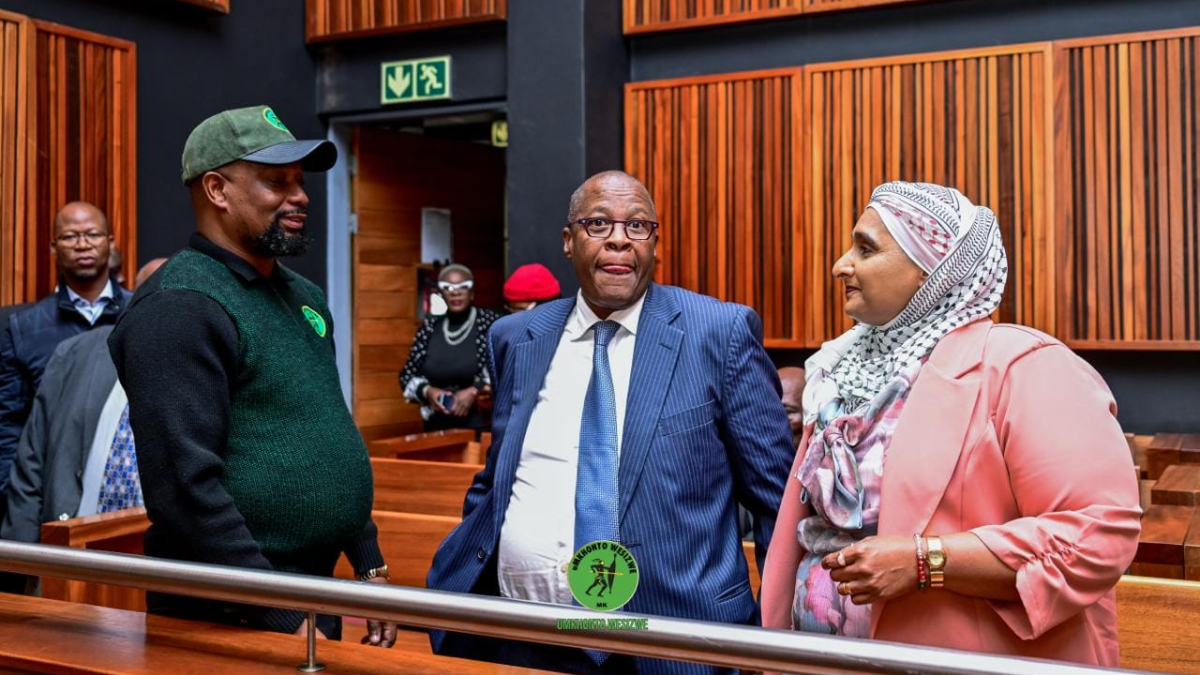
The Zondo Commission of Inquiry into State Capture, which wrapped up in 2022, painted an even grimmer picture.
It identified Molefe as a “primary architect” of State Capture at Transnet, finding that he misled the board, bypassed oversight mechanisms, and authorised contracts that enabled Gupta proxies like Regiments Capital and Trillian to loot public funds.
The commission recommended criminal prosecution, leading to Molefe’s arrest in August 2022 alongside former Transnet CFO Anoj Singh and others on charges of fraud and corruption related to a R398.4 million portion of the locomotives deal.
Legal woes escalated in June 2025 when Molefe, now an MK Party MP, was arrested again by the Hawks alongside former Transnet executives Siyabonga Gama, Anoj Singh, and Thamsanqa Jiyane.
They face charges of fraud, corruption, and money laundering tied to R93 million allegedly diverted through Trillian Capital during the locomotives procurement.
The case, emblematic of the broader State Capture saga, is set for trial in 2026 at the Johannesburg High Court.
Molefe and his co-accused were granted R50,000 bail each following their court appearance in July 2025. Molefe has fiercely denied any wrongdoing on all fronts.
Despite these clouds, Molefe entered politics formally in 2024, securing a seat in the National Assembly for Zuma’s MK Party after the general elections.








 Loading ...
Disgusting, horrible, corrupt man. Indicates the same for the MK party and Zuma.
Where are the criminal prosecutions? NPA are you doing your job?