
South Africa would be ‘stupid’ to have Elon Musk’s Starlink – Songezo Zibi



South Africa would be making a “stupid” and potentially dangerous mistake if it allowed Elon Musk’s satellite internet service Starlink to operate in the country.
This is the argument of RISE Mzansi leader and chairperson of the Standing Committee on Public Accounts (SCOPA), Songezo Zibi.
Late on 11 January, Zibi, whose party has two seats in parliament and is part of the GNU, accused the billionaire entrepreneur of positioning himself as an ‘enemy of the country’s constitutional order and social justice project.’
Zibi’s remarks come amid renewed debate over whether Starlink should be granted regulatory approval in South Africa, following a December 2025 policy directive by Communications Minister Solly Malatsi.
It was aimed at easing Black Economic Empowerment (BEE) requirements for foreign technology companies through so-called “equity equivalents”.
Zibi said the controversy around Starlink went far beyond technical licensing or BEE compliance and touched on fundamental questions of sovereignty, constitutional values and national security.
“My problems with this whole idea are far deeper than that. And they’re two main reasons,” Zibi said.
He argued that Musk’s public conduct and political messaging disqualified him from being treated like an ordinary foreign investor.
“The first reason is that Elon Musk has declared through his actions himself as an enemy of South Africa’s constitutional order. As an enemy of social justice. Of redress. Of addressing racial and social inequality in South Africa,” Zibi said.
Zibi accused Musk of spreading what he described as damaging falsehoods about South Africa in international discourse.
“In order to spread lies in the United States that are damaging about South Africa, including their lie of white genocide which he has actively promoted for years,” he said.
“That person cannot want to invest in South Africa and claim himself to be similar to other investors who want to invest in South Africa.”
The RISE Mzansi leader warned against what he described as an unprincipled approach to investment that prioritises capital inflows over constitutional values.
“Because money is involved, we must then accept whatever kind of person wants to invest here. We’ve got to have principles. We’ve got to have standards. We’ve got to have a constitutional order. That is the first reason,” Zibi added.
Starlink, operated by Musk’s SpaceX, remains unavailable in South Africa as of January 2026.
The company has not secured the necessary licences from the Independent Communications Authority of South Africa (ICASA).
Under existing law, foreign-owned telecommunications firms must comply with BEE rules, including a requirement that at least 30% ownership in local operations be held by historically disadvantaged South Africans.
While regulators have stated that Starlink has not formally applied for a licence, Musk has repeatedly claimed that the equity requirement is the primary obstacle, describing it as discriminatory and incompatible with his business model.
SpaceX has proposed alternatives such as large-scale investments in free or subsidised internet access for schools and clinics, but no agreement has been reached.
In December 2025, Malatsi issued a policy directive allowing companies to meet empowerment obligations through investments in infrastructure, skills development or other equity-equivalent measures rather than direct ownership transfers.
The move was widely interpreted as an attempt to pave the way for Starlink’s entry, particularly to expand connectivity in rural and underserved areas.
Zibi, however, said the risks of allowing Starlink into South Africa outweighed any potential benefits.
‘Musk will spread mis and disinformation’ – Zibi

Zibi said that the second reason he is against it is because “Musk has used his platforms to spread lies, misinformation and disinformation.”
“Not only about South Africa… he’s a white supremacist. He declared himself an enemy of our Constitutional Order,” Zibi said.
He argued that granting Starlink access would effectively give Musk a powerful technological foothold inside the country.
“The last thing we should be doing is giving him a technological ecosystem where he has X as a platform and then he’s got an internet company.”
“He can use that infrastructure against the Constitutional Order and national stability. It would be stupid to do,” Zibi said.
Zibi also took aim at Malatsi personally, questioning how alleged national security considerations could have been overlooked.
“I honestly don’t know what Minister Solly Malatsi was thinking when, as a minister who sits in cabinet, where they purportedly receive security and other briefings, they wouldn’t think these are issues that must be considered,” he said.
“Elon Musk has declared himself an enemy of South African Constitutional Order. We can’t be naive. The fight must be on this year. No Starlink in South Africa. Not when it is owned by Elon Musk.”
Musk and South Africa
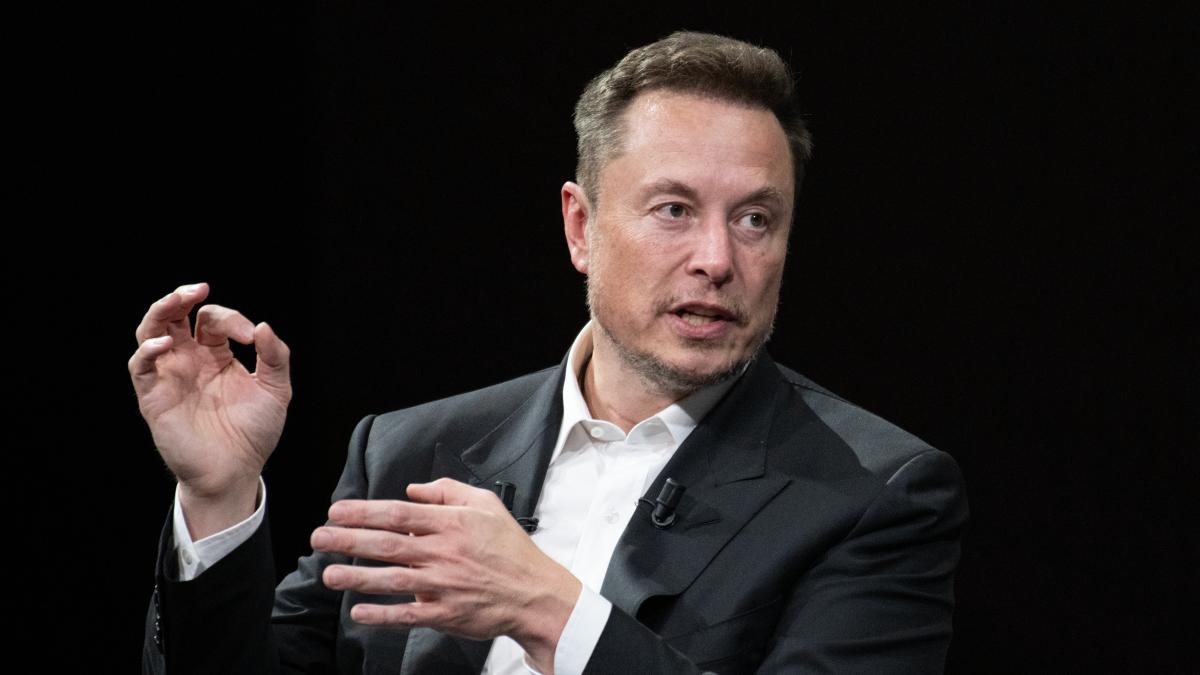
Musk, who was born in Pretoria, has become an increasingly polarising figure in South African politics.
He has repeatedly criticised BEE and other post-apartheid redress policies, calling them “racist” and inconsistent with Nelson Mandela’s vision of a non-racial society.
In public statements and social media posts, he has argued that South Africa has replaced apartheid-era discrimination with a new form of racial preference.
Supporters of Starlink argue that the service could dramatically improve internet access in rural areas, farms, schools and clinics, where connectivity remains poor or non-existent.
They point out that Starlink already operates in several African countries and could help close South Africa’s digital divide, which disproportionately affects black and poor communities.
Critics, however, say the issue is not connectivity alone but control, accountability and national interest.
They warn that allowing a single foreign-owned satellite provider with immense global influence to operate without meaningful local ownership or oversight could ‘undermine regulatory authority and economic transformation.’











 Loading ...
Musk has a Point. Mr Mandela had a vision where all South Africans are equal but we have seen that is not the case with the new Government. They are also not doing this for the Black people. There interest is their own. We have the most beautiful country but it gets messed up by politics and corruption.
The law of 4 White people and 1 Indian woman per 100 workers is not only racist but this is also sexist. Our pass mark is 30%? so basically you have to higher someone that is not qualified for the job. This not not a bad thing as companies will downsize to counter this and thus generate more work so it may have a benefit effect. If this is what happens then our community did a better job than our Government.
We need a new Government Party that is not from South Africa. We have to much history. Most or all of the people that made the rules are already dead. So we have to pay for their mistakes? A Zimbabwean said this is had Mogabe did in Zim and look at the state of the country after taking property. Nothing came from it. In next 10 years we will be a Junk country and this is very difficult to get out off. There are already International companies pulling out as they say there are more profit in other Africa countries and they do not want to follow SA BEE law.