
Dark clouds gather over South Africa’s biggest political party


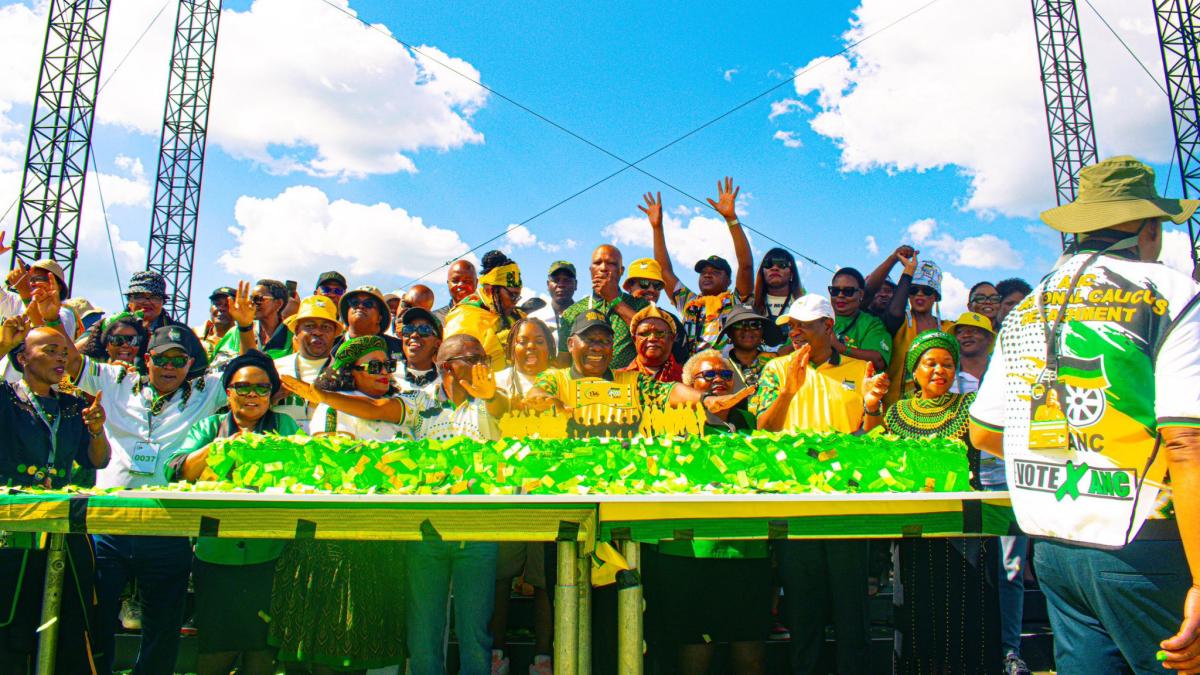
The upcoming local government elections in South Africa are expected to see a monumental shake-up in the local political landscape.
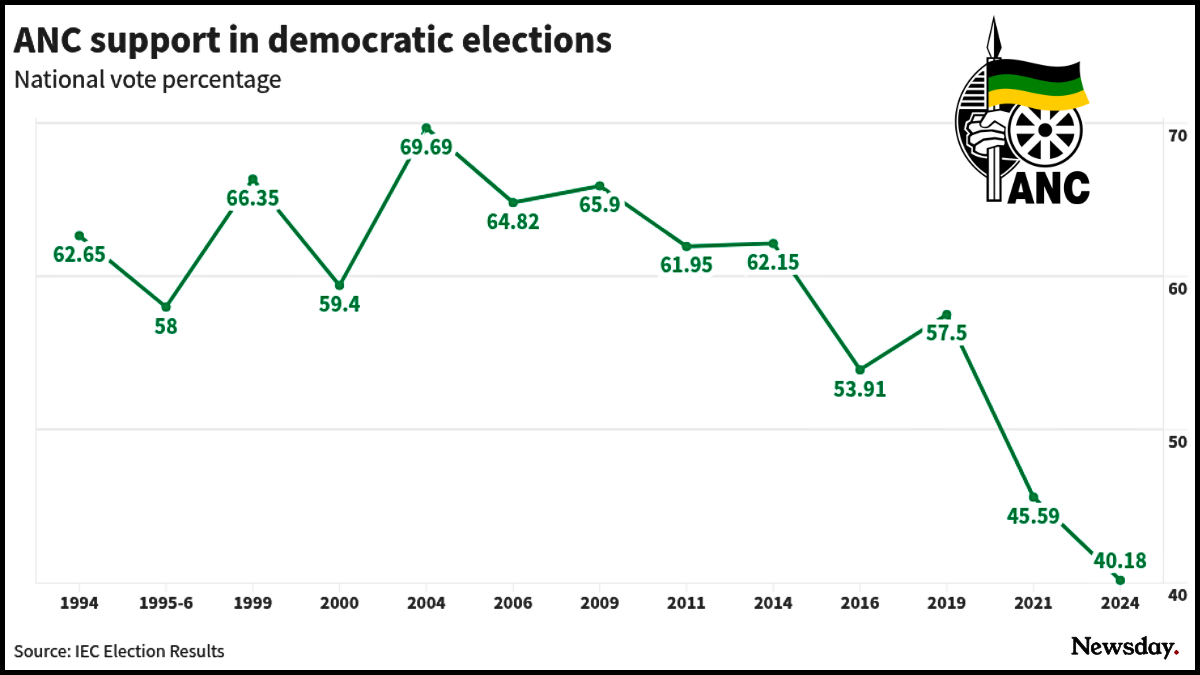
South Africa’s longstanding political heavyweight during democracy, the African National Congress (ANC), has seen a consistent electoral slide.
The party has gone from a high of 69.69% of the national vote in 2004, to 40.18% in the 2024 general elections.
With the 2026 local government elections fast-approaching, their electoral slide shows no signs of slowing down.
According to a recent economic outlook assessment by Momentum Investments’ chief economist, Sanisha Packirisamy, and economist Tshiamo Masike, this year could “rewire” the country’s political map.
The “municipal elections are shaping up less as an ideological contest and more as a judgment on basic governance,” said Packirisamy and Masike.
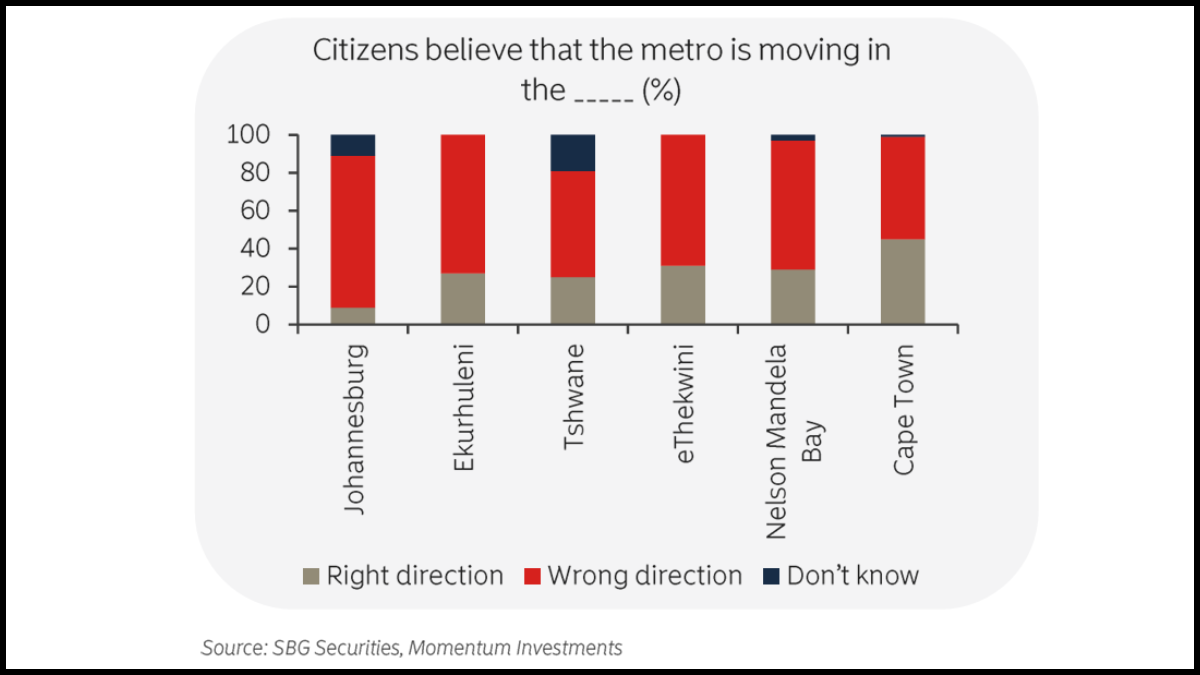
“Years of deteriorating local capacity, chronic service failures and unstable coalitions in major metros have made competence the core ballot question,” the economists added.
Earlier this month, President Cyril Ramaphosa lectured the ANC for failing to meet the basic needs of many South Africans as it prepares to face crucial municipal elections within the next year.
Ramaphosa listed a litany of issues ailing the country, many of them acute in areas led by the ANC, ranging from dysfunctional municipalities and a lack of basic services to chronic unemployment and rampant crime.
“Our own weaknesses and failures in service delivery, governance, the slow pace of economic growth and high levels of unemployment have demoralised and alienated many individuals and communities,” said Ramaphosa, delivering his January 8th statement.
“We cannot blame our people if they question whether our democracy, our Constitution, our economy and indeed the ANC and the alliance really work for them.”
The planned turnaround and predictions
Delivering the party’s mid-term report in December, ANC Secretary-General Fikile Mbalula said the party’s decline had been long-standing rather than a sudden rupture.
According to Mbalula’s analysis, a mid-term review between the party’s 2022 and 2027 national elective conferences, the ANC’s misfortune dates back to 2016.
“The electoral setback suffered by the ANC and the democratic movement began in 2016 with the loss of major metros, accelerating with the emergence of over 80 hung councils after the 2021 local elections,” read the report.
This “culminated in the 2024 strategic setback when the ANC lost its outright majority in Parliament, Gauteng and KZN,” it added.
In 2016, the ANC lost a majority in Nelson Mandela Bay, Tshwane and Johannesburg, making its metro opposition bench count four, including Cape Town.
The list of metros where the party was unable to get a majority expanded to Ekurhuleni and eThekwini in the 2021 local elections.
Of South Africa’s eight metros, it only won above 50% in Buffalo City and Mangaung. While the ANC wants to nip this in the bud, projections show otherwise.
Recent polling from the Social Research Foundation and published on The Common Sense shows the ANC’s support slipping.
The survey of 1,002 registered voters, conducted telephonically with a margin of error of 4%, asked respondents how they would vote if a local election were held today.
Using a turnout model of 53%, the ANC registered the support of 37% of respondents and the DA 32%, with no other party breaking 10%.
The uMkhonto weSizwe Party (MK) scored 8%, the Economic Freedom Fighters (EFF) 7%, and the Inkatha Freedom Party had the support of 6% of respondents.
Prominent elections analyst Dawie Scholtz recently told Newsday that most of South Africa’s major cities are heading for hung councils.
Scholtz says almost all key economic hubs, especially metros, are unlikely to deliver outright majorities.
Exceptions are Limpopo, parts of the Eastern Cape, and sections of the North West, where the ANC still dominates.
Based on 2024 voting patterns, all three Gauteng metros, Johannesburg, Tshwane and Ekurhuleni, are expected to be hung again, with the DA as the largest party.
eThekwini is also likely to be hung, potentially with MK as the biggest party, while Nelson Mandela Bay and Mangaung face tight races. Cape Town remains a DA stronghold.
Overall, Scholtz expects further fragmentation, with ANC support continuing to splinter towards smaller parties and rivals such as MK, the DA and EFF, especially as citizens grow increasingly frustrated with the state of service delivery.












 Loading ...
I believe that the ANC will get below 30% with the FF taking more of their votes.
The he ANC is done because every time Fikile opens his mouth, more votes are lost.
The ANC can’t provide basic services for our people so it is the endgame for them.