
BEE has made white people in South Africa richer and less dependent on the state – Ernst Roets



Racial policies implemented by the government in 1994 purported to reverse decades of apartheid inequalities have had the opposite desired effect, making white South Africans richer and less dependent on the state.
This is according to writer and activist Ernst Roets, the Executive Director of Lex Libertas and former Deputy CEO of AfriForum, who was interviewed on the Conversations with Lelethu podcast.
Roets said it is often argued that white people in South Africa actually got wealthier after the dawn of democracy in 1994 and the implementation of Broad-Based Black Economic Empowerment (BEE).
“That is true,” he said. “It’s very economically interesting what happened, and I think there’s some important lessons to learn from that.”
BEE, established in around 2003, is framed at redressing apartheid-era economic inequalities by promoting Black participation in ownership, management, skills development, enterprise, and socio-economic development.
Some, including the Democratic Alliance (DA), have stated that BEE has failed in its mandate to improve the lives of the previously disadvantaged.
The party argued that since 2014, unemployment among black South Africans rose by 9 percentage points, while white unemployment fell slightly in the same time frame.
While Black South Africans have outnumbered Whites in the richest 10% of the population for about a decade, the gap between South Africa’s richest and poorest has not narrowed.
This is because the decline in racial inequality has been driven almost entirely by a surge in the top Black incomes rather than increased wealth for the poorest, according to World Inequality Lab data.
Data from Statistics South Africa (StatsSA), shows the average annual income for a black household has risen from R51,773 in 2006 to R143,632 by 2022.
The average income for a white household, on the other hand, has risen from R385,599 in 2006 to R676,375 by 2022.
Roets credits BEE for this continued wealth disparity. He said that before 1994, many white South Africans worked for the government, either directly or on the railroads or in state-owned enterprises.
“Then, when the ANC took over, many of them resigned or lost their jobs, or were eventually pushed out because of the idea that government should be representative and 80% black,” he said.
White people working in government found it difficult to get promotions or were pushed out due to racial preference laws, according to Roets.
The irony of being excluded
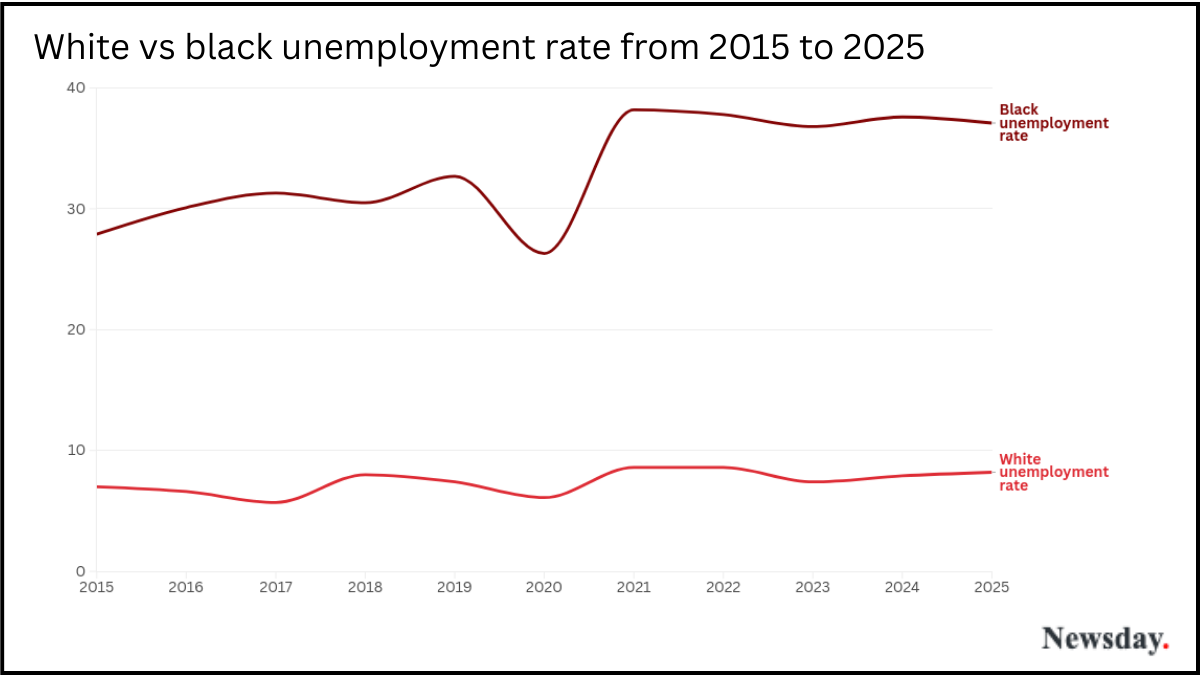
The consequence of this is that those who found themselves unemployed or with no career prospects had no other choice but to start their own business.
“You can’t get a promotion because of the colour of your skin. So you say ‘screw that, I’ll just start my own business’, and then ironically, you become wealthier as a result of the fact that you are being excluded,” he said.
Roets argues that behind white wealth is that when people are dependent on the state, they are less prosperous, and when people move into the private sphere, they become more prosperous.
“That’s the irony,” he said. “People are saying, ‘how is it that Afrikaners are making more money now on average than they did 30 years ago,’ and it’s ironically because of the fact that they are being excluded.”
He added that the efficacy of economic policies should not be judged by the immediate consequences they have, but rather by what the consequences of those consequences would be.
“In this case, you could say the immediate consequence of Black Economic Empowerment is to get white people out and replace them with black people,” said Roets.
However, he added, the consequence of the consequence is that black people have become more dependent on the government, and white people less dependent.
“And the consequence of that is that white people are becoming more wealthy as a result,” he said.
Inequality within the white racial group has also, however, increased as a result of this phenomenon, as not everyone who used to work for or with the government became a successful entrepreneur.
“White squatter camps are increasing. There are about 80 in the Pretoria area alone, but you don’t see them because they are on private property. So you have that gap growing,” he said













 Loading ...
By definition, wealthier means to spend and invest money wisely. Invest in yourself as a person and in your community; it always pays off in the long run. New money that was not earned by hard work is mostly spent on a lavish and fruitless lifestyle.