
South Africa’s National Dialogue has gone quiet



When the National Dialogue was first announced, it was billed as a grand undertaking: a platform to bring together government, civil society, political parties, and legacy institutions in a “citizen-driven” conversation about South Africa’s next chapter.
But as 2025 draws to a close, that ambition seems to have faded. The Dialogue has gone quiet, many key players have left, and the energy behind it has largely evaporated.
According to the Presidency, the idea behind the National Dialogue was to create a broad national conversation, a forum where citizens, interest groups, civil-society organisations, political parties and legacy institutions could come together.
This would involve reflecting on South Africa’s 31 years of democratic transition, assessing where the country stands, and charting a collective path for the future.
In speeches at the Union Buildings in July 2025, proponents said the Dialogue was meant to address entrenched problems: inequality, unemployment, corruption, service-delivery failures, and social discord.
They framed it as a chance to reconnect citizens, renew the social compact, and define a fresh national vision.
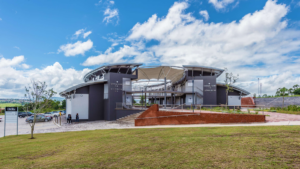
The first major public event was the National Convention, held on 15–16 August 2025 at the Pretoria campus of University of South Africa (Unisa).
Dropping participation

But almost from the start, cracks began to appear.
Prominent legacy institutions — including Thabo Mbeki Foundation, Steve Biko Foundation, Chief Albert Luthuli Foundation, Desmond and Leah Tutu Legacy Foundation, the FW de Klerk Foundation and even the Oliver and Adelaide Tambo Foundation — announced their withdrawal from the preparatory committee.
They argued that the process had been rushed, lacked transparency, and had shifted from citizen-led to government-controlled.
Political parties followed. The Democratic Alliance (DA) and the Freedom Front Plus (FF Plus), partners in the Government of National Unity (GNU), similarly withdrew, calling the Dialogue a “hijacked” platform.
Other voices, including civil-society organisations and lobby groups such as AfriForum and Solidarity, also exited, saying the initiative no longer represented genuine civic engagement.
Many of those who withdrew described the Dialogue not as a citizen-led national reflection, but as a government-driven exercise that lacked the structure, resources and legitimacy needed for meaningful deliberation.
Others accused the ANC of hijacking the platform to use state resources to campaign for the 2026 local government elections.
Costs controversy

One of the biggest triggers for dissatisfaction was the staggering price tag. Early planning documents reportedly placed the cost at around R700 million.
As criticism mounted, the government tried to stem the outrage by announcing cost reductions.
The National Treasury confirmed in August 2025 that the budget had been reduced to approximately R441 million, excluding contingencies.
Still, critics said even that sum was a wasteful use of taxpayer money when public services such as education, health, and infrastructure are in dire need of resources.
Some questioned whether the Dialogue had become little more than “expensive chats”: a high-budget talk shop with little prospect of delivering concrete outcomes.
To its credit, the Treasury instituted several measures aimed at cutting costs ahead of the first convention.
This included fundraising, banning air travel for delegates from certain provinces, capping hotel costs, cancelling plans to buy smartphones for facilitators, and encouraging secondment of existing government staff rather than hiring new personnel.
Silence

After a flurry of media coverage in mid-2025, the public noise around the National Dialogue has dwindled sharply.
The much-touted nationwide consultations, the “six to nine months of community, sectoral and citizen-led engagement” after the convention, have yet to materialise in any meaningful way.
Indeed, key administrative steps, such as appointing a steering committee for ongoing engagement, have been delayed or stalled.
While the Presidency announced in mid-October that nomination of sectoral representatives had been completed, there has been little follow-up or visible action since.
For many, the Dialogue now resembles a shell of its original promise: a process that was meant to mobilise South Africans, but which has instead become bogged down in politics.
Critics say that the withdrawal of major stakeholders undermines the credibility of the Dialogue. What was meant to be a citizen-led, inclusive national reflection increasingly looks like a government-managed show.
Without broad buy-in, and with mounting distrust over both costs and structure, the Dialogue may no longer matter — or may collapse altogether.
For now, the silence speaks louder than the promises: the National Dialogue has quietly fizzled.
2026 visions
For 2026, the key plan for South Africa’s National Dialogue is the Second National Convention, scheduled for the first half of the year.
According to the Presidency, this is to integrate outcomes from extensive community dialogues and adopt a shared vision.
This includes a “People’s Compact,” and an action plan for national development, addressing issues like poverty, jobs, social cohesion, and governance.







 Loading ...
Someone must be exceptionally stupid. This dialogue had nothing to do with talking for solutions. It’s only function was to clear the R750 million pricetag, through the anc bank accounts to ensure a very merry Christmas for the anc elite.