
Waste lords poisoning residents in South Africa’s richest city



The failure of municipal service delivery in the Kya Sand area has led to the rise of a powerful and profitable illegal industry run by so-called “Waste Lords.”
These individuals are forcing residents to turn to the courts and even private security to secure basic health and safety rights.
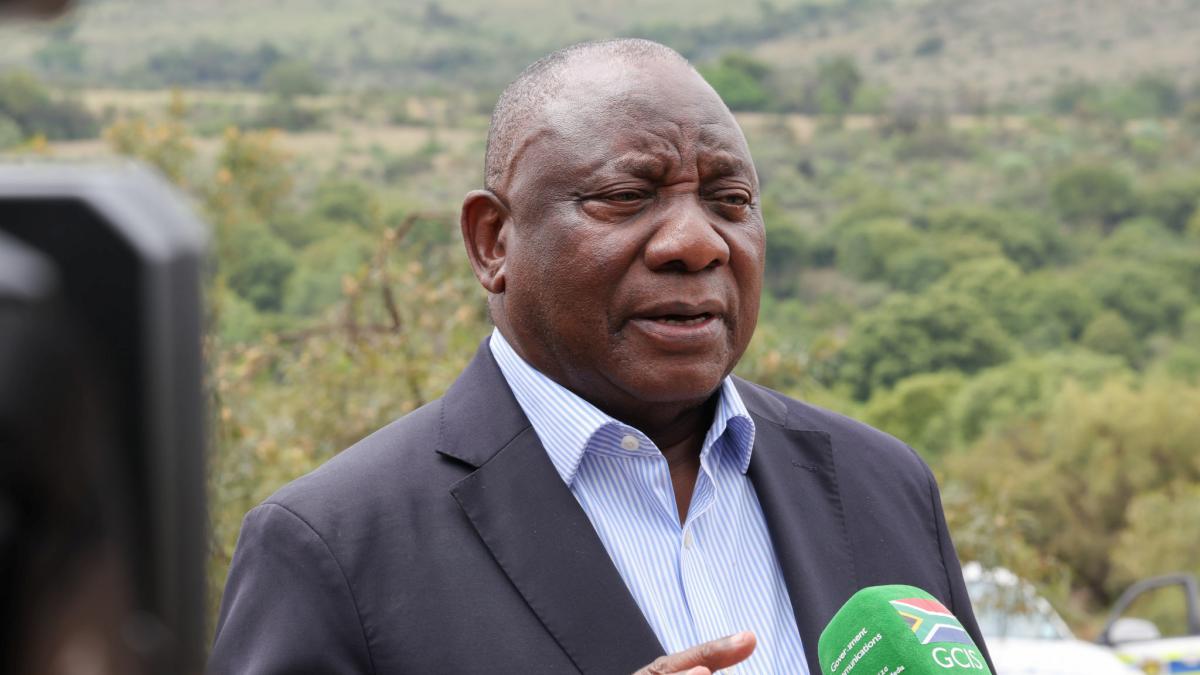
Keith Elliot, the director of the Kya Sands Burning Wasteland Community Forum, detailed the history and operations of this illegal waste management system in a recent interview with BizNews.
He revealed an industry that could be generating anything between R10 and 20 million annually.
The origins of this crisis trace back to the decommissioning of the official Kya Sand waste disposal site around 2010.
Following its closure, “criminal elements—these waste lords—reopened the site and started accepting money from people looking to dump”.
This operation quickly expanded as “copycats invaded other land in the area and this little illegal industry… was spawned”.
According to a 2023 study by the forum, up to 10 illegal dumps were operating simultaneously.
The modus operandi of the Waste Lords is simple but effective: “they have marshals that work on the sites for them”.
Trucks arrive with waste, and money “changes hands at that level”, with fees ranging from R200 to R500 per load.
The dumped waste is then “mined for recyclables”. To clear space for the next day’s operation, the leftover material that cannot be salvaged is set a light.
The most severe consequences of this illegal burning are the health risks posed to the surrounding community.
According to the City, smoke from burning waste has further reduced air quality to below 35% in areas such as Fourways, Cedar Lakes, and Bloubosrand.
When the waste smolders at night, “it is incomplete combustion of the waste and that means that you get compounds called dioxins released into the air”.
Elliot notes that these are “volatile organic compounds which are particularly dangerous”.
The resulting smoke remains closer to the ground during nighttime temperature inversions and flows down the valley, impacting the lives of between 80,000 and 150,000 people.
“Not only do people cough and they can’t breathe, and they have asthma and all of those kinds of things,” Elliot explained, “but these have been linked to reproductive disorders, hormone disorders and even cancers”.
Years of promises
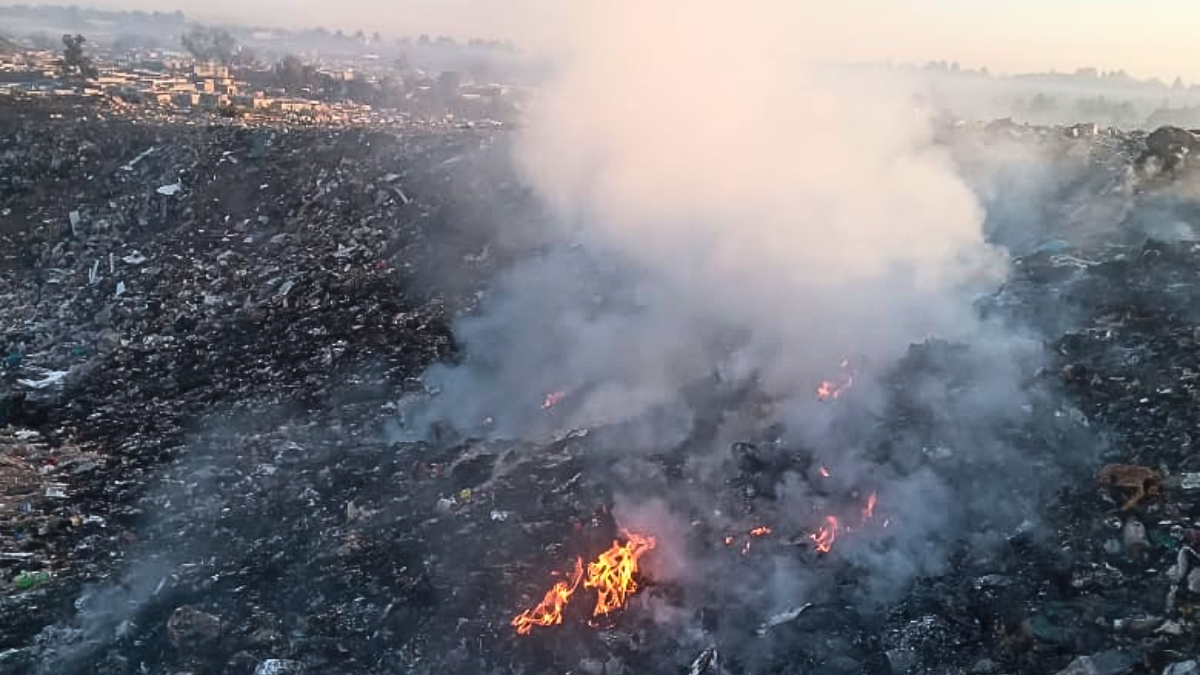
Elliot began engaging with authorities in March 2020 after returning home “in a cloud of this toxic smoke”.
Initial low-level site visits from the City of Johannesburg and the provincial Department of Agriculture and Rural Development led to emails promising action, but “we just saw absolutely nothing happen,” he said.
A breakthrough appeared to occur in August 2021 when high-level officials, including the CEO and Chairman of the Board of Pick It Up (Johannesburg’s waste management company), visited the site.
Elliot recounted the encounter: “They stood on top of those dumps and gave us an undertaking that everything would be sorted out”.
In January 2022, the City of Johannesburg’s Environment, Infrastructure and Services Department published a comprehensive 30-page action plan.
However, despite the community’s efforts to push for its implementation, “by the middle of 2023, they didn’t”.
Legal battle
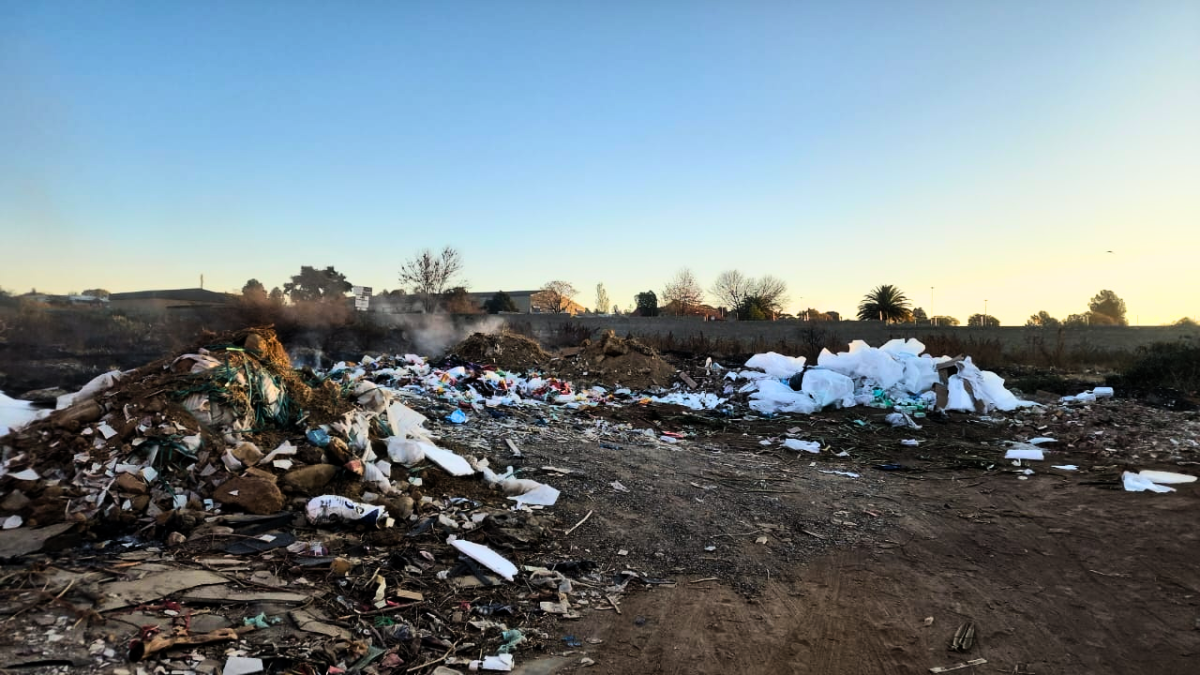
The community’s frustration with government inaction led them to seek pro bono legal help, resulting in two major court applications.
The first compelled the City of Johannesburg to conduct air-quality tests needed to prove environmental harm.
Although the court granted the order, the City missed its April and July 2025 deadlines, only beginning testing in late August.
A second, broader application was filed in September against 13 government entities — from the Presidency and Police Minister to JMPD and Pick It Up — demanding a full assessment, an action plan, and implementation within 120 days.
Elliot said the problem is so extensive that “it will take more than just JMPD or City of Johannesburg to deal with it.”
Several entities have signalled their intention to oppose the motion, which Elliot called “unbelievable.”
Corruption concerns further cloud the issue, with reports of a R100,000 offer to make the problem “go away” and JMPD vehicles allowing waste-carrying trucks to proceed.
The community has even launched a donation-funded private security pilot to monitor dumping.
Despite this, Elliot says the forum, backed by 11,600 signatures, remains hopeful that residents’ rights will prevail.
City response
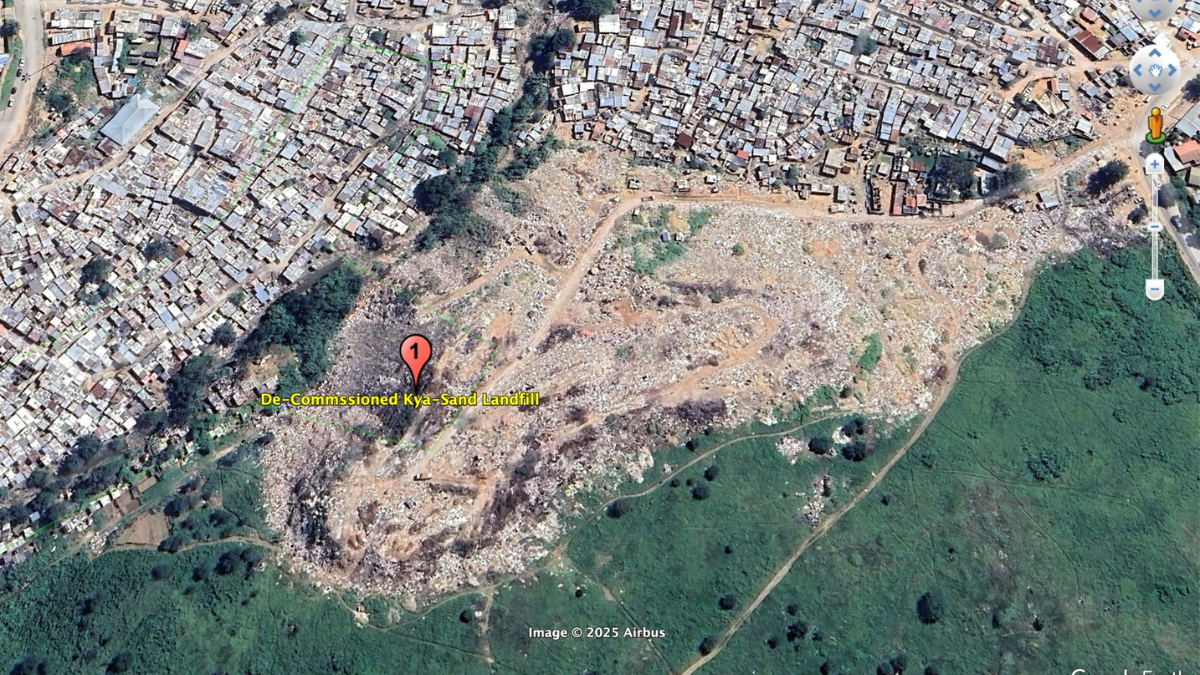
The City of Johannesburg’s Environment and Infrastructure Services Department said that it has appointed a service provider to lead the rehabilitation of the decommissioned Kya Sands landfill site.
The R150 million project aims to restore environmental integrity, improve air quality, and safeguard public health. Key interventions will include:
- Clearing and recycling illegally dumped waste.
- Developing and implementing a rehabilitation plan.
- Installing security measures such as fencing, lighting, and a guardhouse.
- Restoring the landfill’s boundary wall.
- Conducting long-term environmental monitoring of water and air quality.
Makhosazana Mtshali, Director of the Waste Management and Regulation Unit, said that the “project will restore environmental integrity, improve air quality, and create a safer, healthier space for the community.
“The rehabilitation will cover surveying, identification, and quantification of illegal dumping; clearing and recycling dumped waste; developing a rehabilitation plan for the closed landfill; and restoring the boundary wall, among other measures.
The city said that the local community would participate in consultations, benefit from improved living conditions, and have opportunities in waste clearing and site monitoring.









 Loading ...