
The province with the highest rape rate in South Africa



The Eastern Cape has recorded the highest rape rate in the country in the latest crime statistics for the second quarter of the 2025/2026 financial year.
The province saw a 109 increase in cases of rape compared to last quarter, carrying the highest rape rate in the country at 24.7 per 100,000 people.
Sexual offences increased from 1,779 in the first quarter to 1,931 in the second quarter, for a grand total of 3,710 cases in just six months – over a third of the country’s recorded sexual assaults for the quarter of 10,154
“These stats provide a sobering perspective on how widespread gender-based violence remains,” said DA MP Yusuf Cassim.
“You are still more likely to be raped in the Eastern Cape than anywhere else in South Africa.”
Given that South Africa has one of the highest rape rates in the world, at 17.1 per 100,000 people, the Eastern Cape is one of the most dangerous areas in the world for sexual offences.
Lusikisiki was recorded as the province’s hotspot police station for sexual assault crimes. Sixty cases of rape were reported during the first three months of the year, the highest in the province and the fifth highest in the country.
According to the parliamentary committee on Women, Youth and Persons with Disabilities, the Eastern Cape’s high rape rate is compounded by practices like ukuthwala.
This is where young girls are forced into marriage without consent. The parliament committee found that girls as young as 12 years old are being abducted and raped by much older men.
The committee added that most cases of rape go unreported, suggesting that the rape rate in the Eastern Cape is likely much worse.
Eastern Cape claims over a third of South Africa’s sexual offences
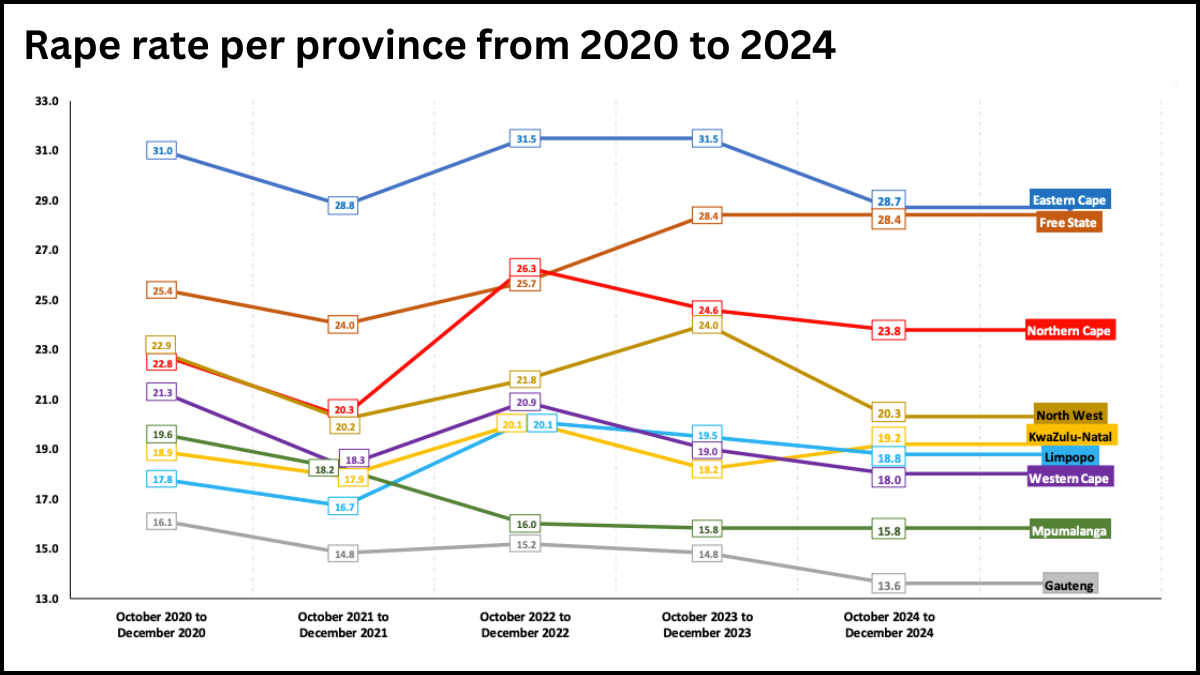
Eastern Cape MEC of Transport and Community Safety Xolile Nqatha said that these crimes often go unreported because they occur within families and among intimate partners.
“This situation makes it challenging for police to effectively combat these serious crimes,” he said.
As evidence of this, the parliamentary committee noted that the South African Police Service (SAPS) station in East London reported only 33 cases of statutory rape in the last financial year.
This is despite evidence to show that sexual violence against girl children alone exceeds these statistics.
“This contradicts the prevalence of teenage pregnancies and sexual violence against minors. It is unacceptable that the reported numbers do not reflect the reality on the ground,” said committee Chairperson Ms Liezl van der Merwe.
In the Eastern Cape this year, 117 girl children between the ages of 10 and 14 gave birth between April and July 2025 alone.
These figures exclude unreported births, cases of concealment and girls who fell pregnant and terminated their pregnancies or suffered miscarriages.
“This means that the pandemic of child rape and statutory rape is far higher than the shocking figures suggest,” said the DA’s MP, Alexandra Abrahams.
Further discouraging reporting, cases of rape that are reported rarely result in convictions and justice for victims.
According to Women and Girls’ Rights Organisation Equality Now, a parliamentary report found that nationwide, 53,498 sexual offences were reported between 2022 and 2023, but of these, only 410 rapists were traced and arrested.
The DA reported in November that SAPS has a 10% conviction rate for rapists.















 Loading ...
Why “a girl child”, as opposed to a girl adult ? A girl is a child.