
The best and worst Eskom CEOs since 2007



Since loadshedding began in South Africa towards the end of 2007, state power utility Eskom has had 14 CEOs.
The collapse of Eskom that led to loadshedding is often blamed on ageing infrastructure, delays in new power stations like Medupi and Kusile, and issues of state capture and corruption during former President Jacob Zuma’s tenure.
Eskom was established in 1923 and was a world-class state utility at the time. During apartheid, the country’s power structures mainly served white communities, with vast numbers of black communities and rural areas excluded.
When the ANC took over Eskom from the National Party in 1994, the focus of capital spending was on an ambitious electrification project.
By 2004, 7.8 million households had been connected, a massive jump from 3 million in 1990.
“This probably would have been the ideal time for the government to ease off on the electrification programme and put all its efforts into helping Eskom avert a looming generation crisis,” Eskom said.
But this is not what happened; instead, then President Thabo Mbeki continued to push for universal electricity access, with little investment in generation.
The consequences were felt in 2007, under the leadership of Jacob Maroga, when Eskom warned that the system would be constrained for at least the next five years.
This was then worsened by the state capture of Eskom during former President Jacob Zuma’s tenure.
The Zondo Commission found that corruption and mismanagement severely undermined state-owned entities, including Eskom and Transnet
Eskom’s irregular expenditure reached R14.7 billion, with significant links to Gupta-associated contracts. President Cyril Ramaphosa estimated that state capture cost South Africa around R500 billion during Zuma’s presidency.
Eskom’s recovery from state capture, which began around 2008, has been hampered by corruption.
Jacob Maroga to Brian Molefe
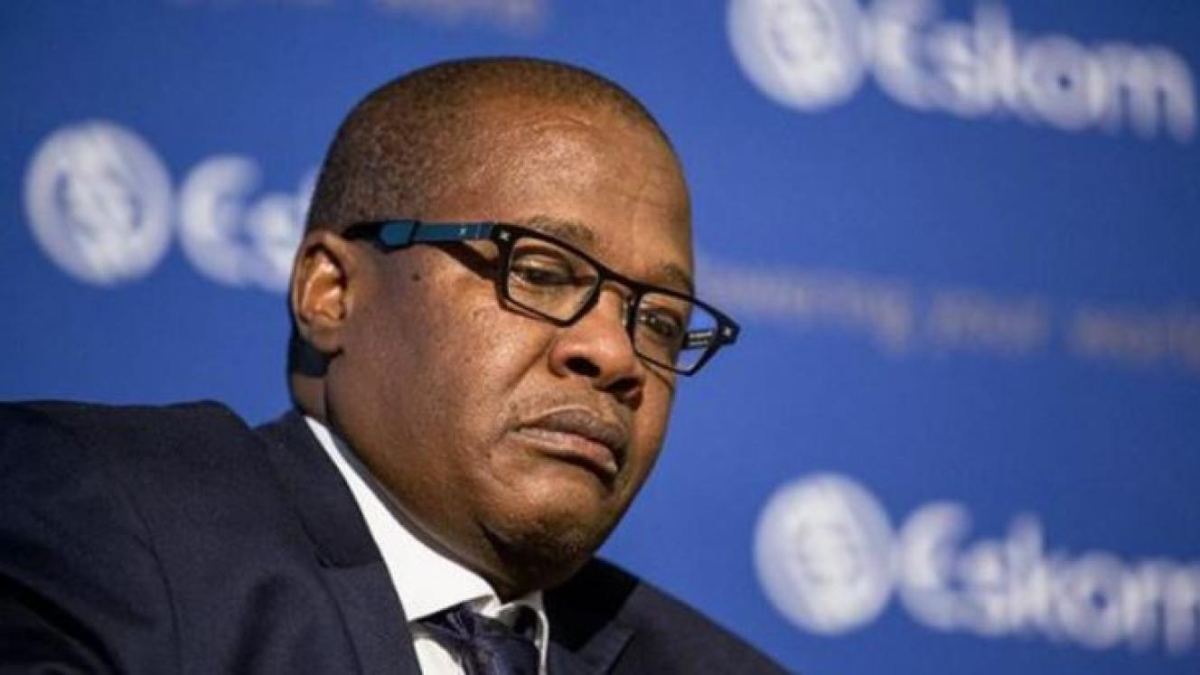
Under Jacob Maroga, South Africa experienced 176 GWh of load shedding in 2007 and 476 GWh of load shedding in 2008, a level that would not be seen again until 2015.
Maroga was removed as CEO by the Eskom board, who cited poor performance as the reason. Maroga challenged his dismissal in court, which ruled that his removal was indeed unlawful.
However, the court denied Maroga’s bid to be reinstated as CEO, saying that it was clear the relationship between Maroga and Eskom’s board had irretrievably broken down.
Maroga was succeeded by acting CEO Mpho Makwana, who held the position for less than a year. During this time, the country experienced no loadshedding.
Brian Dames was then appointed CEO in July 2010 and held the position until March 2014. During Dames’ tenure, Loadshedding restarted for the first time in over five years.
In 2014, the country experienced 121 hours of load shedding, or 203 GWh, but stayed in stages 1, 2 and 3.
However, 2014 was also the year when Dames was succeeded by Colin Matjila, a known Gupta associate who was quickly removed in the same year.
Matjila was then replaced by Tshediso Matona in October 2014, but his involvement as CEO was cut short when he was removed by then-President Zuma at the height of state capture.
He was replaced by Brian Molefe in April 2015. Molefe remained CEO until November 2016, but in his short time as CEO, the country experienced 852 hours of loadshedding, or 1,325 GWh – an unprecedented level for the time.
The next three CEOs, Matshela Koko, Johnny Dladla and Sean Maritz, each held the CEO position for less than a year, but managed to keep load shedding at bay.
When Phakamani Hadebe took over in January 2018, however, the familiar problem would once again rear its head.
South Africa experienced 127 hours of loadshedding in 2018, or 192 GWh in stages 1 and 2.
Andre de Ruyter and Dan Marokane

The following year, however, load shedding levels skyrocketed to 530 hours, or 1,352 GWh, and reached stage 6 for the first time.
Hadebe was then succeeded by Jabu Mabuza in August 2019, and from this point, the electricity crisis severely worsened.
In January 2020, Mabuza was replaced by André de Ruyter who remained in the position until February 2023.
During this time, load shedding climbed to 859 hours in 2020, or 1,798 GWh, reaching up to stage 4 in 2020.
In 2021, South Africa experienced 1,130 hours of load shedding, a new record of 2,455 GWh.
In 2022, the country experienced 3,788 hours of load shedding. The electricity crisis peaked in 2023, when South Africa experienced almost 6,800 hours of loadshedding.
De Ruter was removed as CEO in February 2023, and was briefly succeeded by Calib Cassim in March 2023.
Current CEO, Dan Marokane, took over from Cassim in March 2024 and remains in the position today.
In 2024, Eskom reported that load shedding was implemented for 1,656 hours.
In 2025, Eskom drastically reduced load shedding hours. The country has experienced only 26 hours of power cuts due to loadshedding.
And so, if one were to judge each CEO by the hours of loadshedding experienced during their years in the position, André de Ruyter could be considered the worst.
Some, such as Peter Attard Montalto, the head of capital markets research, insist that de Ruyter inherited a broken system and did his best to turn it around.
“André will probably be scapegoated for the current rolling blackouts,” he told the Daily Maverick. “I think he did ultimately everything possible in that role, given the financial incapacity constraints.” He added that rolling blackouts were bound to worsen, regardless of who filled the role of CEO.









 Loading ...
all should be sued for their poor performance and the only scapegoat is the white man, de Ruyter. so even with the detailed info of the others they are still failing with all the new positions created by Ramapokker to oversee the ever failing EKSDOM