
“The 30% school pass mark is no different to Bantu education”



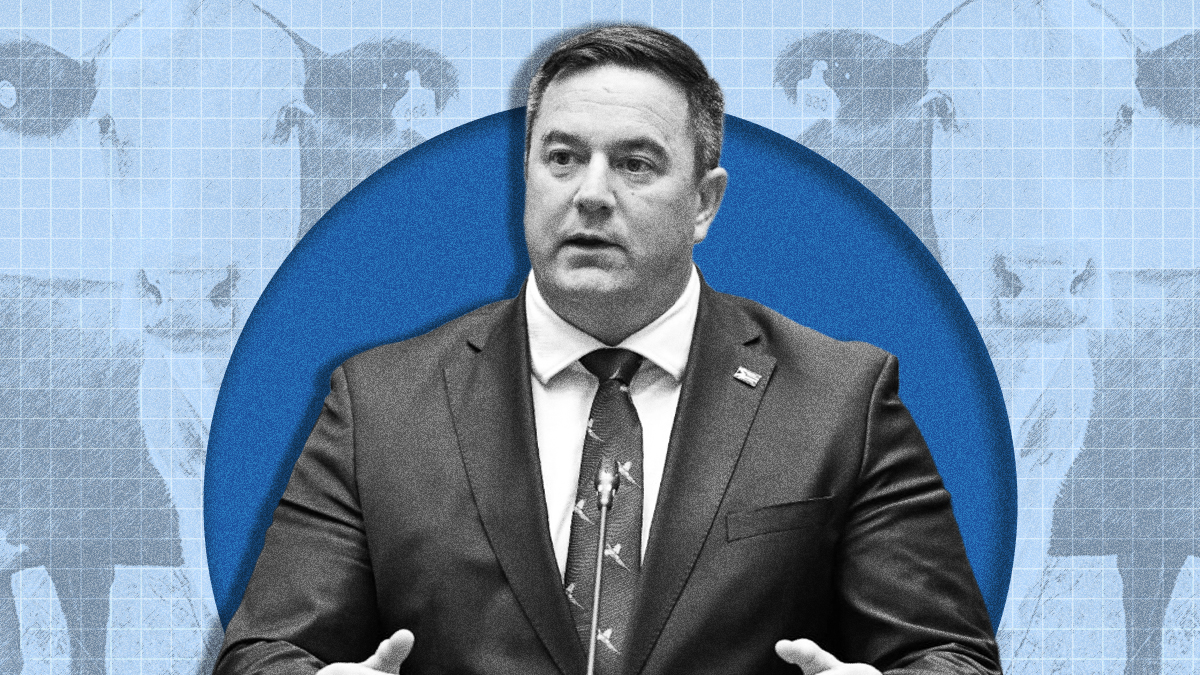
Parliament rejected a motion tabled by Build One South Africa Leader and MP Mmusi Maimane to raise the matric pass mark from 30% to 50% on Tuesday, 2 December.
During the parliamentary vote, a total of 119 members voted to maintain the pass rate, while 87 voted to change it.
Maimane said he was disappointed in his fellow members of parliament, particularly the Democratic Alliance (DA) and the African National Congress (ANC), the two biggest parties in the GNU, for fighting to keep the 30% pass rate.
However, he added that the high number of parties that voted to pass the motion has encouraged him to keep fighting to push the pass mark up.
“I would argue that maintaining the 30% pass mark is no different to maintaining Bantu education,” he said in an interview with Newzroom Afrika following the vote.
“Once a child has passed with 30%, what work are you preparing them for? Other than for menial jobs, if they find a job at all,” he added.
Bantu Education was the apartheid government’s system of racially segregated, inferior education for black South Africans, educating black children only for certain forms of labour.
Maimane argues that the low pass rate perpetuates inequality in South Africa. He said that quintile four and five schools and private schools deem it unacceptable that a child would pass with as low as 30%.
Meanwhile, children who cannot afford these schools and attend quintile one, two and three schools, with fewer resources, pass at 30%.
“We are creating a divided society, with different standards of education for the wealthy and the poor,” he said.
The vote follows a parliamentary debate on 28 November, where members were sharply divided on the issue.
“BOSA has long called for the current 30% pass mark for matric subjects to be scrapped and replaced with a minimum standard of 50%,” said Maimane.
The two largest parties in parliament, the Democratic Alliance (DA) and the African National Congress (ANC), both opposed the motion during the last debate.
“The ANC and the DA argued that we can’t change the pass mark because government is struggling to improve the education system,” Maimane said.
“This is a cop-out by the ANC/DA national government coalition and comes as no surprise,” he added
Creating a divided society

The main argument put forward by the ANC and the DA, as well as the Freedom Front Plus (FF+), was that the 30% overall pass mark is not factually correct.
Minister of Basic Education and DA member, Siviwe Gwarube, said that “there is no such thing as a 30% overall pass mark”.
Gwarube explained that learners need to meet a three-tiered set of subject requirements, including at least 40% in their home language and 40% in two other subjects, to receive a National Senior Certificate (NSC).
The threshold of 30% applies to three additional subjects on top of this. She added that higher thresholds are in place for obtaining admission to a diploma or bachelor’s studies.
The minister further added that, out of the 724,000 learners who wrote the NSC exams in 2024, only 189 passed with the minimum requirements, rather than achieving a bachelor’s pass.
“So the minimum requirements are not the norm,” she said. “That is just 0.003% of the overall number.”
Wynand Boschoff from FF+ described the 30% pass mark controversy as a “popular work of fiction” used to “score political points without addressing the actual, very complicated problem” of South Africa’s broken education system.
The Minister added that raising the pass mark will increase the risk of dropouts and does nothing to address South Africa’s real education crisis: that 81% of Grade 4 learners cannot read for meaning.
Maimane argues that without a goal in place, such as each child passing with over 50%, we cannot expect standards of education to improve.
The current system that allows learners to pass matric with over 40% for three subjects and over 30% for another three subjects was implemented when the old Senior Certificate (SC) was replaced with the NSC in 2008.
In a 2013 Umalusi Discussion document, it was argued that the old system’s pass mark is often cited at 50%, but this is not correct.
Umalusi explains that the old system distinguished between Higher Grade, Standard Grade and Lower Grade, and allowed learners who failed a higher-grade subject with a score between 25 and 39% to convert this to a standard-grade pass.



















 Loading ...
Even getting 100% at a worthless subject won’t get you anywhere. Maths and Science is what’s needed. Raise the bar of those.