
The popular South African toy chain that disappeared



One of the oldest toy retailers in South Africa, Reggies Toy Stores, used to be an institution, with the small-scale neighbourhood stores dotting the country.
The first Reggies opened in South Africa in 1971. Each store originally sold toys for babies and young children. They were built as small, convenient stores in malls and shopping centres across the country.
The stores were owned by the family business Redgwoods, which also expanded to include the national toy franchise Toys R Us.
It became widely known for the TV show Reggies Rush, which aired in 1992. It invited kids under 13 to compete in a 30-second toy dash inside a Reggies store to win a grand prize.
Media Update described it as the “longest running gaming show” in the country by 2008.
By 2002, however, most of the few Reggies stores that were operating were becoming unprofitable.
It was at this point that investor Issy Zimmerman took on a 50% stake in the store’s holding company.
Zimmerman was born in Pretoria and educated at the University of Natal and the University of Cape Town.
He had moved away from South Africa and was working as a short-term insurance salesman when the opportunity to take on the franchise presented itself. At the time, he had no hands-on operational experience in retail.
“I received a call from my father saying that he was considering investing in a cluster of six Toys R Us stores and a few then largely non-profitable Reggies stores,” Zimmerman told BizCommunity.
“I took a chance and in 2002 headed back to South Africa to do an evaluation and due diligence on the local toy and baby business”
Zimmerman was appointed director of Redgwoods and headed up the marketing, store roll-out and real estate leasing and development for the company.
The rise and fall of Reggies
The business flourished under Zimmerman’s leadership. The Toys R Us and Reggies stores saw turnover grow more than sixfold in a space of 10 years to over R1 billion per annum.
By 2008, there were 24 Toys R Us stores and 37 Reggies stores nationwide, as well as 4 Baby & Company stores and 4 Little People stores.
19 of the 69 stores were revamped around this time. Zimmerman said that following this, the company would turn its attention to customer care.
“It will be a period of consolidation and increased focus on improving operational efficiencies, with only one new store opening in East London,” he said.
Zimmerman also saw the launch of the Reggies online store at the end of 2008, which became a success, adapting to the changing shopping habits of customers.
Growth appeared to slow down in 2010, when Zimmerman reported that sales grew only 10% year-on-year in December.
He called the performance “satisfactory” however, as the retail sector was experiencing a flat trading pattern at the time.
In 2012, however, Controversy struck the toy magnate, which would result in Zimmerman selling off Redgwood by the end of the year.
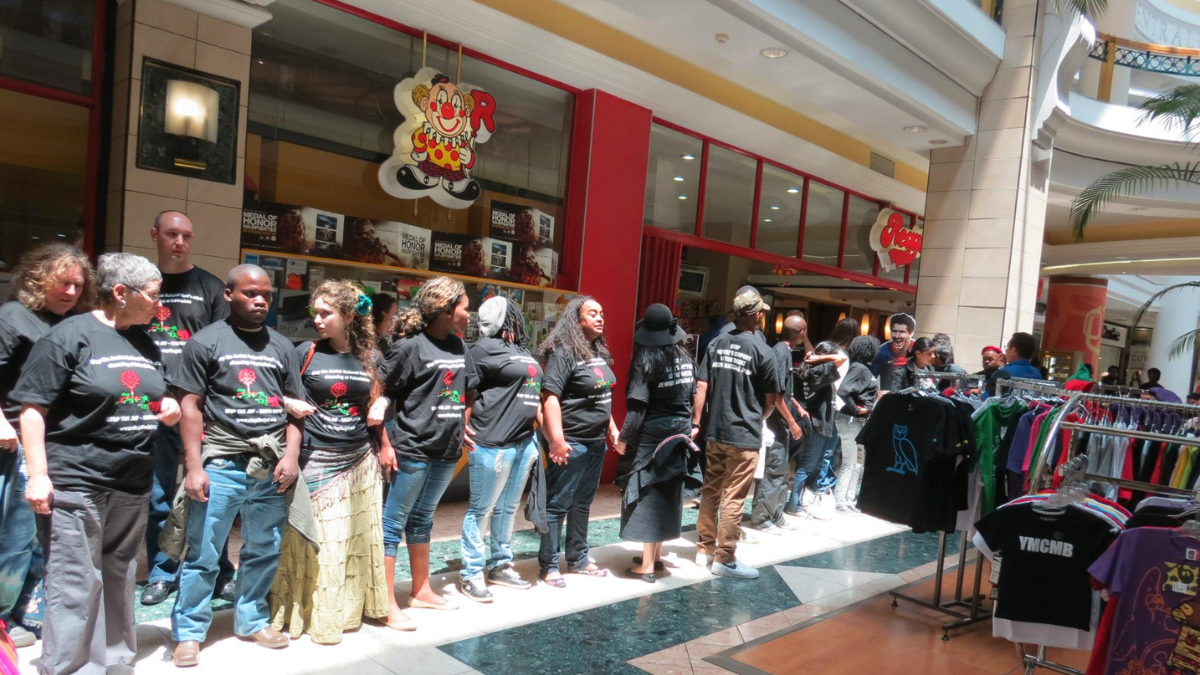
Zimmerman, and subsequently Reggies stores, were the target of protests by the StoptheJNF campaign. The International protest movement was aimed at halting support for the Jewish National Fund for its alleged involvement in displacing Palestinians in Israel.
The South African Chapter of the campaign said Zimmerman was known to support the campaign and said that it tried to inform Zimmerman of the “human rights violations being carried out by the JNF.”
However, they said that he “not only refused to end his involvement with the JNF, a recipient of Reggies financial support, but threatened to intensify it,” the group said.
New owners, big plans
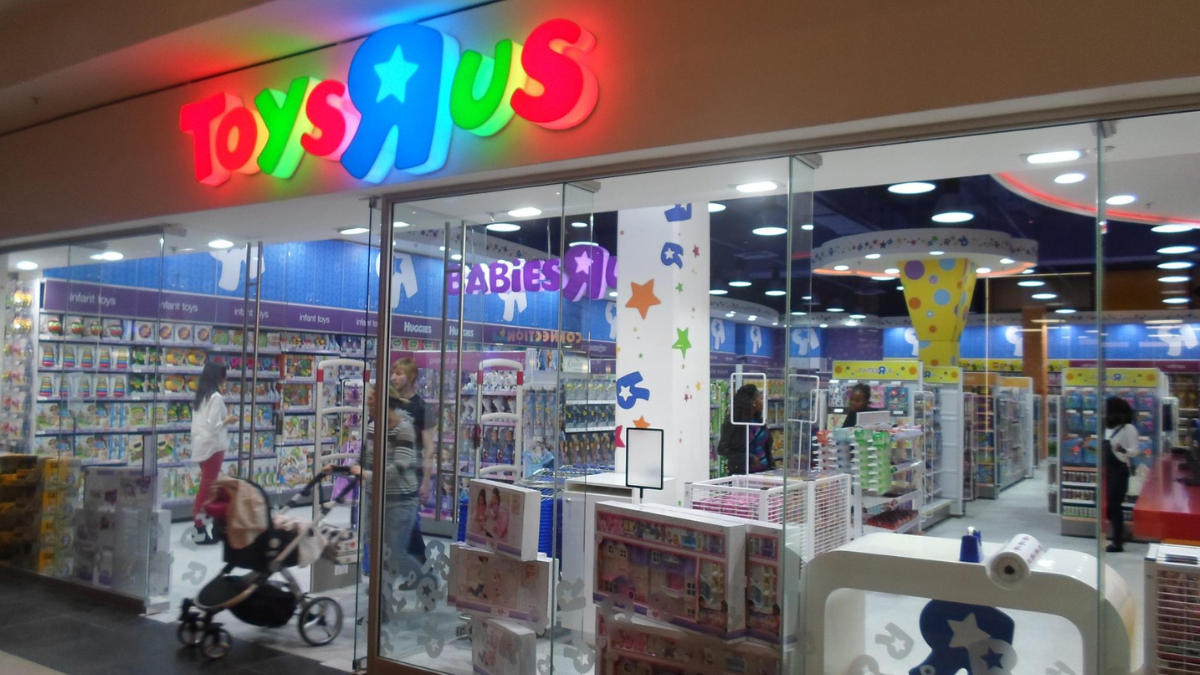
This culminated in protests that saw the closure of some Reggies stores. By January 2013, Redgwoods had been sold off to new owners.
Christian Larsen and Mohsin Mia, took over the stores in 2013, after being Redgwoods’ largest supplier of baby and toy products under the company Amic Trading.
The owners quietly cut financial support for the JNF, saying that they did not carry forward any affiliations of previous ownership.
The duo took on Toys R Us and Reggies at a time when there were 25 Toys R Us stores and 41 Reggies stores. They had big plans for the development of both retailers.
“As owners of two separate toy retailers, we strategically place our stores to prevent cannibalisation of our own sales,” they said.
They positioned Toys R Us as large, destination stores in the biggest malls of South Africa’s major cities, and planned to use Reggies’ more boutique model to complement the bigger toy franchise.
“Reggies stores tend to be a little smaller, typically covering 500 square metres and servicing localised areas and suburbs as well as outlying areas outside of the main urban districts.”
However, without publicly announcing a planned shutdown, Reggies gradually transitioned to a fully online store shortly after. The store branches that did not close were converted into Toys R Us stores.
Within a few more years, by 2020, the Reggies.co.za web domain was no longer active, having completely phased out.
Amic Trading continues to own and operate Toys R Us and Babies R Us and has recently announced its acquisition of competing toy franchise Toy Zone in August this year, according to the Competition Commission.


















 Loading ...
It is only diehard zionist who continuously defend & refuse to acknowledge what everyone knows , ie Israel is a fascist , colonial genocidal state .