
Ramaphosa has been a disappointment



Billionaire Christo Wiese, one of South Africa’s leading business figures and the founder of the Shoprite and Pepkor retail empires, has expressed disappointment about the legacy of President Cyril Ramaphosa.
In a recent interview with SMWX, Wiese addressed the notion that Ramaphosa, whose election initially “stoked great hope in the country,” has failed to live up to expectations.
When asked directly about the President’s legacy, Wiese responded plainly: “It has been a disappointment.”
Despite his candid assessment, Wiese emphasised his personal respect for Ramaphosa. “He is a good person, and I’m sure he would have wanted to have a better legacy than what he’s going to be stuck with,” he said.
Wiese pointed to structural flaws within South Africa’s political system as a key reason for what he describes as the administration’s underperformance.
“I’ve always defended him because I blame the system,” he explained, criticising a framework “where a president can be recalled at any time by seven or eight people that don’t bear the ultimate responsibility of running the country.”
He is referring to the fact that the ANC NEC has recalled the prior two Presidents.
Highlighting the challenges of leadership in such a system, Wiese reflected on the fate of Ramaphosa’s predecessors.
“Can you imagine being a president and you’ve seen what’s happened to your two predecessors, and you’ve got to do something that really goes against the grain in the view of some people — the next day you can be recorded, and you can land the country in a worse situation,” he said.
Wiese also expressed support for structural reform, suggesting that the president should be elected directly by the people.
“I’m beginning to move also in favour of the president being elected directly. Completely agree,” he noted.
Law, order, and governance failures
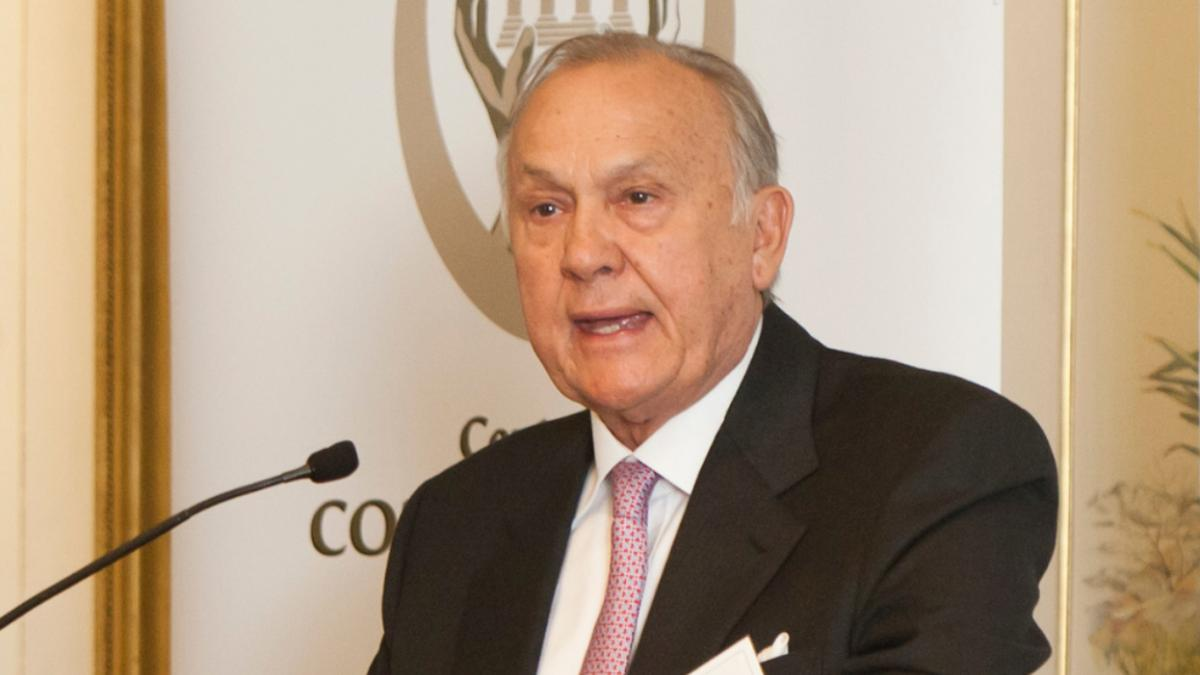
While sympathetic to the constraints faced by the President, Wiese acknowledged that the government has “failed miserably” in crucial areas.
Drawing on advice from international figures, he emphasised that the primary role of government is to uphold law and order. “If you let the rule of law go, you have a huge problem,” he said.
Wiese identified weaknesses in South Africa’s core justice and security institutions as particularly concerning.
“The worst is, of course, the police, and now apparently the judiciary, and certainly our prosecuting authority,” he said, warning that the inability to enforce the law undermines public confidence and economic stability.
He contrasted South Africa’s indecisive approach with other countries that have rapidly restored law and order, suggesting that decision-making in South Africa has been hampered by “attachment to obsolete ideologies.”
Despite his disappointment in the administration’s performance, Wiese expressed optimism about the country’s potential.
He said that if the government were to “get out of the way,” South Africa could become “unrecognisable” in a year, largely due to the strength and dynamism of the private sector.
What the data says

Since taking office in February 2018, Ramaphosa has faced high expectations for economic renewal following the scandals of the Zuma era.
However, South Africa’s performance under his leadership reveals a pattern of stagnation, structural challenges, and recurring crises across key indicators such as employment, growth, currency stability, energy supply, and governance.
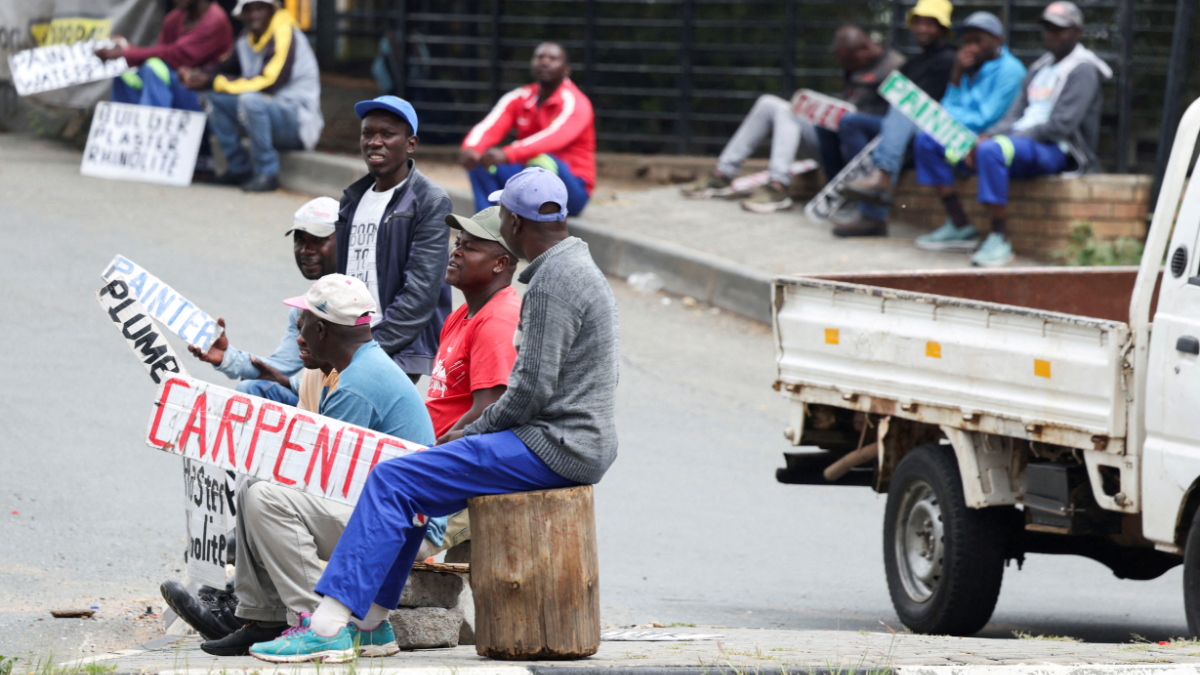
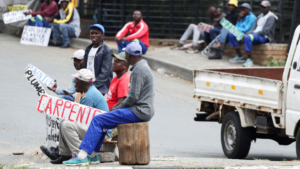
The official unemployment rate rose from 26.9% in 2018 to an entrenched 32 to 33% by 2025, with youth unemployment reaching 46.1%.
GDP growth has remained weak, averaging around 0.8% annually, reflecting energy shortages, weak investment, and logistical bottlenecks.
The rand depreciated roughly 30% against the US dollar since 2018, signaling investor concerns over policy uncertainty and fiscal risks.
Corruption perceptions stagnated or declined, with South Africa’s Transparency International ranking slipping from 73rd in 2018 to 83rd in 2023 despite anti-corruption pledges.
Load shedding escalated dramatically, peaking in 2023 with nearly 20,000 GWh shed, before easing in 2024/2025 following electricity-sector reforms.
While post-2024 improvements in energy reliability and modest growth provide some optimism, the data suggest a presidency constrained by structural challenges and slow reforms, leaving critics to argue that robust recovery has largely been missed.










 Loading ...
Unemployement is high in South Africa.Can they please go to shopping malls on grant payment days and see the real stats or rather consult Sassa and found many people leave on R370 grant per month to get the real stats.