
Emergency plan announced amid foot-and-mouth disease crisis in South Africa



Minister of Agriculture John Steenhuisen has announced plans to vaccinate all the cattle in South Africa from Foot and Mouth Disease (FMD) starting in February 2026.
This is after the minister denied that the outbreak was out of control, and after South African farmers had resorted to legal action to demand transparency on the containment efforts that were not yielding any tangible results.
The Department of Agriculture plans to take delivery of two million doses of FMD vaccines in two separate consignments.
Steenhuisen said the Department is working closely with the Ondersterpoort Biological Products (OBP) and the Agricultural Research Council on public-private partnerships, including with countries such as China and Argentina.
Despite the vaccination of 931,200 animals with vaccines purchased from Botswana for R72 million, the spread of the disease has not been contained.
“We must be honest with the public and with our farming sector. This is a battle we are currently not winning,” Steenhuisen said on Wednesday.
In September, Steenhuisen rejected claims from the Red Meat Producers Organisation that FMD was “out of control.”
Experts began sounding the alarm in October 2025, however, calling the outbreak one of the most severe in South Africa’s history, triggering fears of export bans and soaring meat prices.
The Rooivleis Aksi Groep, representing many local meat farmers, took the Red Meat and Livestock Primary Cluster (RMPC) and its auditing partner, Red Meat Industry Services (RMIS NPC), to court over the outbreak.
VDM Incorporated director and head of litigation Ann-Suhet Marx explained at the time that farmers pay levies to these groups for the monitoring and prevention of FMD outbreaks, but have seen no results.
Marx said that abattoirs across South Africa are paying R14.33 per head of slaughtered cattle to RMPC.
”They are paying, but the disease continues to spread, market access is collapsing, and red meat prices are soaring. The system has failed, and they have had enough,” said Marx.
South African farmers fed up
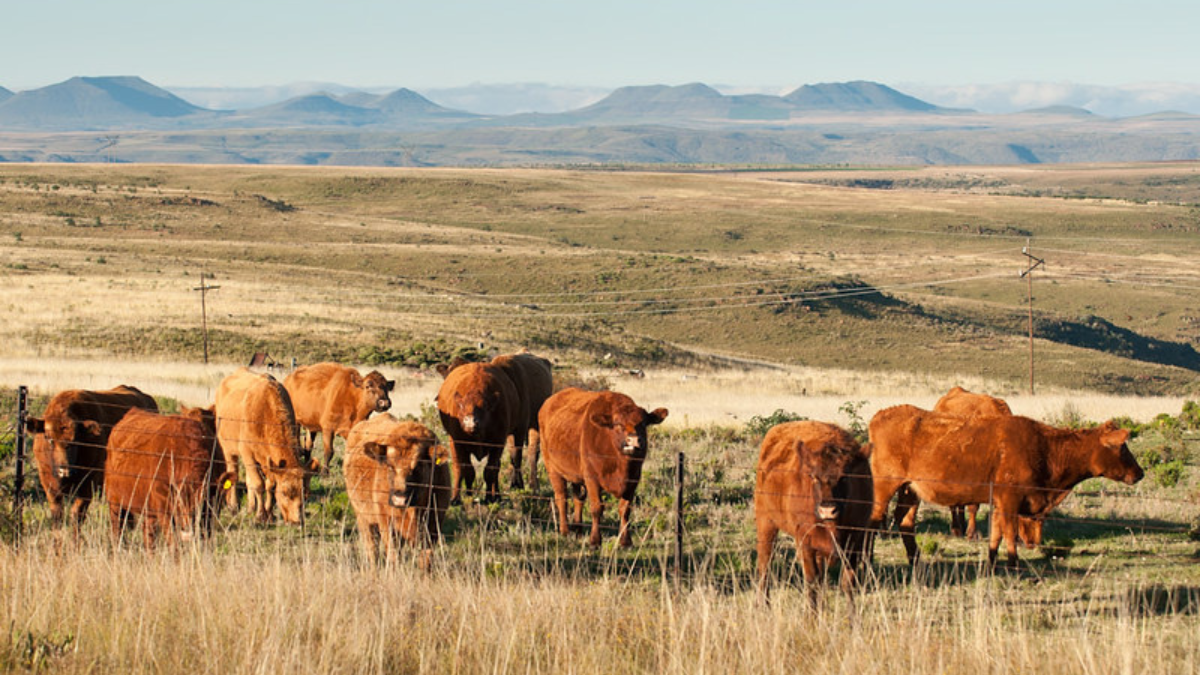
The latest outbreak of the disease began in April 2025. The Department of Agriculture has confirmed that the epicentre remains KwaZulu-Natal, with 180 of the 274 cases reported nationally.
The Department said this is one of the most persistent and damaging waves of FMD that the country has seen in decades.
The ambitious plan to vaccinate South Africa’s entire herd will allow South Africa to apply to the World Organisation of Animal Health (WOAH) for recognition of freedom with vaccination status.
This is after a 2019 outbreak in Limpopo led to the WOAH suspending South Africa’s foot-and-mouth disease-free status.
The vaccination strategy will begin with the hardest hit provinces: KwaZulu-Natal, Gauteng, Free State, Mpumalanga, and North West.
The provinces will submit their livestock numbers and the number of quarantine farms.
Steenhuisen acknowledged that the plan is reliant on a consistent, high-quality vaccine supply and highlighted plans to construct a new, mid-scale vaccine production facility.
This will produce a further 1.5 million vaccine doses.
The Minister said the success of the mass operation will depend on law enforcement and the control of the movement of animals: this, he said, is the biggest threat to national containment efforts.
“We recognise the emotional, financial, and operational strain this disease has placed on the sector. We remain committed to doing everything possible to turn this outbreak around and rebuild resilience in the livestock industry,” he said.










 Loading ...
People connected with the WEF cannot be trusted.