
Critical South African agency hamstrung in fighting financial crime



South Africa’s Electoral Commission (IEC) is mandated to oversee compliance with political party financing laws, but without strengthened investigative authority, it will be unable to curb noncompliance and financial crime among parties and politicians.
These are key concerns raised by civil watchdog My Vote Counts (MVC), an organisation that advocates for transparency in the country’s political funding system.
Until 2021, South Africa’s political funding system operated in the shadows, with no legal frameowrk regulating such.
However, a successful legal challenge by MVC and others changed this.
The Constitutional Court ordered that legislation was needed, designed to enhance transparency, inclusiveness, and accountability in political funding, addressing the previous lack of access to information.
The Political Funding Act (PFA), originally enacted as the Political Party Funding Act (PPFA) in 2018, came into effect on April 1, 2021.
It requires political parties to disclose private donations above R100,000, caps donations at R15 million per donor per year, establishes new public funds, and bans contributions from state-owned entities and foreign governments.
Renamed the PFA in 2024 to reflect electoral reforms, the Act was amended again in August 2025, doubling the disclosure threshold to R200,000 and the donation cap to R30 million.
All registered political parties must submit annual audited financial statements to the IEC, detailing private donations, loans, membership fees, and allocations from allocated taxpayer funds for specific purposes.
Across the political aisle, this amounts to billions of rands annually. Despite its powers, the IEC’s role remains limited.
It can only investigate complaints backed by evidence, cannot independently verify parties’ financial submissions or loans, and operates under tight budgets that constrain enforcement.
With these prescripts, MVC warns that enforcement remains a weak link in the political funding system. “Without real investigative capacity, noncompliance can flourish unchecked.”
In response to questions from Newsday, the IEC said that “the Commission’s limitations are mainly with regards to limited internal investigation capabilities.”
What the IEC can do

A critical question concerns the IEC capacity to investigate financial misconduct and enforce compliance under the PFA.
The IEC does have defined powers and tools for oversight, yet their effectiveness is constrained by legal, operational, and resource limitations.
Under Section 14 of the PFA, the IEC is tasked with monitoring compliance by political parties, independent representatives, and independent candidates.
This includes evaluating submitted documentation and information.
To investigate complaints or ensure compliance, the Commission may require any person to:
- Disclose relevant information;
- Produce books and records in any form;
- Allow access to premises during working hours;
- Copy or store documentation; and
- Answer questions about financial activities.
While these powers provide a formal investigative framework, the PFA also places significant responsibility on independent auditors, who are mandated to audit party financial records, thereby creating a dependency on external verification.
The IEC has several enforcement mechanisms to address non-compliance.
It can suspend payments to represented political parties, recover money that was irregularly accepted or spent, and institute proceedings in the Electoral Court to impose administrative fines.
Additionally, it can press charges against parties for offenses under the Act and issue directions to ensure compliance before taking formal action.
For example, of the 581 unrepresented political parties in the 2023/24 FY, 510 did not submit any statement of income, as required – with no consequenses.
“This flagrant noncompliance becomes particularly problematic in cases where unrepresented parties later win representation,” said MVC.
This is “because the funding sources that backed their campaigns and helped boost their electoral prospects will remain unknown.”
Represented political parties in the same financial year, namely COPE, AIC, and NFP, had funding from the IEC withheld for noncompliance.
‘Often left toothless’
Despite these powers, the IEC does admittedly face notable limitations.
Its mandate is largely reactive: under Section 14(4), it can investigate only complaints submitted with prima facie evidence of noncompliance, leaving little room for proactive enforcement.
Parties like ActionSA have cried foul over this limitation, with its National Chairperson Michael Beaumont saying that it leaves the IEC “toothless.”
The Commission is also required to publish audited financial data as submitted by parties, without independent verification of potentially significant sums classified as “other income” outside the PFA’s scope.
Loan oversight is similarly weak, as the IEC cannot verify whether loans are genuine or being repaid, creating opportunities for parties to circumvent disclosure requirements.
Compounding these challenges are budgetary constraints, with funding for the Party Funding Programme remaining flat and restricting the Commission’s enforcement capacity.
For example, during one of South Africa’s fiercest election contests, Jacob Zuma’s uMkhonto weSizwe Party (MKP).
Following these elections, the MKP amassed 58/400 seats in the National Assembly, 9/90 in the National Council of Provinces, and 58/487 across the country’s nine provincial legislatures – not bad for a supposed R2.8 million campaign that it reported.
Beaumont, told Newsday that “it is absolutely impossible to have run a campaign on R2.8 million.”
He referenced how the costs of an event which includes stadium hire, for example, would run into the tens of millions of rands along.
“I believe they ran one of the most expensive election campaigns in the hundreds of millions,” said Beaumont.
“Lawmakers have not given the IEC any teeth to deal with non-compliance and shadiness by parties. It is only parties that comply with the law that face their wrath. Non-compliant parties seemingly have a hall pass.”
MVC said that “the lack of enforcement of the Act’s disclosure requirements highlights once again that closing the PFA’s existing loopholes is insufficient.”
“The IEC needs to be given adequate budget, staff capacity, and a clear legislative mandate to monitor and investigate parties’ funding sources and fundraising activities.”
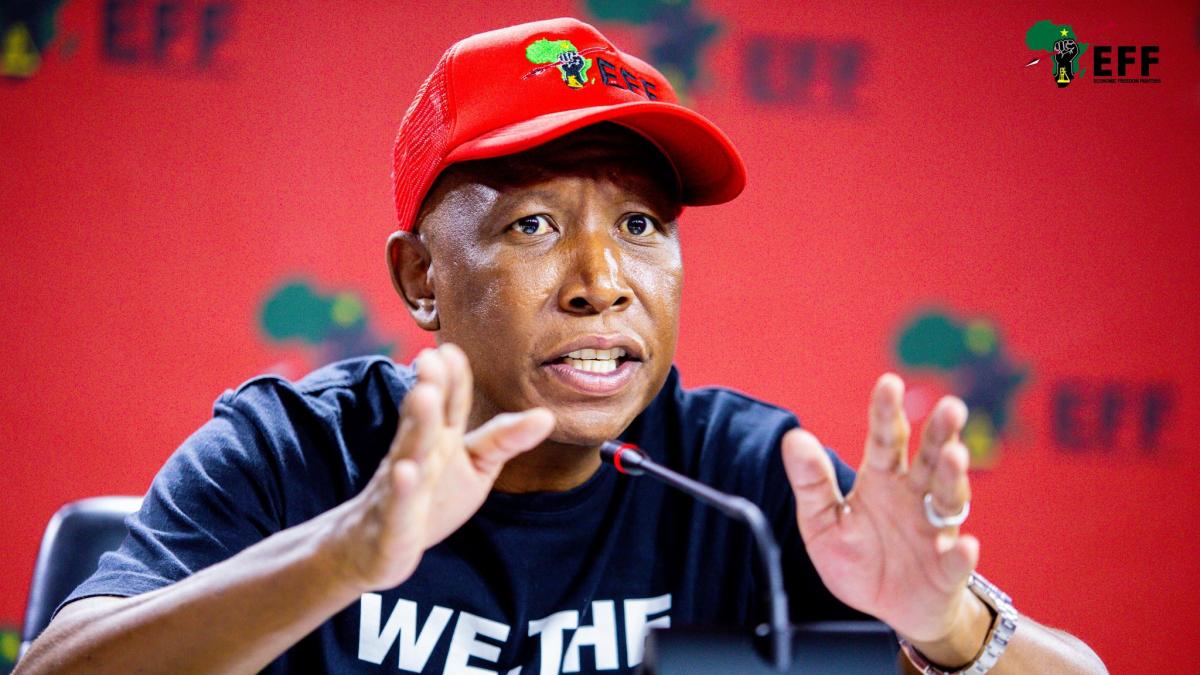
For reference, the ANC declared R536 million in private funding for this same period, the DA R213.3 million, and the EFF R110.7 million, excluding what it got for its representation from the public purse.
At a recent party funding symposium hosted by MVC, SANEF, and the IEC, multiple speakers noted the risk of a toothless Commission, particularly as the country aims to demonstrate its best efforts in combating financial crime.
In response, the IEC said that to compensate for its limited internal investigative capacity, the IEC has prequalified a panel of legal and forensic experts.
It has also established agreements with the Financial Intelligence Centre (FIC) and the South African Reserve Bank (SARB), however, these agreements have not yet been utilised.
















 Loading ...