
The group that took on Ramaphosa’s government and won



Public-interest group Sakeliga has secured a major legal victory in its multi-year campaign to restore governance in the failing Ditsobotla Local Municipality.
The court order, issued last week, compels the National Executive to take direct responsibility for the municipality under section 139(7) of the Constitution, the final, explicit legal mechanism for addressing municipal collapse.
This follows years of inaction by municipal and provincial authorities and a formal decision by President Cyril Ramaphosa and his cabinet to place Ditsobotla under administration.
Under the court’s ruling, the Minister of Finance must submit quarterly reports to Sakeliga and the court, ensuring formal oversight of government intervention.
These reports will be shared with local businesses and communities to enhance transparency and allow monitoring of progress in restoring essential services.
The court also awarded costs jointly and severally against the North West Premier, the provincial executive, the MEC for Local Government and Human Settlements, and the Finance Minister.
Sakeliga said that this underscores that government officials cannot ignore their constitutional duties without consequence.
It added that the ruling establishes a precedent for the most severe form of constitutional intervention at the municipal level, while also embedding elements of judicial oversight.
“If the National Executive succeeds, communities will finally feel relief,” the group said.
However, Sakeliga warned that ongoing state failure nationwide means communities must also prepare for alternative, locally driven solutions to address municipal collapse where government proves unable or unwilling to act.
Over the past three years, Sakeliga and local partners have methodically exhausted every constitutional mechanism to compel government action, culminating in this decisive court victory.
The organisation will now shift focus toward empowering communities to fill the gaps left by failing state structures.


Holding politicians directly responsible
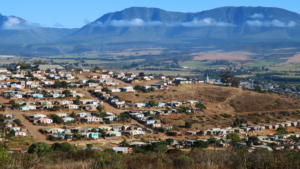
The collapsing Ditsobotla Local Municipality (DLM) in the North West was placed under national administration by the National Government in October 2025, marking a critical victory for the struggling towns of Lichtenburg, Coligny, Boikhutso, and more.
The collapse of DLM has been dramatic and drawn-out, plagued by political instability, corruption, and financial mismanagement.
Despite President Cyril Ramaphosa visiting the town several years ago, declaring it a “horror story” and “captured by criminal elements,” and promising that things would improve within weeks, the situation deteriorated.
It has received disclaimed audit opinions for years, and racked up over R1.2 billion in unauthorised, irregular, fruitless and wasteful expenditure.
Political chaos has been so pervasive that at multiple times, more than one person claimed to be the mayor or speaker of the council.
This environment has been devastating, with poor service delivery significantly hurting residents, and as Sakeliga CEO Piet le Roux describes it, “killing businesses”.
The closure of Clover’s flagship cheese factory in Lichtenburg in 2021 was explicitly attributed to ongoing poor service delivery and infrastructure issues.
A new model for recovery

Sakeliga pursued a protracted legal strategy alongside local partners like Agri North West and the Ditsobotla Services Association (DSA).
After successfully forcing the provincial government to intervene under Section 139(5) of the Constitution in 2023, and finding this provincial effort ineffective, Sakeliga escalated the litigation to demand national intervention.
In an interview with Newsday, Le Roux highlighted that the constitutional provision for intervention in a failed municipality is not optional: Section 139(7) imposes a duty to intervene.
The Minister of Finance, the Minister of CoGTA, and President Ramaphosa himself “had neglected this constitutional duty,” said Le Roux.
The turning point came when Sakeliga chose to attach the President and relevant Ministers directly to the litigation.
Sakeliga formally notified Ramaphosa and several Ministers that it would seek personal cost orders against them for failing in their duty to intervene.
Crucially, the government’s response was swift following this threat. Sakeliga received acknowledgement and a reply from the state attorney shortly after sending those letters.
The national intervention was then passed through cabinet and publicly announced within about two weeks.
Le Roux stated there is “no doubt that this was a very necessary step and the final one that actually got them across the line”.
He added that real, lasting change requires a shift in the political structure. He said the state is “far too powerful nominally” and prevents businesses and community members from taking control of failed municipal infrastructure, all while still claiming levies, rates, and taxes.
Ultimately, the lesson learned from Ditsobotla is that waiting for the state to act may be futile. The group warned that local communities must prepare to tackle governance issues themselves.
“Given the extent of municipal failure and many other forms of state failure country-wide, it would be imprudent not to prepare for further, continued, or repeated incidents of municipal collapse in Ditsobotla and elsewhere,” Sakeliga warned.











 Loading ...