
Police bust multi-million-rand poaching operation in South Africa



The South African Police Service has announced the arrest of Chinese and Malawian nationals over the weekend for the possession of over R3 million worth of abalone.
This followed an intelligence-driven operation between members of Operation Lockdown III and the Endangered Species K9 Unit.
Abalone is a large marine snail found along the country’s rocky western and eastern coasts, thriving in shallow reefs with kelp and sea urchins.
It is a prized delicacy in East Asia, especially in China, where it symbolises luxury and is often served at celebrations. Its iridescent shell is also valued for decoration.
Highly valued — at up to $300 (R5,172) per pound — abalone is sought for its rarity, slow seven-year growth, and status as a prestigious or aphrodisiac dish.
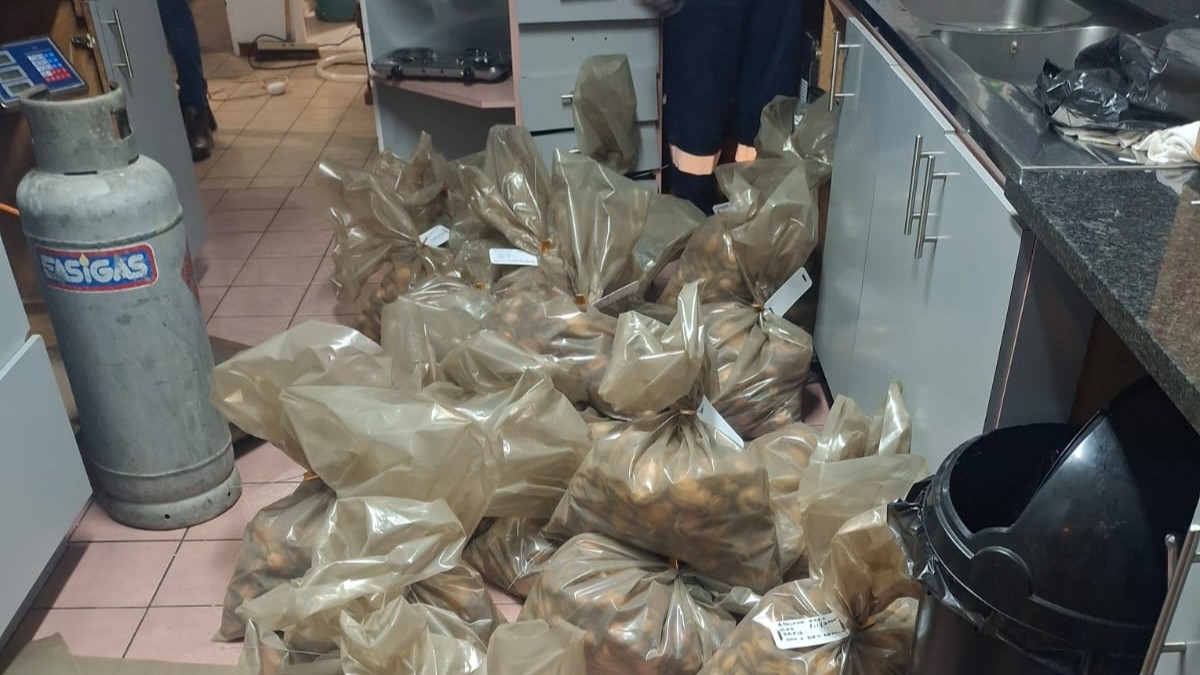
According to SAPS spokesperson Sergeant Wesley Twigg, when authorities raided a property in Primrose Park in Cape Town, they found 6,400 units of abalone worth R3.52 million.
Police also confiscated drying equipment and gas cylinders found on the premises.
Twigg said the two adult males are scheduled to appear in the Athlone Magistrates’ Court on Monday, 10 November 2025.
This comes nearly two months after police seized a stash of abalone of similar value in Rawsonville in late September.
In that case, authorities received intelligence about a shipment of the endangered species en route to Cape Town.
The vehicle was stopped at a weighbridge along the N1 and was found to be carrying 13,341 units of abalone with an estimated street value of R3.3 million.
According to Terrence Corrigan from the Institute of Race Relations, the abalone trade was once a regulated industry. However, poor policy implementation and syndicate operations have driven rampant poaching.
Given the species’ slow reproductive rate, overharvesting has long been a significant threat.
Corrigan stated that controls and permits were implemented from the 1960s; however, poorly managed policy shifts in the 1990s sparked resentment among fishermen.
As a result, many turned to poaching, as the high market prices made illegal harvesting more lucrative. South African gangs have also begun taking part in the trade, often coercing local communities.
Today, the trade is estimated to generate $23 billion in annual revenue.
Government efforts, Corrigan said, have largely failed due to poor enforcement, lack of resources, and corruption — with some fisheries officials accused of redirecting confiscated abalone to syndicates.
Prosecuted cases rarely disrupt operations, and weak international enforcement allows exports to continue.

Economic sabotage
Forestry, Fisheries and the Environment Minister Dr Dion George warned earlier this year that wildlife crime is no longer a marginal issue but “economic sabotage.”
He said environmental crime has become one of South Africa’s most serious national security threats, fuelling organised crime, endangering biodiversity, and putting the lives of rangers at risk.
Poaching in South Africa has severe ecological, economic, and social impacts. Ecologically, poaching drives species like rhinos towards extinction, disrupting ecosystems and impacting biodiversity.
Economically, it damages the vital tourism industry, reducing tourist numbers and revenue, and affecting communities that rely on tourism for their livelihoods.
Socially, studies have shown that poaching can fuel corruption, conflict, and inequality within communities.
George added that his department plans to better equip rangers with tools to combat environmental crime, including canine units, drones, digital mapping technology, and stronger legal support.
He also highlighted the expansion of the Sea, Air and Mountain Special Operations Unit, which has more than doubled in size since 2021 and carried out over 700 patrols and 71 rapid responses in the past year.










 Loading ...
This is fantastic news. Each successful bust means that the criminal network is getting weaker.