
Closure of South Africa’s biggest diamond mine puts thousands of jobs at risk


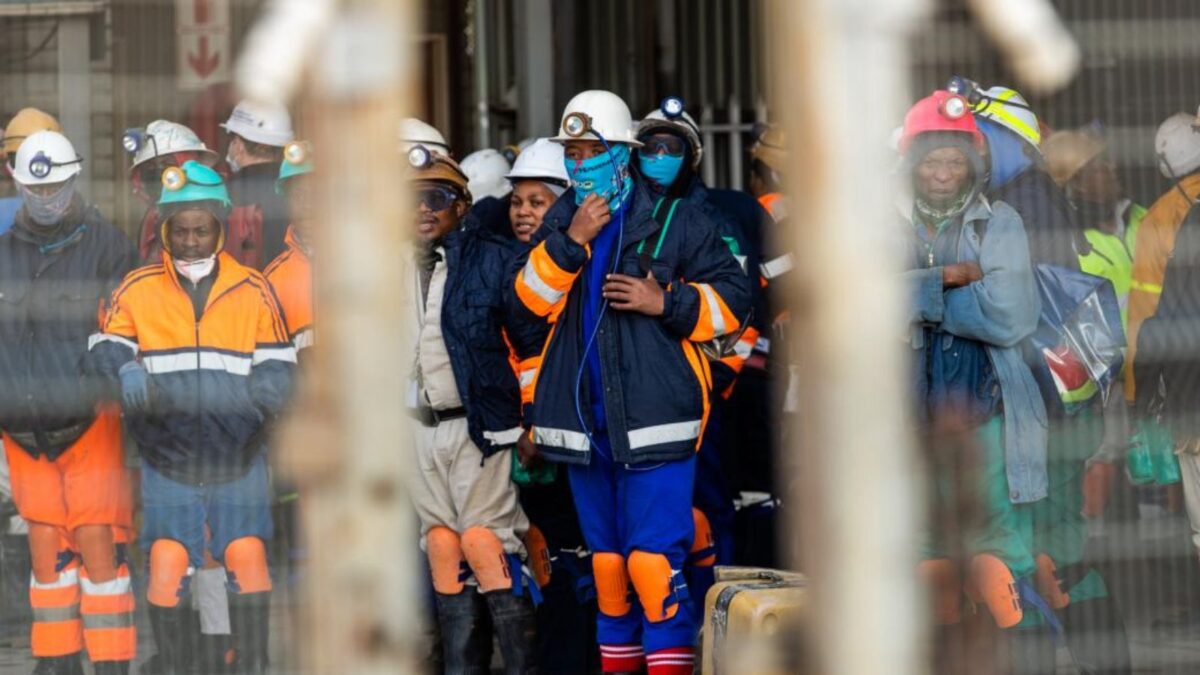
De Beers has announced it will temporarily close the Venetia diamond mine, raising questions about the future of its thousands of employees.
The Venetia mine in Limpopo is responsible for producing approximately 40% of South Africa’s natural diamonds.
The underground mine is 1,000 metres deep and is a massive contributor to South Africa’s famed diamond industry.
Recently, the mine owner, De Beers, announced it would temporarily halt all operations for two years.
This decision was made to help De Beers reduce costs amid weakening global diamond markets.
Natural diamonds have seen their value threatened in recent years by the growing popularity of lab-grown alternatives.
These synthetic diamonds are atomically identical to their natural counterparts, but can be produced for a fraction of the cost.
This destroyed the notion that diamonds were a scarce resource, a fact that has largely driven their status as a luxury item.
This has weakened the natural diamond market due to decreased demand for the mined resource.
The value of diamonds has also been threatened by the global rise in living costs, leaving many consumers without funds for luxury goods.
Due to shifts in the diamond market, mining companies such as De Beers have been left with large stockpiles of unprocessed diamonds.
If the backlogs enter the market, diamonds’ status as a scarce resource could be harmed, causing their prices to drop further.
The backlogs mean that companies are quickly trying to slow production to meet current global demand.
While the pause in operations at the Venetia mine is a temporary measure for De Beers, it could have devastating effects on local communities.
Many people in these communities rely on the mine for work, and do not have the means to wait two years for operations to resume.
Thousands of jobs on the line

The Democratic Alliance (DA) said the Department of Mineral and Petroleum Resources (DMPR) must formulate a plan to support communities around the Venetia mine.
This department is responsible for overseeing mining operations in South Africa and ensuring that the sector continues to operate effectively.
The DA partly blamed the department for the temporary closure of Venetia mine, due to policy and regulatory uncertainty.
While the party noted that the issues facing the diamond market are global, it said that DMPR Minister Gwede Mantashe had created a sector that could not withstand global shocks.
“The Minister is responsible for creating a stable, predictable and competitive mining environment that attracts investment and protects jobs,” it said.
The DMPR was asked to provide a plan to address economic uncertainty affecting Venetia mine workers and contractors.
The DA said this plan should do everything it can to avoid job losses for Venetia employees.
“Every practical alternative to job losses must be considered, and proper support must be provided to affected workers,” it said.
The Venetia mine has been a major employer in Limpopo, creating roughly 4,400 jobs for workers and contractors.
Solidariteit deputy general secretary Willie Venter said De Beers should proactively ensure there are no job losses in the area.
“Musina has limited alternative employment opportunities, apart from agriculture and logistics operations related to cross-border transport,” he said.
“When more than a thousand people suddenly lose their income, it affects not only the employees, but also hundreds of businesses and families that depend on that economic activity.”
He said plans need to be put in place to help protect workers from large-scale unemployment stemming from mine shutdowns.
Venetia is not completely halted, as infrastructure maintenance and similar operations will continue for the next two years.
This could create employment if local workers are retrained to fill the new jobs at the mine.




 Loading ...
“The DMPR was asked to provide a plan to address economic uncertainty affecting Venetia mine workers and contractors.”
South Africa has this idea that companies cannot fire people. But they can and usually must to survive. It is one of the most unpleasant tasks out there as a business owner but it is a reality of life.
Our government can regulate till they are blue in the face but they can’t stop a company from closing down.
I feel for the workers, I feel for De Beers and for the businesses that depended on De Beers.
I don’t feel a fig for Gwede who made it so difficult that mines can’t operate in South Africa.