
The government wants to make Chinese cars more expensive in South Africa


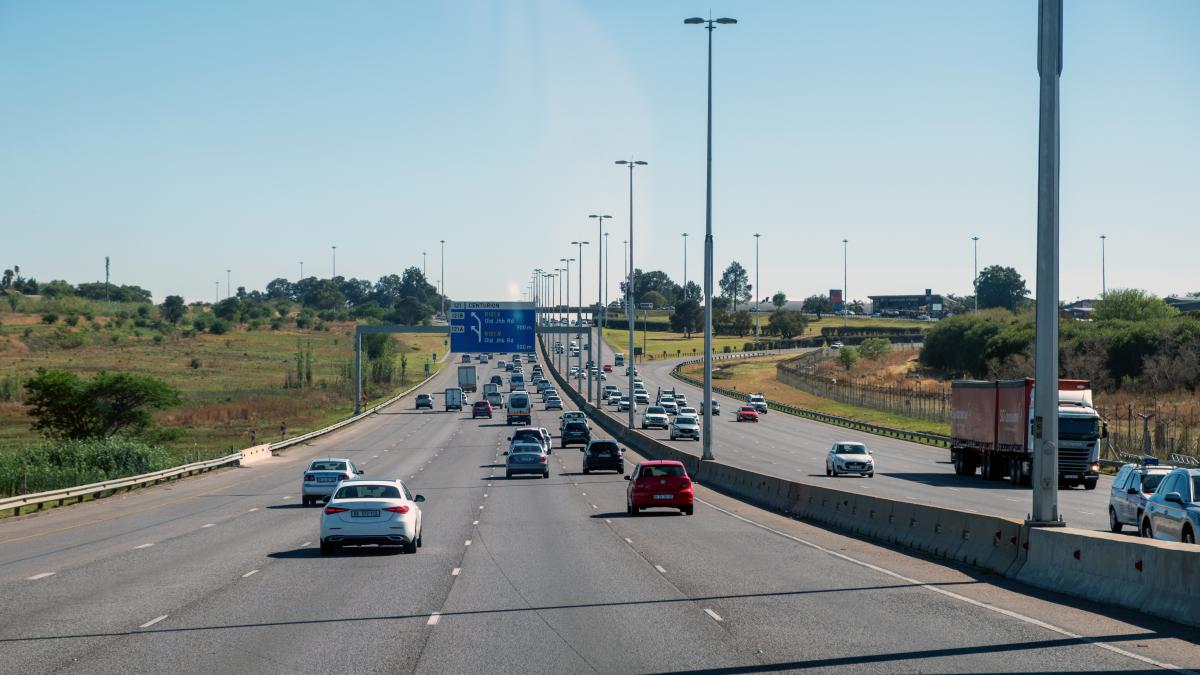
Dr Lumkile Mondi, an economist and senior lecturer at Wits University, said the plan to impose a 50% tariff on vehicles from China and India is a bad idea.
He shared his views during an interview with SABC News about the government’s plan to impose tariffs of up to 50% on vehicles from China and India.
This proposal aims to protect South Africa’s automotive manufacturing industry from a flood of affordable imports.
The Department of Trade, Industry and Competition is conducting an internal review to assess potential measures to stem inbound shipments.
Among the options under consideration is an amendment to South Africa’s tariff schedule to align import levies with World Trade Organisation concessions.
Ayabonga Cawe, the commissioner of the country’s International Trade Administration Commission, shared the info with lawmakers in Cape Town.
“For completely built-up passenger vehicles, the bound rates there are at 50%. Our duties at the moment are at around 25%,” he said.
“On components, there is some room to manoeuvre, depending on what the origin market is, between 10% and 12%.”
China, India, and South Africa are part of the BRICS group of developing nations, which has been working to deepen trade ties among its members.
Vehicles sourced from China and India accounted for 53% and 22% of South Africa’s total vehicle imports, respectively, in 2024.
Vehicle shipments from China have surged 368% over the past four years, while those from India are up 135%.
The measures may offer relief to the industry, which has been under pressure following the United States’ imposition of a 30% tariff on South African exports last year.
The US is South Africa’s third-largest automotive export destination, with exports totalling R28.7 billion in 2024.
Lumkile Mondi says it is not a good idea

Lumkile Mondi is against the tariffs, describing them as a blunt instrument that would ultimately hurt South African consumers and the automotive industry.
He argues that, rather than aiding the sector’s growth, it will simply raise the cost of imported vehicles for domestic consumers.
He highlights that many South African families currently benefit from the affordability of Chinese cars.
Raising prices through tariffs would take away their ability to save and spend money in other critical areas, like education.
South Africa’s 2035 automotive master plan aims to grow the sector’s contribution to the GDP and increase local production to 1% of the global output.
To achieve this, he believes the country needs to attract more manufacturers from India and China rather than pushing them away.
Mondi warned that these new tariffs on Chinese and Indian cars could sour relations with key BRICS partners amid complex global geopolitics.
Instead of tariffs, he calls for economic diplomacy from the Department of Trade, Industry and Competition (DTIC).
He suggests engaging with Indian and Chinese manufacturers to nudge them to locate their manufacturing facilities in South Africa.
He said South Africa could use the Automotive Incentive Scheme (AIS) and Special Economic Zones to attract these companies.
Solidarity warns against tariffs

Trade union Solidarity also warned that tariff increases on imported vehicles could harm both the motor industry and consumers.
It said that the government’s plan to increase import tariffs on vehicles from 25% to 50% will not strengthen the local motor industry.
“On the contrary, it could place further pressure on the market and make vehicles even less affordable for ordinary South Africans,” Solidarity said.
Theuns du Buisson, an economic researcher at the Solidarity Research Institute (SRI), said doubling the tariff will have serious price implications.
“By raising the tariff from 25% to 50%, the prices of the cheapest vehicles on the market could increase from around R180,000 up to approximately R225,000,” he said.
“This would also subject these vehicles to the tax on so-called luxury vehicles, making them even more expensive.”
Du Buisson points out that there is a misconception that inexpensive vehicles compete directly with locally manufactured vehicles.
“The cheapest locally manufactured vehicle costs about R100,000 more and is therefore beyond the reach of many entry-level buyers,” he explains.
Solidarity warns that such a tariff increase could create the perception that all vehicles are unaffordable.
“This not only crushes ordinary people’s dream of owning a car, but is ultimately harmful to the entire motor industry,” says Du Buisson.
Solidarity advocates that alternative, more sustainable solutions should be urgently considered.
Some more expensive Chinese vehicles are already assembled locally according to the so-called semi-knockdown (SKD) model.
The government could apply pressure to encourage manufacturers to expand their local plants and switch to the completely knocked down (CKD) model.
















 Loading ...
Strange, them trying to ‘protect’ an industry that’s been systematically destroyed by their unthinking policies created solely for the purpose of self enrichment